Unicellular
adj.
[ˌjuːnɪˈsɛljʊlə]
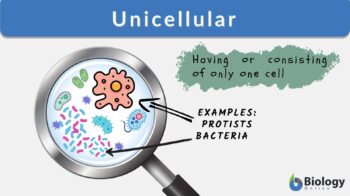
Definition: Having or consisting of only one cell
Table of Contents
Unicellular organisms are organisms consisting of one cell only that performs all vital functions including metabolism, excretion, and reproduction. Unicellular organisms can either be prokaryotes or eukaryotes. Examples of unicellular organisms are bacteria, archaea, unicellular fungi, and unicellular protists. Even though unicellular organisms are not seen by the naked eye, they have an indispensable role in the environment, industry, and medicine. Some of them may also be infectious or pathogenic to humans, animals, and plants.
Unicellular Definition
What is a unicellular organism? In contrast to multicellular organisms, single-celled organisms — or unicellular organisms — are groups of different living organisms consisting of one cell only. And that cell performs all vital functions, such as homeostasis, metabolism, and reproduction. Moreover, a single cell must be able to obtain and use energy, get rid of wastes, and transport materials. In contrast, multicellular organisms are made up of multiple cells and these cells have specific roles and may function together as a unit (tissue).
The cell of a unicellular organism has a protoplasm that contains various proteins, lipids, carbohydrates, and nucleic acids. The protoplasm is surrounded by a cell membrane that separates the internal components of the cell from the external environment. However, any cell should be able to interact with its external environment to obtain molecules from the outside and expel wastes to the outside.
Are bacteria unicellular? Yes! In fact, not only bacteria are unicellular but also archaea. Both bacteria and archaea are prokaryotic organisms. Unicellularity, though, is not exclusive to prokaryotes. Some eukaryotes live singly as well. Examples of single-celled eukaryotes are the unicellular algae, unicellular fungi, and protozoa.
Most living things composed of only one cell are microscopic and cannot be seen by the naked eyes. Unicellular organisms abound in nature. Even extreme habitats contain unicellular organisms. Some archaea, for instance, can survive in extreme environments, and so they are called extremophiles. They are typically resistant to extreme conditions such as temperature or pH.
Importance of Unicellular Organisms
Unicellular organisms may be living independently but they carry out an important role in the ecosystem. Moreover, they are also being utilized medically, for instance, in formulating antibiotics.
Ecological functions of unicellular organisms
Several strains of eubacteria are useful to the environment since they decompose the decaying and dead organic matter and fix their compounds in the soil. Some strains help in fighting pollution such as Pseudomonas strains that have the ability to degrade oil spills in the soil and oceans. Other strains of bacteria can break down heavy metals in the waste-water. Eubacteria have industrial benefits. They are used in the production of cheese, liquor, and other digestive foods. Eubacteria are the main source of the production of antibiotics so they are medically important. Cyanobacteria are a type of eubacteria that have the ability to perform photosynthesis and contribute to the production of oxygen, which keeps the balance of oxygen in the atmosphere.
Medical Importance
Some archaea are used in the pharmaceutical industry to produce antibiotics that differ in their structure and mode of action from bacterial antibiotics. Such antibiotics can treat patients by different mechanisms, consequently, they can overcome the problem of bacterial resistance to antibiotics.
Types of Unicellular Organisms
Single-celled organisms are classified into two major groups: prokaryotes and eukaryotes. They are found everywhere around us and even inside our bodies. But because of their minute cell size, they are not seen by an unaided eye unless special equipment, such as microscopes, are used. Nevertheless, they can form colonies, which can be readily seen by the naked eye.
A. Prokaryotes
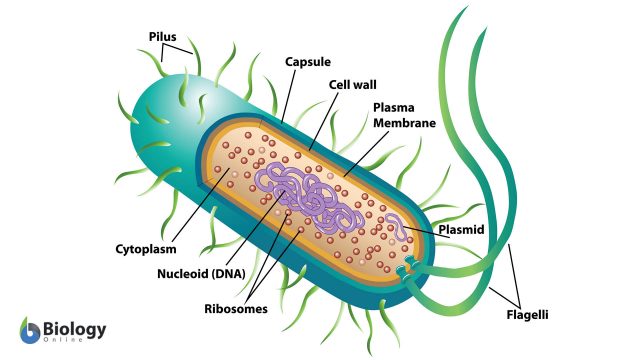
Are prokaryotes unicellular? Prokaryotes represent the vast majority of the unicellular organisms. What is a prokaryotic cell? Prokaryotic, by definition, means having no specialized membrane-bound organelles, such as nucleus and mitochondria. Their DNA is free in the cytoplasm in a region known as the nucleoid.
What are prokaryotes? Prokaryotes are highly adaptive cells to the surrounding conditions. Prokaryotes can use organic and inorganic materials for metabolism. Examples of prokaryotic cells are archaea and eubacteria. One way to distinguish bacteria from archaea is through their cell walls. Those bacteria that have cell walls have peptidoglycan in their cell walls whereas the cell wall of archaea has pseudopeptidoglycan.
1. Archaea
Archaea are one of the ancient prokaryote examples. They reproduce by budding, fragmentation, or binary fission. Archaea usually live in extreme conditions while others live in normal conditions such as oceans, soils, and certain parts of the human body. However, they are usually non-pathogenic to humans. Methanogens are archaea that have the ability to produce methane gas. They produce methane by reducing carbon dioxide to hydrogen and producing energy in the form of adenosine triphosphate.
2. Eubacteria
Are bacteria unicellular? The eubacteria domain is commonly known as bacteria; they are unicellular organisms that live almost everywhere around us. Are bacteria prokaryotes? Bacteria are the most common prokaryotic unicellular organisms. They are classified according to their structure into gram-positive or gram-negative bacteria. Are bacteria living? Yes, bacteria are living organisms that usually reproduce by binary fission. Some eubacteria have the ability to form spores in order to protect their genetic material from damage by the surrounding environment, such as radiation or chemicals. Some bacteria are pathogenic to humans and other living things. Others, though, are beneficial and present in the body as normal microbiota that can either protect the body from invading microorganisms or produce vitamins that help different body cells in performing their normal function.
B. Eukaryotes
Can eukaryotes be unicellular? Eukaryotes can either be unicellular or multicellular organisms. However, unicellular eukaryotes share distinctive characteristics as multicellular eukaryotes at the cellular level. Particularly, all eukaryotes contain membrane-bound organelles, such as the nucleus and mitochondria. Eukaryotes reproduce sexually or asexually. By sexual reproduction, genetic diversity is increased as opposed to asexual reproduction that usually produces a clone of the parent. Nevertheless, asexual reproduction contributes to the rapid spread of the organism. Eukaryotic unicellular organism examples include single-celled protists and fungi.
1. Protists
Protozoans, algae, slime molds, and water molds belong to the Kingdom Protista. Do protists have a nucleus? Are they eukaryotes? Protists have a nucleus that contains their genetic material, and so, they are eukaryotes.
- Protozoa: protozoa are unicellular eukaryotes found in soil or water. They vary in shape, size, mode of nutrition, and cellular structure. Protozoa may be found in the body as a part of normal flora or as a source of diseases. Only a few parasites can cause diseases, however. Parasitic pathogens that pose a great impact on health are exemplified by the sporozoans, Plasmodium spp., that cause malaria, one of the leading causes of mortality among African children. Malaria is transmitted through infected mosquitoes to humans. They inject sporozoans into the blood of the host causing malaria. Other protozoans are autotrophic, capable of photosynthesis. They are freely living. Protozoans that are pathogenic have a rather complicated life cycle, moving from one host to another. Protozoans usually reproduce asexually by schizogony, budding, or fission whereas only a few protozoa such as Paramecium reproduce sexually.
A capsule is produced by some protozoa in certain conditions to protect the organism. It is the cyst form of a protozoan and it is the stage in its life cycle wherein the organism can survive unfavorable conditions, including depletion of nutrients, water, and oxygen, or when the organism is exposed to extreme heat or toxic chemicals. The cyst can also protect protozoa outside the host since some parasitic protozoa are excreted from one host to infect the other.
- Algae: Many algae are unicellular. They are usually found on rocks, soil, or in coastal waters. The largest single-celled organism is one of the aquatic algae. Algae are photoautotrophs similar to plants. However, due to differences in the structure of plants and algae, the latter group is not considered as plants.
- Molds: Water molds and slime molds are unicellular organisms that feed on organic decaying matter. Water molds (oomycetes) are filamentous; they resemble fungi. However, unlike fungi that have chitinous cell walls, water molds (as well as slime molds) have cellulosic cell walls. Slime molds are also unicellular although they are capable of transitioning into a seemingly multicellular organism under stress.
2. Fungi
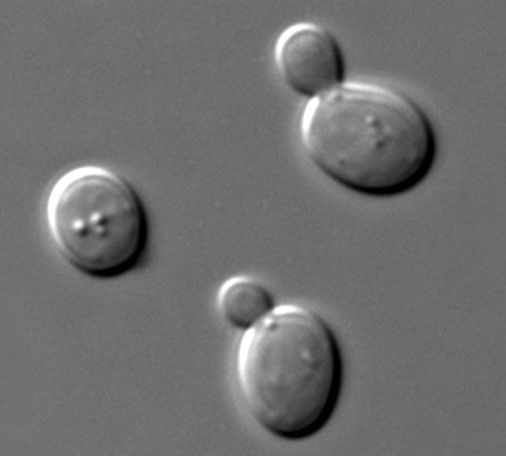
Are fungi unicellular or multicellular? Most fungi exist as multicellular organisms and only a few are unicellular. Yeasts are a unicellular form of fungi; they are widely distributed and usually found on the coating of leaves and fruits. Yeast, such as Candida albicans, can attach to the human epithelial cells and cause disease (candidiasis). Other types of yeasts can also cause serious diseases inhuman. Yeasts usually reproduce either by budding or fission. They can grow and survive in aerobic or anaerobic conditions. When oxygen is abundant, they aerobically metabolize carbohydrates into water and carbon dioxide. In instances of oxygen depletion, yeasts perform anaerobic fermentation of carbohydrates to produce ethanol and carbon dioxide. This form of fermentation is used in various industries, such as baking, the production of wine, and brewing.
Do fungi have a nucleus? Since they are eukaryotes, fungi have a nucleus in their cells that carries their genetic material. Fungi are economically important since they are used in many industries, they are also responsible for decomposing the dead matter therefore, they are considered to be an important component of the food chain. Most plants depend on fungi to help them in the absorption of water and minerals from the soil to their roots. Humans use fungi such as mushrooms in the food and pharmaceutical industries.
Evolutionary History of Unicellular Organisms
All cells share some similar characters, such as the storage of genetic material in the form of nucleic acid, using adenosine triphosphate to obtain energy, and being surrounded by a cell membrane. These similarities are due to the evolution of organisms and sharing common ancestors. On the other hand, differences between organisms result from the adaptation to suit the surrounding environment by means of natural selection.
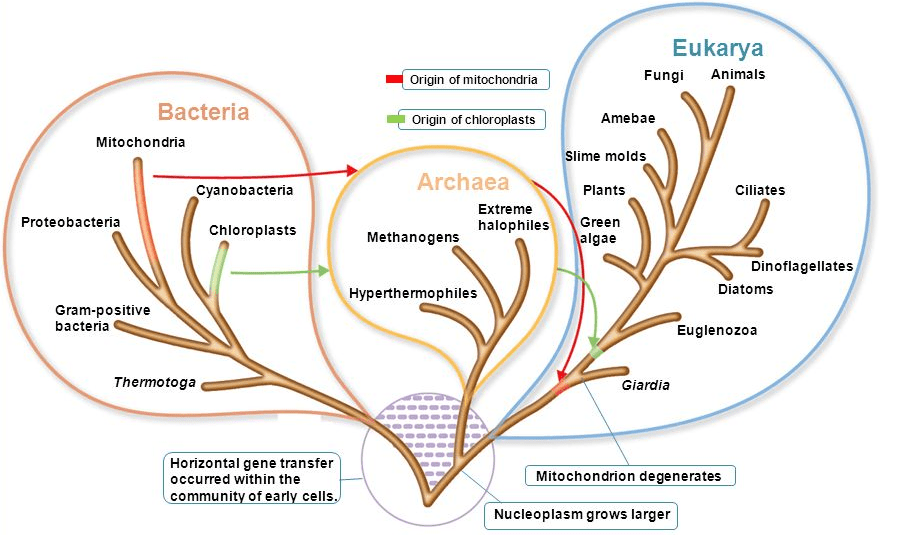
There are three main types of organisms classified into three domains: (1) Eukaryota (comprised of eukaryotes) and the two types of prokaryotes: (2) Bacteria and (3) Archaea. They were classified according to the structure of ribosomes in each cell type.
Unicellular organisms emerged over 3 billion years ago where horizontal gene transfer occurred between different species that finally led to the formation of three different cell types. This theory was proposed after the analysis of the three cells’ genomes and obtaining results showing that they share common genetic material.
The oldest fossil found on earth’s surface was of a unicellular prokaryote. It was formed about 3.5 billion years ago. Following that, eukaryotes started to appear recently, about 2.5 billion years ago. Endosymbiotic theory shows that eukaryotes evolved from prokaryotic cells that lived inside the eukaryotes. For example, the similarities between the mitochondrial ribosome -which is a component of the eukaryotic cell- and the bacterial cell ribosome give evidence that eukaryotes were evolved from this endosymbiotic relationship between two prokaryotes. The science of taxonomy clarifies the evolutionary relationships among different species.
Examples of Unicellular Organisms
Unicellular organisms are essential for the life and wellbeing of all other creatures on earth. They can produce useful substances, decay dead matter, and protect other creatures from some infections. In this section, some unicellular examples are described.
Phytoplanktons
Phytoplanktons, i.e. the aquatic unicellular protists, are examples of eukaryotic cells that live either in fresh or salty water. Green algae and diatoms are phytoplankton. They perform photosynthesis to obtain energy. Phytoplankton explodes into blooms when the surrounding conditions are favorable. These blooms produce great amounts of oxygen in the earth’s atmosphere.
Amoebae
Amoeba is one of the eukaryotic cell examples. Amoeba spp. live in moist environments such as wet soils, decaying vegetation, or inside the human body. Amoeba uses their tentacles to hunt smaller bacteria that they feed on. These tentacles are called pseudopods, they are used in movement, touching, and hunting prey.
Nitrosomonas and Nitrobacter
Nitrosomonas and Nitrobacter are examples of prokaryotes. These bacteria can utilize any source of carbon such as different energy sources or carbon dioxide to make complex chemicals containing nitrogen. Nitrite is then produced as a result of the oxidation of these nitrogenous compounds by Nitrosomonas. Following that, nitrates are produced from the oxidation of nitrite by Nitrobacter species. The yield of this process is used in agriculture.
Euglena
Another unique unicellular organism is Euglena. The species can either produce its own food or get it from an external source. Thus, euglenas are regarded as “plant-animal hybrid” unicellular organisms. They are mostly green due to feeding on green algae in case of poor light which is not sufficient for the organism to perform photosynthesis. On the other hand, if the light is sufficient it will produce oxygen during photosynthesis.
Try to answer the quiz below to check what you have learned so far about unicellular.

References
- Cossart, P., & Helenius, A. (2014). Endocytosis of viruses and bacteria. Bacteria: Highly Organized Unicellular Organisms, a016972.
- Gargaud, M., Amils, R., & Cleaves, H. J. (Eds.). (2011). Encyclopedia of astrobiology (Vol. 1). Springer Science & Business Media.
- Gupta, G. N., Srivastava, S., Khare, S. K., & Prakash, V. (2014). Extremophiles: an overview of microorganism from extreme environment. International Journal of Agriculture, Environment and Biotechnology, 7(2), 371-380.
- King, N. (2004). The unicellular ancestry of animal development. Developmental cell, 7(3), 313-325.
- Soininen, J. (2012). Macroecology of unicellular organisms–patterns and processes. Environmental microbiology reports, 4(1), 10-22.
- Tortora, G. J., Funke, B. R., & Case, C. L. (2015). Microbiology: An Introduction, Global Edition. USA: Pearson Education.
©BiologyOnline.com. Content provided and moderated by BiologyOnline Editors.