Transport
n., plural: transports
[tɹænzˈpɔɹt]
Definition: the act of moving or translocating
Table of Contents
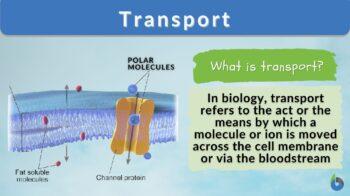
In biology, transport refers to the act or the means by which a molecule or ion is moved across the cell membrane or via the bloodstream. There are two types of transport in this regard: (1) passive transport and (2) active transport. Passive transport is a kind of transport by which ions or molecules move along a concentration gradient; it means the movement from an area of higher concentration to an area of lower concentration.
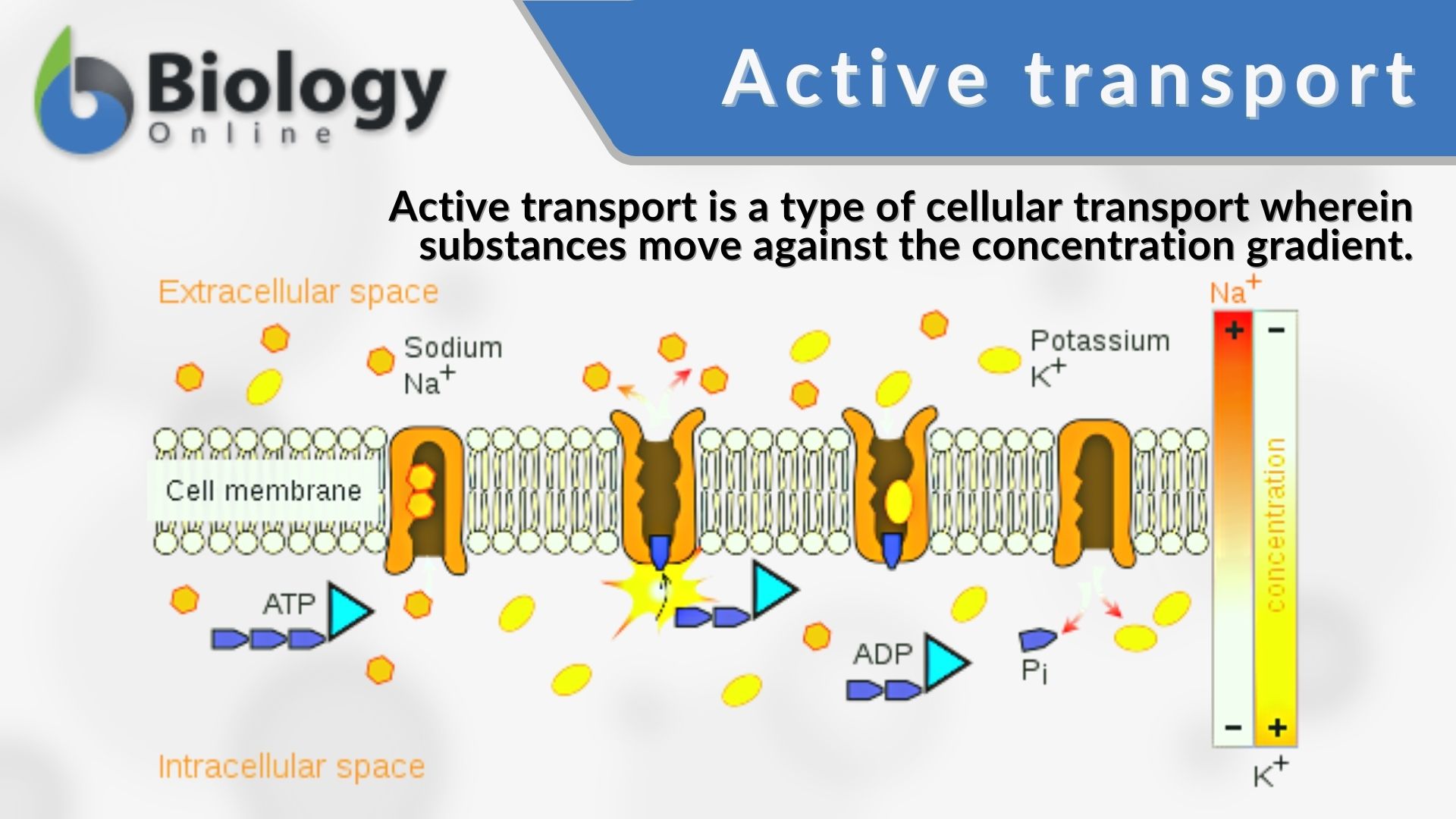
The four major types of passive transport are diffusion, facilitated diffusion, filtration, and osmosis. Active transport is a kind of transport wherein ions or molecules move against a concentration gradient. This means the movement is from an area of lower concentration to an area of higher concentration. This type of transport requires expending cellular energy and the assistance of proteins (i.e. carrier protein).
Transport Definition
In general, the term transport is the movement (of something) from one place to another. It can be used as an action word for carrying, moving, or conveying something from one location to another.
In biology, transport is the act or the means by which molecules, ions, or substrates are moved across a biological membrane, such as the plasma membrane. It may also pertain to electrons being transported along the electron transport chain.
At the cellular level, a concentration gradient is necessary for cellular transport to occur. A concentration gradient occurs when there is a concentration difference, for example, between the cell cytoplasm and extracellular fluid. Transport may then be along or against their respective concentration gradient.
Transport may also be used to pertain to the transport activity of blood and other bodily fluids in the circulatory system. Thus, the transport of biological substances may occur in intracellular and extracellular fluids.
Etymology: The term transport came from Middle English, Old French transporter, meaning “to carry” or “convey across”. It is derived from the Latin transporto, from trans-, meaning “across” and porto, meaning “to carry”.
Cellular Transport
At the cellular level, transport may be classified as passive or active, simple or facilitated, intracellular or extracellular…
-
Passive and active transport
Biological transport at the cellular level may be passive or active. Both types need a concentration gradient to ensue. They differ though in the direction of the movement with respect to the concentration gradient. Passive transport is the transport of substances across the plasma membrane from an area of high concentration to an area of low concentration. The movement is, therefore, along or in the same direction as the concentration gradient.
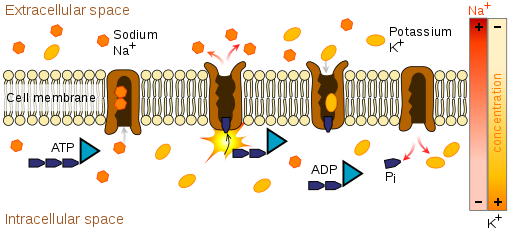
Conversely, active transport is a type of cellular transport where the movement is against or opposite the direction of the concentration gradient. A movement against the concentration or electrochemical gradient would indicate the need for energy.
The movement is from an area of low concentration to an area of greater concentration. Since the movement of substances in passive transport is downhill, kinetic energy is sufficient to drive the movement. In active transport, the movement is uphill and therefore needs a greater source of energy to power up the process. Typically, it uses chemical cellular energy in the form of adenosine triphosphate (ATP), which the cell generates metabolically, such as through glycolysis and the citric acid cycle.
Passive transport vs. Active transport |
|
|---|---|
| Passive transport | Active transport |
| Downhill movement of substances, i.e. from higher to lower concentration | Uphill movement of substances, i.e. from lower to higher concentration |
| Along the concentration gradient | Against the concentration gradient |
| Does not require ATP | Mostly requires ATP |
Types:
|
Types:
|
| May or may not utilize membrane transporters | Requires membrane transporters |
Membrane transporters in assisted passive transport:
|
Primary transporters
Secondary transporters
|
Examples:
|
Primary active transport examples:
Secondary active transport example:
|
-
Simple vs. Facilitated diffusion
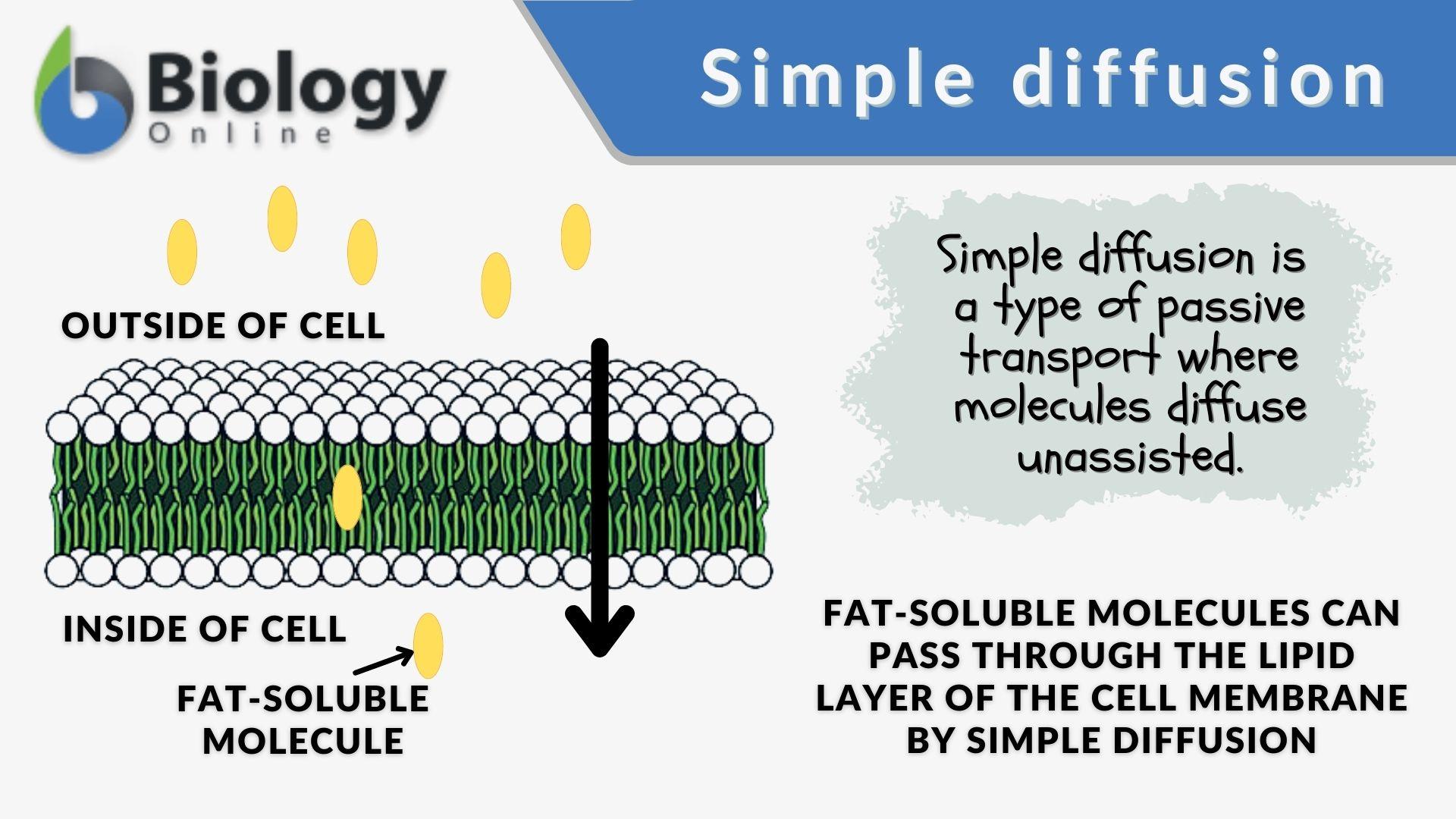
Fat-soluble molecules can move rather readily across the lipid-bilayer membrane (an example of unassisted diffusion or simple diffusion).
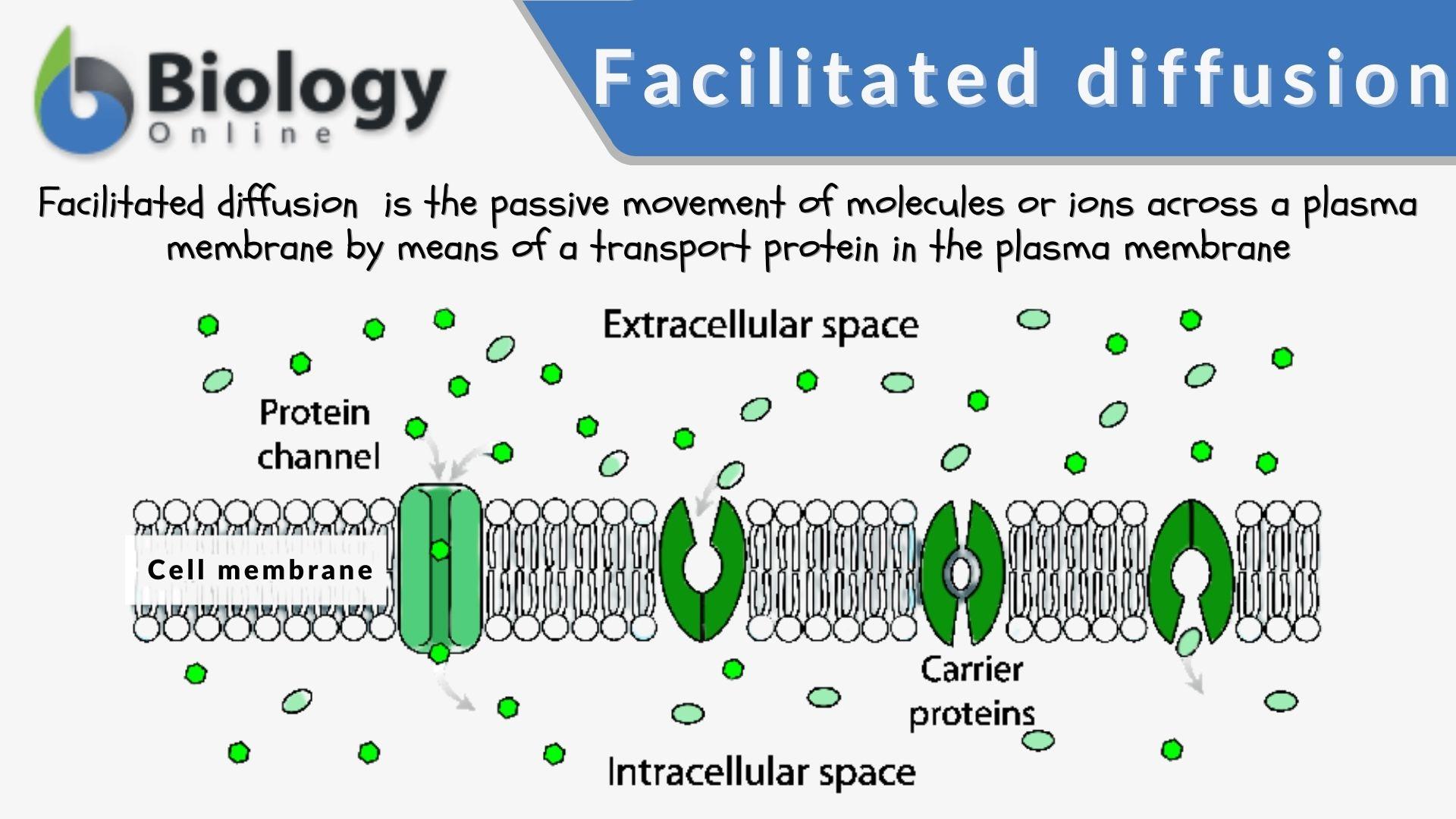
When diffusion makes use of transporters, it is referred to as facilitated diffusion.
The illustration below shows how passive transport occurs. Water-soluble molecules move down the concentration gradient across the membrane proteins. These membrane proteins may be in the form of channels or carriers.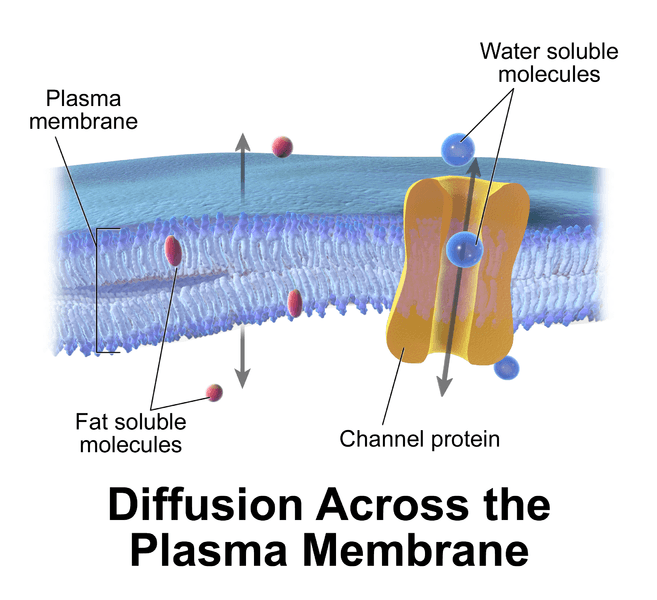
-
Intracellular vs. extracellular transport
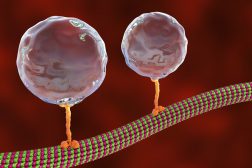
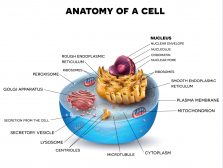
One of the major biological activities of a cell is the transport of biological molecules, ions, and substrates. The transport could occur inside the cell. For instance, the protein produced by the endoplasmic reticulum is transported or conveyed to the Golgi apparatus for further processing. This is an example of intracellular transport.
Transport could also occur from the cell to the outside, as in extracellular, such as that occurs during secretion, or from the outside into the cell. There are substances that can easily move through the lipid bilayer component of the plasma membrane. For example, small nonpolar molecules can move across the membrane.
Larger nonpolar molecules and polar molecules cannot enter or leave the cell because of their size and polarity, respectively. Nevertheless, they can still be moved across the membrane but they would need membrane proteins to shuttle or transport them across.
Plasma Membrane
The plasma membrane is a selectively permeable membrane. Its structure is key to its ability to transport molecules “selectively” into and outside the cell.
- Lipids, primarily phospholipids, form the double-layered structure of the plasma membrane. Phospholipids form the so-called phospholipid bilayer, which consists of hydrophilic and hydrophobic regions. The “tails” of the phospholipids are oriented in a way that they lie internally while the “heads” are facing outward. The phospholipid tails are hydrophobic; the phospholipid heads are hydrophilic. Because of the hydrophobic lipid core orientation, lipid-soluble material will be able to pass through this phospholipid bilayer whereas polar molecules, such as water, will be prevented to pass through it. This feature of the plasma membrane makes the latter referred to as a ‘selectively permeable membrane’ — or, in some references, the semipermeable membrane separating the two sides, the inner and the outer of the cell.
- Proteins in the plasma membrane, as already pointed out above, are essential for the transport of certain molecules, especially those that cannot pass through the hydrophobic, nonpolar lipid component of the membrane layers. Based on location, proteins may be transmembrane proteins (spanning the membrane) or peripheral proteins (found at the periphery). They may also be referred to as channel formers or carriers, which is based on how they transport substances. Channel proteins facilitate diffusion via a ‘tunnel’; carriers facilitate diffusion by changing shapes to move substances across the membrane.
- Carbohydrates that are attached to the lipids or proteins are found outside the plasma membrane. They help the cell bind substances it will need from the extracellular fluid, especially for cell signaling and cell recognition.
Note it!
Factors that Affect Diffusion
Molecules diffuse where a concentration gradient exists at rates depending on factors, such as temperature, concentration, distance, and material…
- Molecules diffuse after at higher temperatures; slower at lower temperatures
- The greater the number of particles in a solution, the faster the diffusion
- The shorter the distance for the particles to travel, the faster the diffusion
- Smaller and lighter particles diffuse quicker than larger or heavier particles, which makes gases diffuse faster than liquids, and liquids diffuse faster than solids
- In biological membranes, another factor that affects transport is polarity. Nonpolar molecules tend to pass through more easily than polar molecules. Polar substances present problems when it comes to diffusing across the membrane. Polar molecules connect easily outside the cell but not by passing through the lipid bilayer. In such a case, they could use where a carrier or channel protein exists. And while uncharged organic molecules may be able to pass through the phospholipid layer, charged molecules, albeit small, will not be able to pass as easily because of their charge. This is key to the plasma membrane’s capability in selectively transporting molecules.
Water Movement and Transport
Water is vital to any cell as it is the major solvent in a solution (the dissolved substance is referred to as the solute). In osmosis, water is thus the only component that moves passively, for that matter. Let’s take for instance the movement of water molecules in the red blood cells placed in three solutions:
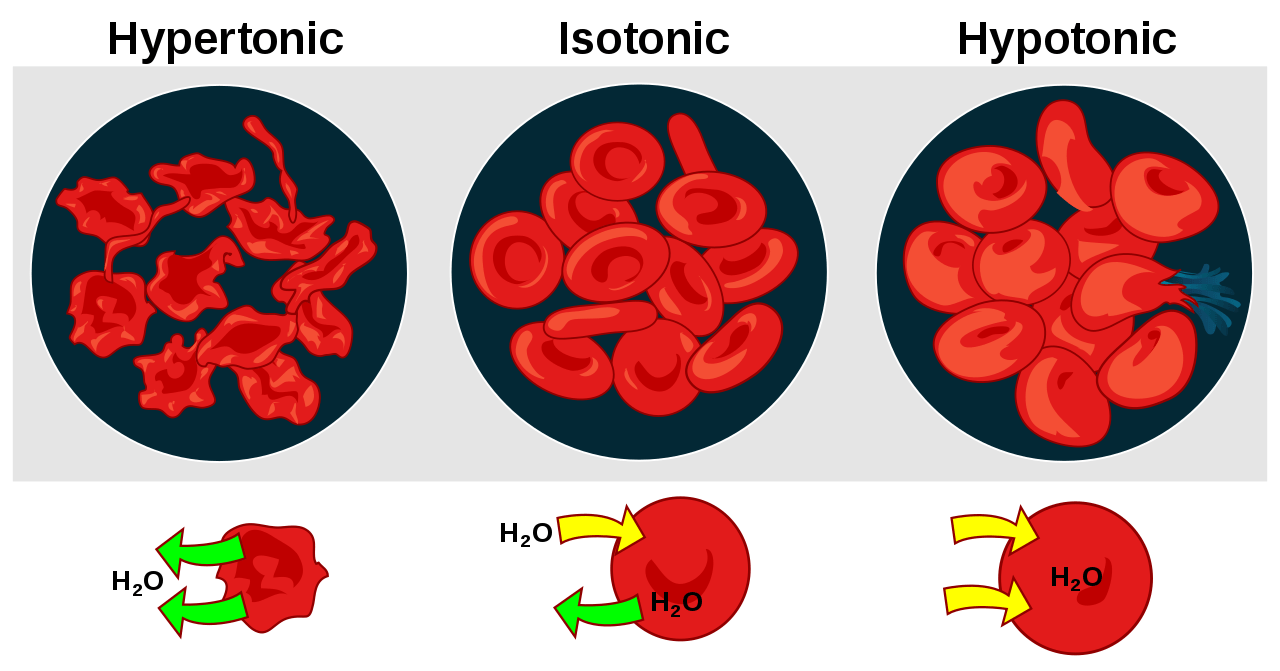
When the cell is submerged in a hypotonic solution (where there is less solute and much water outside the cell), water tends to enter the cell resulting in the swelling of the cell. As more water molecules enter the cell, there will come a point where the cell will burst. But for single-celled organisms like protists, their cells are able to prevent it with their contractile vacuoles. The vesicle collects excess water and then pumps it out of the cell, thereby regulating water inside the cell.
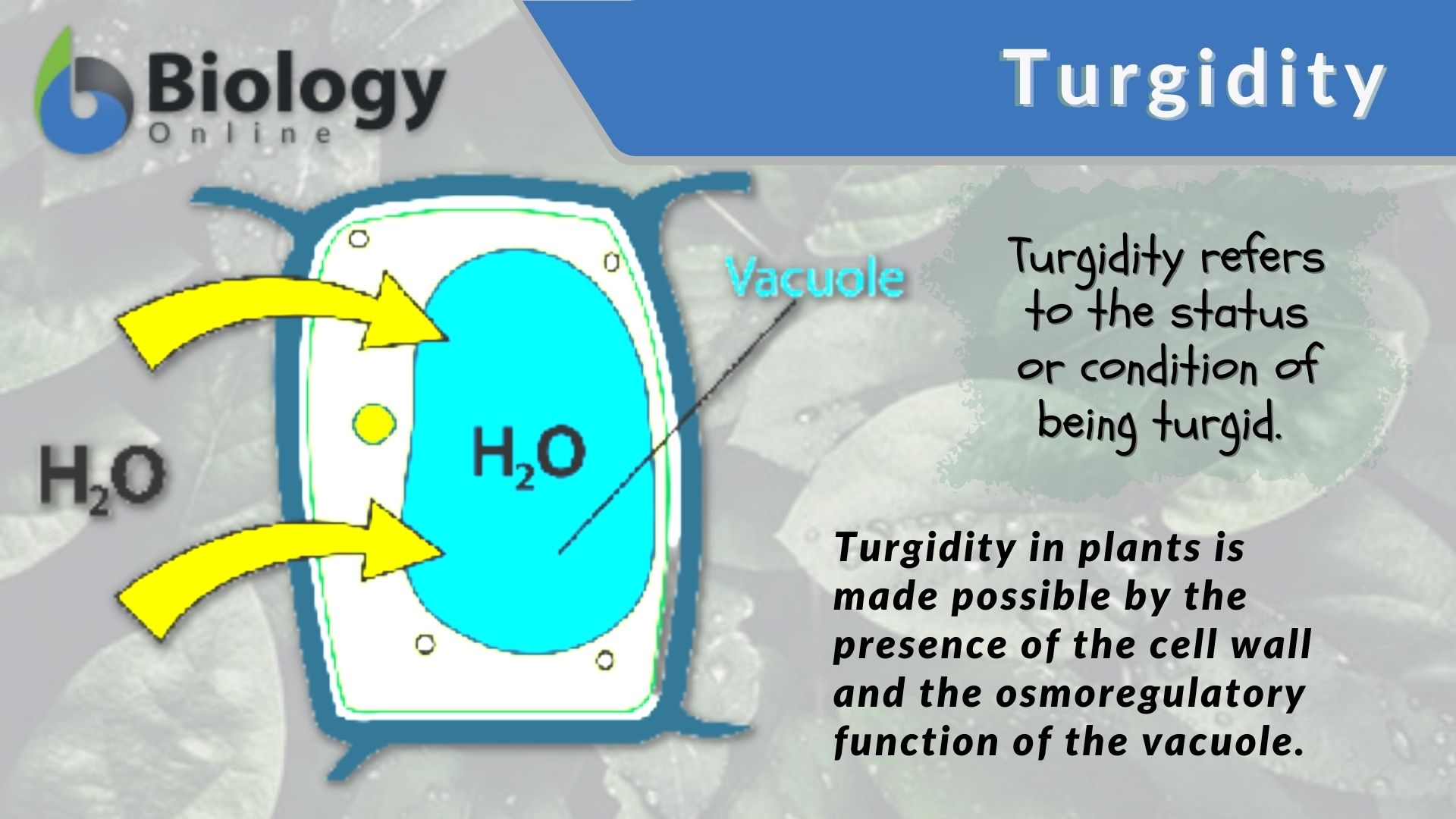
As for plants, bursting is unlikely. The plant cell depends on the cell walls that prevent the cell from bursting when there is much water that went in the cell. However, in the event of exposure to a hypertonic solution (where there is much solute and less water outside the cell), much water will be transported out. The plant cell membrane detaches from the cell wall as the cytoplasm shrinks with water leaving the cell. The plant cells lose turgor pressure due to a lack of enough water that produces it. The plant eventually becomes visibly wilted (which can be restored by watering the plant soon enough).
Similarly, when the animals’ cells lose water, the cells tend to shrink leading to a condition called crenation. So think about marine animals, such as saltwater fish. How are they able to thrive despite the hypertonic environment? They excrete highly concentrated urine apart from secreting salt through gills.
In humans, this is identified as a case of dehydration. When the body’s cells lose water, the cells’ functions deteriorate or fail to function as they should. Good thing that there are specialized cells in the brain called osmoreceptors. These cells found in vertebrates are able to detect solute levels in the blood. When solutes are detected as atypically high, the body releases a hormone that will slow down water loss via the kidneys and regulates osmotic pressure through the release of albumin from the liver to the blood.
Conversely, when the cell is placed in an isotonic solution (where there is about the same water and solutes inside and out), there is no net change in water movements.
In plants, water transport inside and outside the plant cells is essential in keeping them upright. Plants tend to look wilted when it is not watered for quite some time because the amount of water that is lost is higher than the amount of water that is absorbed. Plant cells primarily use osmoregulation in ensuring they are “turgid”.
Watch this vid about plasma membranes, their structure and function:
Transport at the tissue level
At the tissue level, transport is the means by which substances are moved from the cell to the outside or other body parts. Blood is the circulating fluid in the body of higher animals, including humans. It transports various molecules, such as respiratory gases, (carbon dioxide and oxygen bound to hemoglobin of red blood cells), nutrients (e.g. glucose, amino acids, and fatty acids), metabolic byproducts for excretion, hormones, and other chemical signaling molecules, and nutrients.
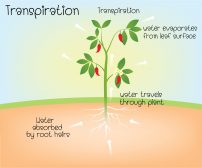
In plants, the transport of substances at the tissue level occurs at the vascular tissues, particularly, phloem and xylem. The phloem tissues are responsible for the conduction of photosynthetic materials whereas the xylem tissues are the ones conducting water and nutrients from the roots to the different parts of the plant.
Take the Quiz!

Further Reading
References
- TRANSPORT IN AND OUT OF CELLS. (2019). Retrieved from Estrellamountain.edu website: https://www2.estrellamountain.edu/faculty/farabee/biobk/BioBooktransp.html
- MEMBRANE TRANSPORT. (2019). Retrieved from Yvcc.edu website: http://www2.yvcc.edu/Biology/109Modules/Modules/MembraneTransport/membranetransport.htm
- Active Transport Across Cell Membranes. (2019). Retrieved from Gsu.edu website: http://hyperphysics.phy-astr.gsu.edu/hbase/Biology/actran.html
- MEMBRANE TRANSPORT. (2013). Retrieved from Byui.edu website: https://content.byui.edu/file/a236934c-3c60-4fe9-90aa-d343b3e3a640/1/module5/readings/membrane-transport.html
- Biology, The Cell, Structure and Function of Plasma Membranes, Passive Transport. (2022). OERTX Repository. https://oertx.highered.texas.gov/courseware/lesson/1631/student/?task=7
© Biology Online. Content provided and moderated by Biology Online Editors