|
|
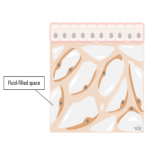
Dictionary » S » Structure StructureDefinition noun, plural: structures (1) (biology) An arrangement or organization of parts to form an organ, system, or living thing. (2) (ecology) A network or a hierarchy of interrelated parts of a system. (3) (chemistry) The molecular geometry, electronic structure and crystal structure of a chemical compound. (4) The formation or mode of construction of a body or system from distinct units. (5) A collection of interrelated or arranged parts of an entity. (6) The overall form or organization of something. (7) A formation, organization or construction.
In biology, structures exist at all levels of organization, i.e. from the molecular to the cellular, tissue, organ, organismic, population and ecosystem level.
Related terms: ![]()
Please contribute to this project, if you have more information about this term feel free to edit this page ![]()
Results from our forumRe: Any SOLID arguments against evolution?... more than it is, you haven't taken into account polar bonds(of which there are a lot in hemoglobin due to H, N, O), the stress put on any random structure from this imbalance alone would cancel at least half of the possibilities. Structure of Hemoglobin http://www.bio.davidson.edu/Courses/Molbio/MolStudents/spring2005/Heiner/hemoglobin.html ...
See entire post
New conception of evolution ?new theory of evolution ? new theory of the structure and the development of the society ? we will see
See entire post
Re: Any SOLID arguments against evolution?... more than it is, you haven't taken into account polar bonds(of which there are a lot in hemoglobin due to H, N, O), the stress put on any random structure from this imbalance alone would cancel at least half of the possibilities. By polar bonds you are I believe referring to dipole-dipole bonds. ...
See entire post
Re: Any SOLID arguments against evolution?... more than it is, you haven't taken into account polar bonds(of which there are a lot in hemoglobin due to H, N, O), the stress put on any random structure from this imbalance alone would cancel at least half of the possibilities. Also you have to remember in the early atmosphere-lots of heat ...
See entire post
Re: Any SOLID arguments against evolution?... number of ways to arrange the atoms and hemoglobin still be functional? No. He was saying they could be arranged randomly that number in primary structure, not secondarily, nor tertiarily, nor quaternarily as hemoglobin does. He was simply saying that primarily if you took the single atoms out ...
See entire post
This page was last modified 12:48, 5 June 2009. This page has been accessed 9,128 times. |
© Biology-Online.org. All Rights Reserved.
Register | Login
| About Us | Contact Us | Link to Us | Disclaimer & Privacy
Science Network - Braintrack.com - University Directory | Chemicool.com - Chemistry