Photosynthesis
n., plural: photosyntheses
[ˌfŏʊ.ɾoʊ.ˈsɪn̪.θə.sɪs]
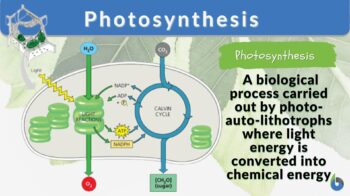
Definition: the conversion of light energy into chemical energy by photolithorophs
Table of Contents
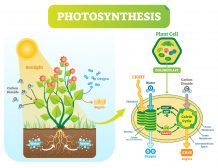
Photosynthesis is a physio-chemical process carried out by photo-auto-lithotrophs by converting light energy into chemical energy. Among the endless diversity of living organisms in the world, producers are a unique breed.
Unlike consumers (herbivores, carnivores, omnivores, or decomposers) that rely upon other living organisms for their nutritional requirements and nourishment, producers have been distinguished by their ability to synthesize their own food. This is the reason that we call producers “autotrophic or self-reliable” in nature while consumers of all the different categories are called “heterotrophic or dependent” in nature.
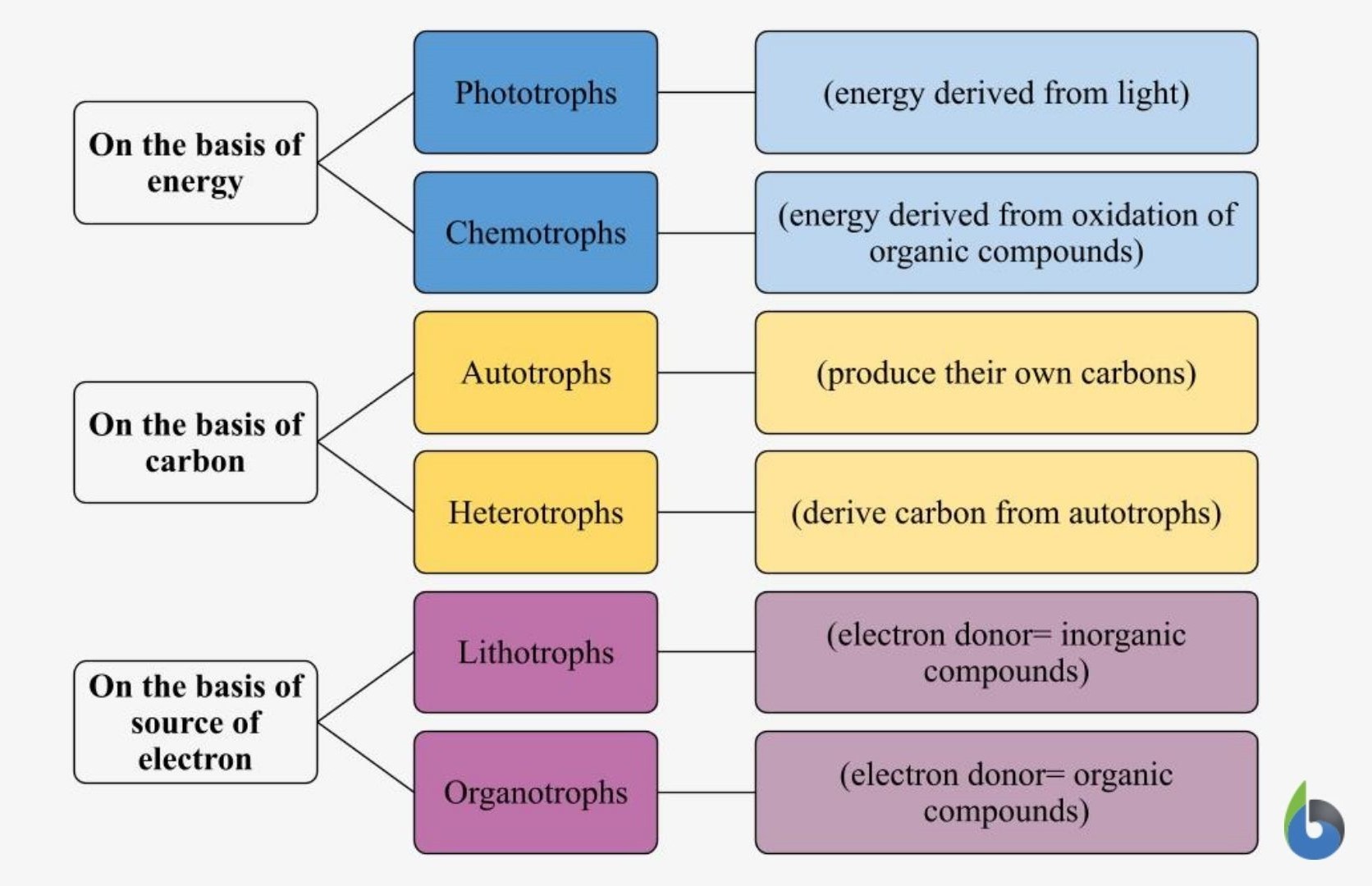
Now among producers, there are different categories of producers, i.e. different mechanisms via which they produce their own food.
- Photo-auto-litho-trophs: Since these organisms tend to derive their nutrition by channeling the sun’s light energy, they are termed phototrophic in nature. Also, since they utilize inorganic carbon and translate it into organic carbon atoms, i.e. their means of deriving food becomes autotrophic. Additionally, since the source of electrons (electron donors) here are inorganic compounds, they are specified as lithotrophic. In totality, they can be called photo-auto-litho-trophic in nature. Example: Green plants are nature’s brilliant entities that come under this category. They carry out a photosynthesis cycle by taking in carbon dioxide and fixing it into carbohydrates (energy storage molecule). Some of them also give out oxygen gas that’s vital for the other life forms to survive in the earth’s atmosphere.
- Chemo-auto-lithotrophs: Many of us might be unaware of the fact that there are some autotrophs that don’t utilize sunlight. Rather they derive their energy stored from a different energy source like oxidation of inorganic compounds.
The scope of today’s discussion is limited to photosynthesis and photoautotrophs. So, let’s get started and get to know the answers to these common questions: what is the photosynthesis process, what are the 3 stages of photosynthesis, what does photosynthesis produce, what is a byproduct of photosynthesis, what is the purpose of photosynthesis, is photosynthesis a chemical change, the various inputs and outputs of photosynthesis, which organisms perform photosynthesis, and many other more questions!!!
What is Photosynthesis?
Photosynthesis definition: Photosynthesis is a physio-chemical process carried out by photo-auto-lithotrophs. In simpler language, photosynthesis is the process by which green plants convert light energy into ‘chemical energy’.
This energy transformation is only possible due to the presence of the miraculous pigment molecule chlorophyll in photosynthesis. The chemical energy as referred to before is the fixed carbon molecules generated during photosynthesis.
Green plants and algae have the ability to utilize carbon dioxide molecules and water and produce food (carbohydrates) for all life forms on Earth. There’s no doubt in the fact that life is impossible and unimaginable without green plants that photosynthesize and sustain the cycles of life.
Let’s give you a brief outline of the topic before we head forward.
- Etymology: The photosynthesis process finds its origin in 2 Greek words, firsts one being “phōs (φῶς)” meaning ‘light’ and the second one being “sunthesis (σύνθεσις)” meaning ‘putting together’. The process of photosynthesis aids the conversion of light energy to chemical energy in varied forms of carbohydrate molecules like sugar molecules and starches.
- Organisms that perform photosynthesis: The organisms are called photo-auto-litho-trophs or simply photoautotrophs.
- Atmospheric gas consumed: Photosynthesizing organisms utilize carbon dioxide in photosynthesis (CO2).
- Atmospheric gas released by “some” photosynthetic organisms (MIND IT-Not all): Some photosynthesizing organisms convert carbon dioxide and aid the process of producing oxygen gas (O2).
- Examples of photosynthesizing organisms: Green plants, cyanobacteria (earlier termed as blue-green algae), and different types of algae that essentially carry out phytoplankton photosynthesis.
- Why is photosynthesis important? The important function of photosynthesis: Food supply for the organisms on Earth, Oxygen supply for the survival of all organisms.
- Site of photosynthesis: Leaves and green tissues. (So when asked where photosynthesis takes place, we can tell that it is this site.)
- What are the reactants of photosynthesis: Carbon dioxide molecules + Water molecules + Light energy
- Products of photosynthesis: Fixed carbon (carbohydrates) + Oxygen (some cases) + Water
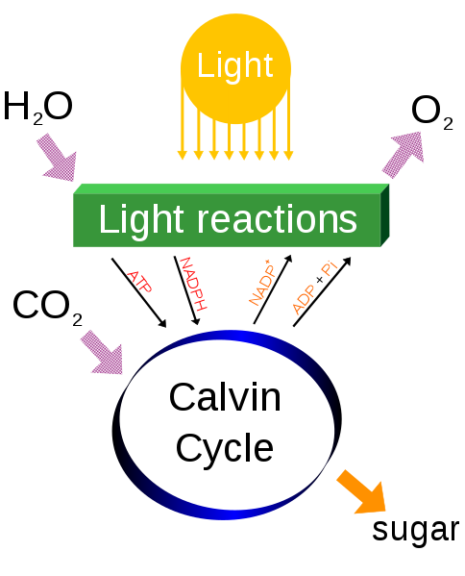
Watch this vid about photosynthesis:
Biology Definition:
Photosynthesis is the synthesis of complex organic material using carbon dioxide, water, inorganic salts, and light energy (from sunlight) captured by light-absorbing pigments, such as chlorophyll and other accessory pigments. Photosynthesis may basically be simplified via this equation: 6CO2+12H2O+energy=C6H12O6+6O2+6H2O, wherein carbon dioxide (CO2), water (H2O), and light energy are utilized to synthesize an energy-rich carbohydrate like glucose (C6H12O6). Other products are water and oxygen.
- Photosynthesis occurs in plastids (e.g. chloroplasts), which are membrane-bounded organelles containing photosynthetic pigments (e.g. chlorophyll), within the cells of plants and algae.
- In photosynthetic bacteria (cyanobacteria) that do not have membrane-bounded organelles, photosynthesis occurs in the thylakoid membranes in the cytoplasm.
Etymology: from the Greek photo-, “light”, and synthesis, “putting together”
Related forms: photosynthetic (adjective)
Compare: chemosynthesis
See also: photoautotroph
Types of Photosynthesis
Plant photosynthesis and photosynthetic organisms can be classified under different categories on the basis of some characteristic features. They are:
-
- Types of organisms that carry out photosynthesis on the basis of “cellular structure”
Both prokaryotic and eukaryotic organisms carry out photosynthesis. - Types of organisms that carry out photosynthesis on the basis of whether they release oxygen or not, i.e., photosynthesis 1 and 2:
- Oxygenic photosynthesis (release oxygen while photosynthesizing)
- Photosynthetic prokaryotes: for example, cyanobacteria
- Eukaryotic: for example, protists (diatoms, dinoflagellates, Euglena) and green plants. In particular, algae photosynthesis can be observed in green algae, red algae, brown algae, & land plants, like bryophytes, pteridophytes, gymnosperms, and angiosperms.
- An-oxygenic photosynthesis (don’t release oxygen while photosynthesizing)
- Prokaryotic ONLY (anoxygenic photosynthetic bacteria, green sulfur bacteria and purple bacteria)
- Oxygenic photosynthesis (release oxygen while photosynthesizing)
- Types of organisms that carry out photosynthesis on the basis of “cellular structure”

kOchstudiO.
Photosynthesis: a two-stage process
Photosynthesis is an example of a metabolic process with 2 stages. Both the stages need light (direct or indirect sunlight). Hence, the long-claimed notion of the 2 processes being ‘absolute LIGHT and DARK reactions’ isn’t apt.
Scientific studies have pointed out that even the 2nd stage of photosynthesis requires indirect sunlight. Therefore, rather than classifying the stages as light and dark photosynthesis reactions, we’ll like to classify the 2 stages as follows:
- Photochemical Reaction Process: Light energy is converted to ATP; photophosphorylation process (light-dependent reactions)
- Carbon fixation process: Inorganic carbon is converted to organic carbon (light-independent reactions). This is an endergonic process. This process can happen in 2 ways:
- Through Calvin cycle: In oxygenic photosynthesis as well as anoxygenic photosynthesis
- Through Non-Calvin cycle: Only is some anoxygenic photosynthesis
Evolution of Photosynthesis Process
It is postulated that the very first photosynthetic beings and photosynthesis evolved quite early down the evolutionary timescale of life.
It is also believed that the first photosynthetic beings would have initially resorted to other available reducing agents like hydrogen ions or hydrogen sulfide in contrast to the modern-day photosynthetic organisms that utilize water as the “prime and only sources of electrons”.
It is believed that cyanobacteria would have appeared on the surface of Earth much later than the first photosynthetic beings. Once appeared they must have saturated the Earth’s atmosphere with oxygen gas and led to its oxygenation. Only after the Earth was oxygenated, the more complex forms of life would have later evolved.
Overview
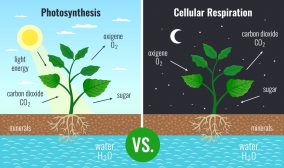
When we compare photosynthesis to other metabolic processes like respiration, we can clearly notice that these two processes are almost opposite to each other. But another point to note is that both the processes in synchrony sustain life on Earth.
You cannot separate respiration from photosynthesis or photosynthesis from respiration and expect life to run normally. It is not possible that way. Let’s try to compare and list some characteristic features of photosynthesis and cellular respiration processes.
Photosynthesis vs. Respiration
- Anabolic vs Catabolic:
- Photosynthesis: Anabolic process
- Cellular respiration: Catabolic process
By anabolic, we mean the photosynthesis process “utilizes energy to build biomolecules” like carbohydrates, starch, and sugars. These biomolecules are further utilized by both the plants and the organisms dependent on plants for their nutritional needs. On the other hand, respiration is a catabolic process. This energy is utilized to break down complex molecules to derive nutrition out of them.
- Site of occurrence:
- Photosynthesis: In the chloroplasts of the eukaryotic phototrophic cells.
- Respiration: Primarily in the mitochondria of the cell.
- Reactants:
- Photosynthesis: Carbon dioxide molecules + Water molecules + Light energy
- Respiration: Glucose + Oxygen
- Products:
- Photosynthesis: Fixed carbon (carbohydrates) + Oxygen (some cases) + Water
- Respiration: Carbon dioxide + Water +energy (ATP)
- Endergonic vs Exergonic/Endothermic vs Exothermic:
- Photosynthesis: Endergonic and endothermic
- Respiration: Exergonic and exothermic
Just note that these terms endergonic and endothermic both convey the same meaning of “absorbing heat”. And the terms exergonic and exothermic also convey the same meaning of “releasing heat”. The only difference is that –gonics relates to “the relative change in the free energy of the system” while –thermic relates to “the relative change in enthalpy of the system”.
- Chemical reactions:
- Photosynthesis: 6CO2 + 6H2O → C6H12O6+ 6O2
- Respiration: C6H12O66 + 6O2 → 6CO2 + 6H2O
Photosynthetic Membranes and Organelles
When we begin the discussion on this topic, it’s important that we know that no photosynthesis is possible without the pigment molecules that absorb light. The absorption of sunlight is the most vital step of photosynthesis.
We should also note that the energy of photons is different for every light of different wavelengths. And the energy needed for the photosynthesis to be conducted is of “a very specific wavelength range”.
For the absorption of lights of desired wavelengths, phototrophs organize their pigment molecules in the form of reaction center proteins. These proteins are located in the membranes of the organisms. Let’s learn how these pigment molecules reside inside the organism and how they make the membranes photosynthetic in nature.
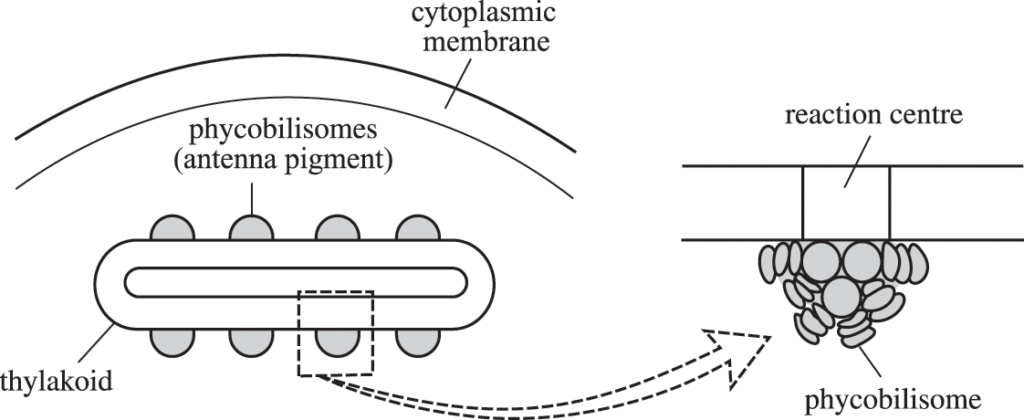
- Prokaryotic photosynthetic organisms: These organisms have their pigment systems or photosystems located in the cell membranes or the thylakoid membranes in the cytosol itself. There are no special organelles called chloroplasts in the prokaryotes.
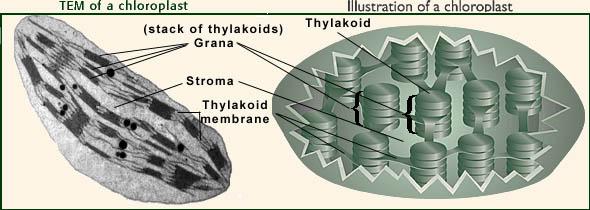
- Eukaryotic photosynthetic organisms (like green plants): These organisms have their pigment systems or photosystems located in the thylakoids of the chloroplast membranes. Eukaryotes have specialized organelles called chloroplasts (chlorophyll-containing plastids) in their cells.
Photosynthetic Pigments
There are 2 types of photosynthetic pigments in the oxygenic photosynthesizing organisms. They are as follows:
- Porphyrin-derivatives (Chlorophyll in plants and Phycobilin)
- Carotenoids
-
Chlorophyll
Chlorophyll is the green-colored pigment essential for photosynthesis. Let’s try to list its major characteristic features and roles of it.
- Nature: Lipid
- Location: Embedded in the thylakoid membrane
- Types: 9 types as identified by Arnoff and Allen in 1966 (chlorophyll-a, b, c, d, e, bacteriochlorophyll a, b, chlorobium chlorophyll-650,666). Bacteriochlorophylls are present in the anoxygenic photosynthetic organisms.
- Primary photosynthetic pigment: Chlorophyll-a
- Presence: In all oxygenic photosynthetic organisms
- Absorption range: Visible (blue and red) and IR (Infra-red)
- Ion important for its biological functioning: Magnesium ion (Mg2+)
- Structure: Chlorophyll-a, b, and d are “chlorin” derivatives; c is a “porphyrin” derivative.
- Chlorophyll Tail: Oxygenic photosynthetic organisms have a “phytol” tail in their chlorophyll; anoxygenic photosynthetic organisms have a “geranyl” tail in their bacteriochlorophylls.
- Role:
- Main pigment for capturing and storing solar energy
- Photochemical reaction (chlorophyll-a is present in the photochemical reaction center i.e. PCRC. Chlorophyll a, b, c, and d play a role in resonance energy transfer.)
-
Carotenoids
Carotenoid is the photosynthetic pigment essential for working in conjunction with chlorophyll. Let’s try to list its major characteristic features and roles of it.
- Nature: Lipid-soluble
- Types: More than 150
- Presence: In all oxygenic photosynthetic organisms
- Absorption range: 400-500nm
- Forms: Carotene (simple hydrocarbon, for example, beta carotene) and xanthophyll (oxygenated hydrocarbon, for example, lutein)
- Roles:
- In excitation and resonance energy transfer
- Photo-protection (work as a free-radical scavenger as well as a quencher)
-
Phycobilins
Phycobilins aren’t present in all the oxygenic photosynthetic organisms. They have a tetrapyrrole structure (no need for magnesium ion).
- Types: Phycoerythrobilin, Phycocyanobilins, Allophycocyanobilins
When these pigment molecules combine with a water-soluble protein, they form the pigment-protein complex (phycobiliproteins, like phycoerythrin and phycocyanin). - Location: Since these phycobiliproteins are water-soluble, they can’t exist in the membranes like chlorophyll and carotenoids. Therefore, phycobilin pigments as their pigment-protein complex aggregate into clusters and adhere to the membrane. These clusters are called phycobilisomes.
- Exceptional Note: These are the only pigments that are associated with protein molecules.
- Role: Resonance energy transfer
- Types: Phycoerythrobilin, Phycocyanobilins, Allophycocyanobilins
Organelle for Photosynthesis
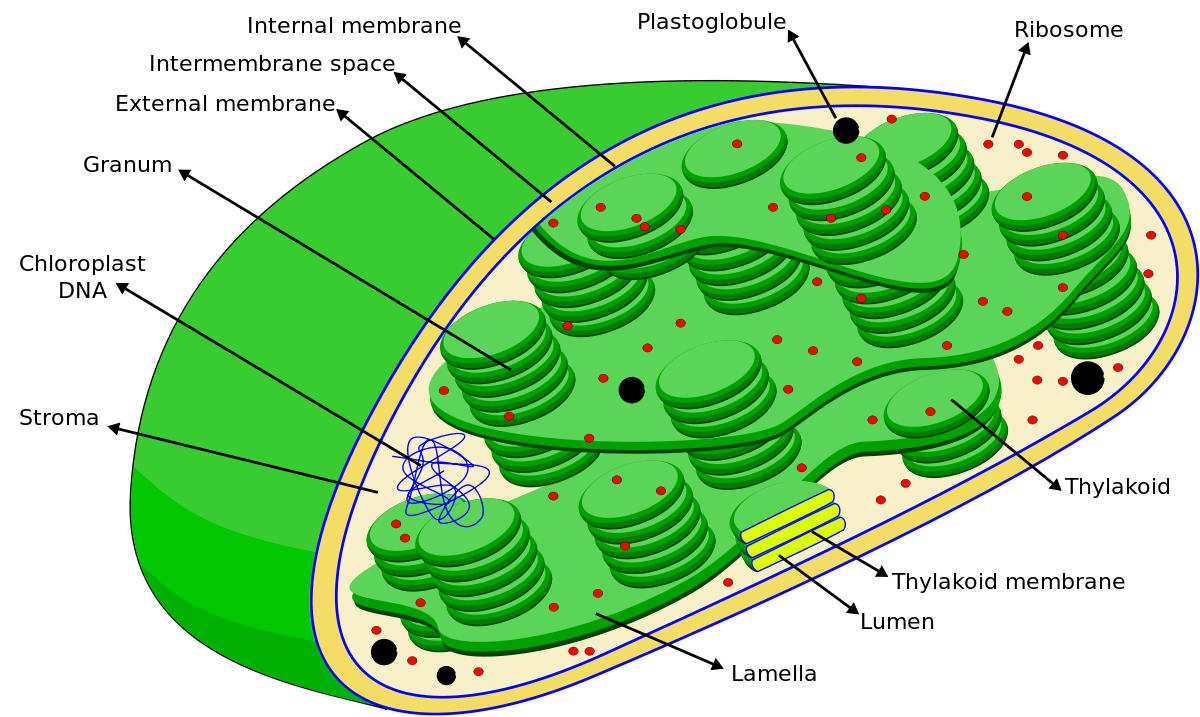
What is chloroplast? In eukaryotes, photosynthesis occurs in chloroplasts as they are the designated organelles for the photosynthesis process. There are nearly 10-100 chloroplasts in a typical plant cell.
Inside chloroplasts are the thylakoids; the very specific site for the light capturing. The structure of this very unique part of the chloroplasts is briefly discussed here.
Thylakoid is a membrane-bound compartment in the chloroplasts of eukaryotic organisms. They are also present as such in the cytosol of cyanobacteria (cyanobacteria don’t have chloroplasts but they have simply thylakoids).
These thylakoids are the “primary site of the 1st stage of photosynthesis. i.e. “photochemical reaction” or popularly called “light-dependent reactions of photosynthesis”. The main components of the thylakoid are membrane, lumen, and lamellae. The chlorophyll molecules are present inside these thylakoid membranes.
Light-dependent Reactions
The first stage of photosynthesis is popularly called “light-dependent reactions”. We choose to call this stage the “1st stage: PHOTOCHEMICAL REACTION STAGE”. It is also called the “thylakoid reaction stage” or “hill’s reaction”.
This stage is marked by 3 essential steps of photosynthesis: Oxidation of water, reduction of NADP+, and ATP formation. The site where these reactions occur is the lamellar part of the chloroplast. The units of light-dependent reactions are quantosomes.
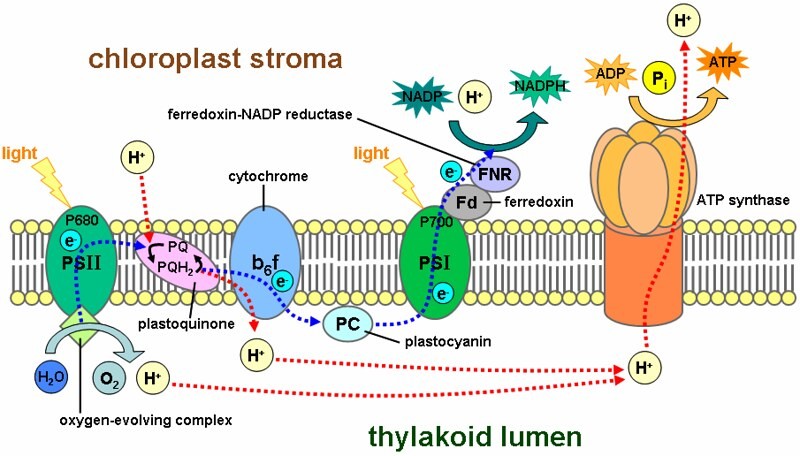
Let’s discuss this stage under some subheadings:
-
Wavelengths of light involved and their absorption
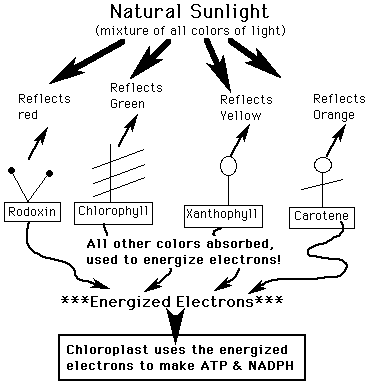
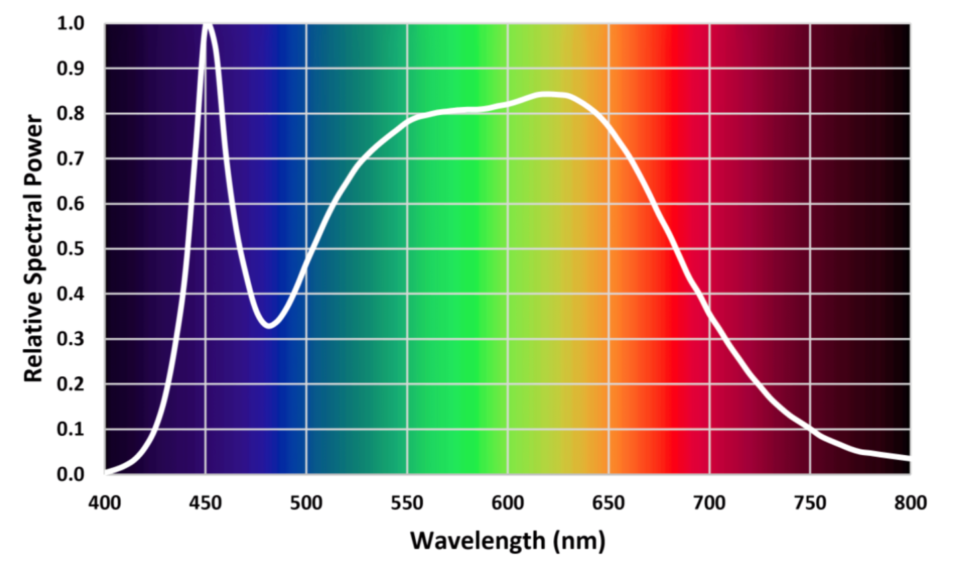
The white light that reaches Earth has subparts of different wavelengths together constituting the visible spectrum (390-760nm). But the photosynthetic organisms specifically use a subpart called PAR (Photosynthetically Active Radiation).
PAR ranges from 400-760nm. Blue light is 470-500nm while red light is 660-760nm). The green light (500-580nm) is reflected back by the plants and this is the reason that plants appear green in color. Blue-green light is not used, only blue light is used.
-
Absorption spectrum and action spectrum
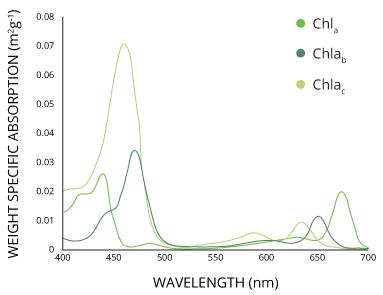
- Absorption Spectrum: This is a pigment-specific entity or terminology. To find the absorption spectrum of a pigment, you need to plot “the amount of absorption of different wavelengths of light by that particular pigment”. The graph has the “wavelengths of light (in nanometers/nm)” on the X-axis and the “percentage of light absorption” on the Y-axis.
-
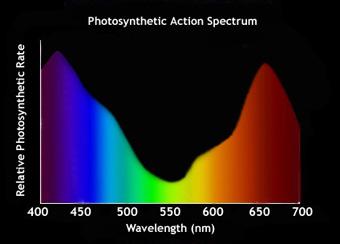
- Action Spectrum: To find the action spectrum of a pigment, you need to plot the “effectiveness of the different wavelengths of light in stimulating photosynthesis process”. The graph has the “wavelengths of light (in nanometers/nm)” on the X-axis and the “rate of photosynthesis (measured as oxygen released)” on the Y-axis. When you superimpose the action spectrum of photosynthesis with the absorption spectrum of the specific pigment, you can find the contribution of each different wavelength in the photosynthesis rate, photosynthetic efficiency, and photosynthetic productivity.
IMPORTANT NOTE: The absorption spectrum is calculated for any of the many pigments involved in photosynthesis. Contrastingly, the action spectrum is calculated only for the photochemical reaction performing pigment i.e. chlorophyll-a present at the reaction center. We identify the progress of photochemical reactions as the “evolution of oxygen gas” that primarily happens at the reaction center where only chlorophyll-a is present. Since the action is directly correlated to the specific excitation of chlorophyll-a molecule, the action spectrum is scientifically calculated only for this chlorophyll-a.
Examples:
- Absorption spectrum of chlorophyll-a: 430 nm (blue), 660nm (red) {more absorbance at 660 nm)
- Absorption spectrum of chlorophyll-b: 430 nm (blue), 660nm (red) {more absorbance at 430 nm)
-
What actually happens in the Light-dependent reaction
Let’s briefly describe what actually happens here.
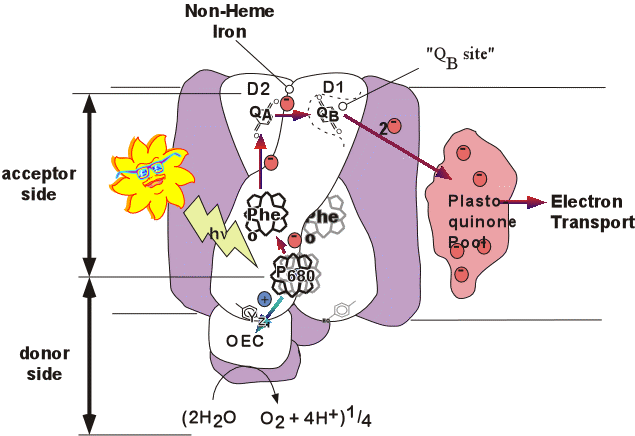
- 1 photon is absorbed by 1 molecule of the chlorophyll (P680) and simultaneously 1 electron is lost here.
- The electron flow of the photochemical reaction begins here.
- The electron is transferred to D1/D2 protein, then to a modified form of chlorophyll and “pheophytin”.
- After that, it’s transferred to plastoquinone A and then B.
- Roles of this electron flow:
- Initiates an electron flow down an electron transport chain.
- Ultimately aids the NADP reduction to NADPH.
- Creation of a proton gradient across the chloroplast membrane.
- Further on this proton gradient is exploited by the ATP synthase for the generation of ATP molecules.
-
Water photolysis
Now, if you are wondering how the first electron lost by the 1st chlorophyll is replenished to keep this cycle going, read on. The answer to this query is “photolysis of water molecules”. The chlorophyll molecule regains the lost electron when the “oxygen-evolving complex” in the thylakoid membrane carries out the photolysis of water. The chlorophyll molecule ultimately regains the electron it lost when a water molecule is split in a process called photolysis, which releases oxygen.
Many scientists had a doubt about the source of oxygen in photosynthesis. Some speculated the oxygen atom of the CO2 gas is the source of oxygen post-photosynthesis. But it was the collective contribution of some 4 scientists that gave clarity on this topic.
C.B. Van Niel worked on purple photosynthetic bacteria (Chromatium vinosum) and found out that the source of oxygen is the oxidation of water molecules (‘indirect evidence’). While Ruben, Hassid, and Kamen carried out an isotopic study that gave ‘direct evidence’ of oxygen-evolving from H2O molecules and not CO2 molecules.
Hydrolysis of 2 molecules of water leads to the evolution of 1 molecule of oxygen gas. The photosynthesis equation for light-dependent reactions (non-cyclic electron flow) or the chemical formula for photosynthesis:
2 H2O + 2 NADP+ + 3 ADP + 3 Pi + light → 2 NADPH + 2 H+ + 3 ATP + O2
-
Z scheme
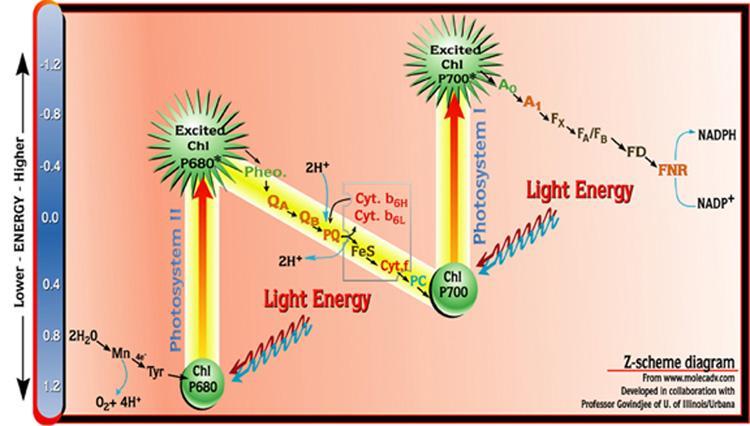
The photochemical reaction (or the light-dependent reactions) can be classified as:
-
- Cyclic reaction: Only 1 photosystem (PS1) is involved. (Photon excites P700 in PS1, electron reaches Fe-S, then Ferredoxin, then Plastoquinone and then Cyt b6f complex and then Plastocyanin). Since in the solo involvement of PS1 here, the electron flow becomes cyclic. And this phosphorylation process is called cyclic phosphorylation. It happens in the stroma lamellae when light beyond 680nm is available.
- Non-cyclic reaction: Both photosystems (PS1 and PS2) are involved. (Photon excites P680 in PS2, the electron is lost and transferred to pheophytin, then sent on a roller coaster (Z-scheme). Within the z-scheme, the final redox reaction enables the reduction of NADP+ to NADPH. And the chemiosmotic potential generation via proton pumping proton across the membrane and into the thylakoid lumen ensures ATP synthesis.
Photochemical Reactions: Cyclic vs. Non-cyclic phosphorylation |
||
|---|---|---|
| Feature | Cyclic phosphorylation | Non-cyclic phosphorylation |
| Oxidation of water | No | Yes |
| Generation of oxygen gas | No | Yes |
| Reduction of NADP | No | Yes |
| Need for final electron donor/acceptor | No | Yes (Donor=H2O, Acceptor=NADP+) |
| ATP production | Yes | Yes |
| Photosystems involved | Only PS1 | Both PS1 and PS2 |
Data Source: Akanksha Saxena of Biology Online
Light-Independent Reactions (Carbon-fixation Reaction)
Also called the carbon fixation process, the “light-independent reactions” is a misnomer as Science has now already proved that the second stage of photosynthesis isn’t really light-independent reactions. Though it doesn’t need direct light, indirect light is involved even in this process. We choose to label this stage of photosynthesis as the “2nd stage: CARBON-FIXATION REACTION STAGE”, which is also called:
- Calvin Cycle or “stromal reaction” as it manifests in the stroma part of the chloroplast
- “C3 Cycle” or the “reductive pentose phosphate cycle”
-
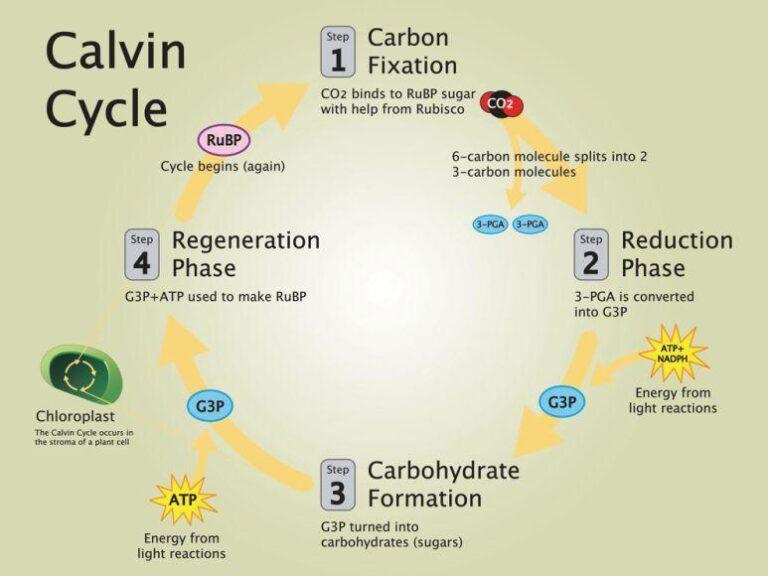
Calvin cycle
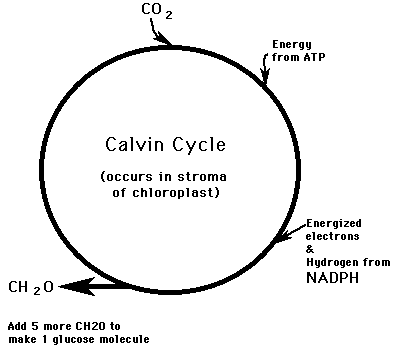
The inputs for the Calvin cycle in most plants come from the previously occurred photochemical reaction.
In this cycle, the carbon dioxide produced is fixed to a glucose molecule. To be very specific, the Calvin cycle directly doesn’t produce glucose, rather it produces glyceraldehydes-5-phosphate (G-3-P). Glucose is formed after these G-3-P molecules move into the cytosol from the chloroplast.
It consists of primarily 3 steps as follows:
- Carboxylation: Acceptance of CO2 by RuBP which is a 5-carbon compound and the CO2-acceptor). 2 molecules of 3-phosphoglycerate are generated as the result of the carboxylation process.
- Reduction: Generation of 3C/4C/5C/6C/7C molecules.
- Regeneration of RUBP: 3 molecules of RuBP are regenerated.
In totality, 3 molecules of CO2 produce 1 molecule of G-3-P. This uses 9 ATPs and 6 NADPHs. And, 6 molecules of CO2 produce 2 molecules of G-3-P which further produce 1 molecule of glucose. This uses 18ATPs and 12 NADPHs.
The main enzyme is RuBisCo. It’s a multi-enzyme complex with 8 large and 8 small subunits. The substrates for this enzyme are CO2, O2, and RuBP. An essential ion for the biological functioning of this enzyme: Mg2+. The role of RuBisCo is that it captures carbon dioxide gas from the atmosphere and utilizes the NADPH from the 1st stage (photochemical reaction/light-dependent reaction stage) to fix the CO2.
The equation of dark reaction of photosynthesis/light-independent reaction stage/2nd stage is:
3 CO2 + 9 ATP + 6 NADPH + 6 H+ → C3H6O3-phosphate + 9 ADP + 8 Pi + 6 NADP+ + 3 H2O
The simple carbon sugars formed via the C3 cycle are utilized by the biological systems to form complex organic compounds like cellulose, precursors for amino acids synthesis and thereby proteins, precursors for lipids, and the source of fuel for respiration.
Important Point To Note: It happens in all the photosynthetic organisms as the basic carbon-fixation step.
-
Carbon concentrating mechanisms
There are many carbon concentrating mechanisms to increase the carbon dioxide levels and the carbon fixation process like C4, CAM, etc.
-
- Hatch and Slack cycle, C4 cycle, co-operative photosynthesis, CO2-enrichment cycle.
- Doesn’t happen in all photosynthetic organisms. Rather it happens in conjunction with the C3 cycle in some 4% of angiosperm families.
- Most commonly angiosperm families that witness C4 cycle: Poaceae, Cyperaceae.
- First explained by: Hatch and Slack (hence also called the Hatch and Slack cycle). They worked on the maize plant.
- Role: Endow the ability to efficiently conduct photosynthesis in plants of the semi-arid regions by making them well adapted.
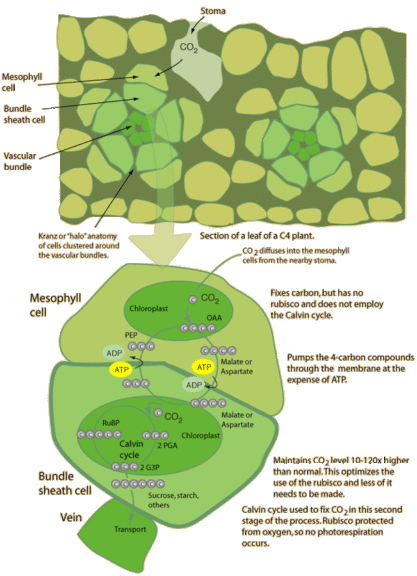
- Mechanism: By separation of photosynthesis stages in 2 types of cells (mesophyll cells and bundle sheath cells). The light reaction is restricted to the mesophyll cells and the CO2 fixation happens in the bundle sheath cells. This phenomenon is also termed as “chloroplast dimorphism” in C4 plants. The Kranz anatomy is visible here.
- Why does the need arise in the first place? – In semi-arid regions or regions with very hot and dry environmental conditions, plants are forced to close their stomata in order to limit water loss. Under such harsh conditions, the intake of CO2 decreases during the day as the stomata are forced closed. This might lead to no CO2 intake and hence no CO2 fixation (2nd stage of photosynthesis). But the 1st stage of photosynthesis keeps running as it doesn’t depend on stomata opening or closure. This means that a continuous oxygen evolution happens which can lead to oxygen saturation. As we know that RuBisCo enzymes use O2 gas as substrate too, and this can lead to an increased rate of photorespiration by the oxygenase activity of RuBisCo. This further decreases the carbon fixation. This is a very big issue if not resolved. Hence, for situations like these, carbon concentrating mechanisms have evolved in some families of plants to concentrate and enrich the CO2 concentration in the leaves of these plants under such conditions.
- Important enzyme for CO2 concentration: PEP carboxylase
- CO2 is first added to a three-carbon compound called phosphoenolpyruvate (PEP) in this cycle. This leads to the formation of a four-carbon (4C) molecule called oxaloacetic acid or malate. This step happens in the mesophyll cells of the leaves.
- After that, these 4C compounds are transferred to the bundle sheath cells where the normal C3 cycle fixes them into glucose molecules.
- This CO2 concentrating mechanism works on the “principle of separating the RuBisCo enzyme from the O2-generating photochemical reactions” in order to reduce the rates of photorespiration and simultaneously increase the rates of CO2 fixation.
- This increases the photosynthetic capacity of the leaf/leaf photosynthesis.
- When the high light and high-temperature conditions are dominant, C4 plants prove more photosynthetically efficient than C3 plants as they produce more sugar molecules in such conditions.
- Examples of C4 plants: Many crop plants like wheat, maize, rice, sorghum, millet, and sugarcane.
- Number of ATPs required: 12 (for C-enrichment) + 18 (for C-fixation)= 30 ATPS for 1 glucose production
- Number of NADPH required: 18 NADPH for 1 glucose production
- Hatch and Slack cycle, C4 cycle, co-operative photosynthesis, CO2-enrichment cycle.
-
- CAM Cycle
- Some plants resort to another mechanism called the CAM cycle in conjunction with the C3 cycle to fix carbon dioxide.
- Examples: xerophytes like cactus photosynthesis, and most succulents.
- Around 16,000 species of plants utilize the CAM mechanism
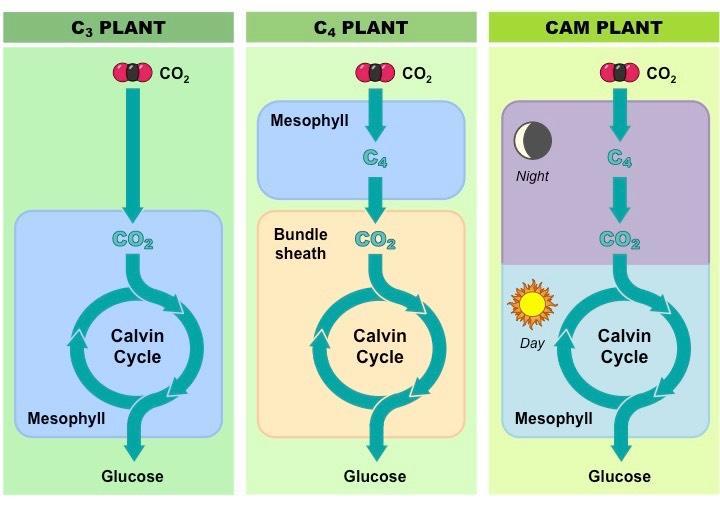
- Mechanism: Utilize PEP carboxylase to capture carbon dioxide. In contrast to the C4 cycle where there is a “spatial separation of the 2 processes of CO2 reduction to PEP and PEP fixation to glucose”, CAM plants display a “temporal separation of the 2 listed processes”.
- CAM Cycle
-
-
On land
-
Land plants display different types of photosynthesis based on their requirements and environmental constraints. They are C3, C4 +C3, and CAM+ C3 types of photosynthesis.
-
-
In water
-
Aquatic plants and algae display some extra features in the photosynthetic machinery. These features further refine and define the smooth functioning and efficiency of photosynthesis.
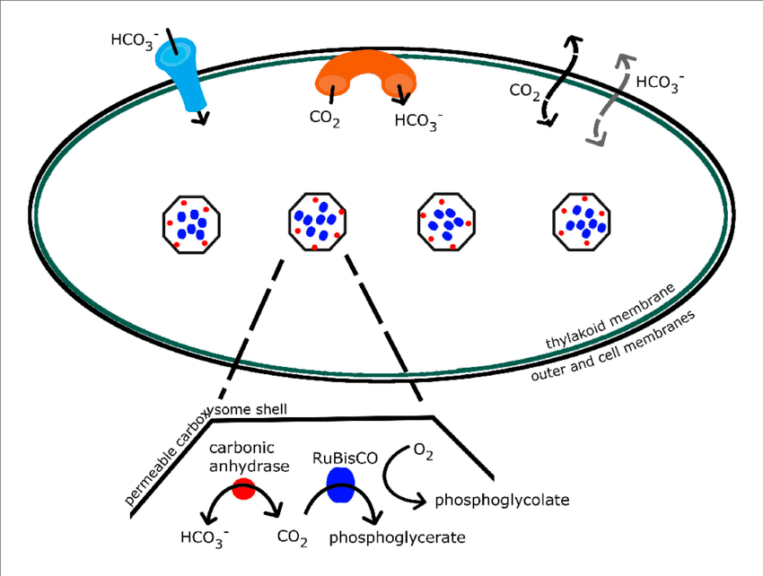
Example: Cyanobacteria photosynthesis – cyanobacteria have carboxysomes that help in enriching the concentration of carbon dioxide around the RuBisCO enzyme. This directly increases the photosynthetic rates. The distinguished and specially enabled enzyme in the carboxysomes is called “carbonic anhydrase”. The carbonic anhydrase possesses the ability to evolve and release CO2 from the dissolved hydrocarbonate ions (HCO-). As soon as the CO2 is released, RuBisCo takes care that it doesn’t go to waste.
Order and Kinetics
There are innumerable reactions and processes involved in the biological mechanism of photosynthesis. Besides the normal flow of photosynthesis, there are some plant-specific and condition-specific additional steps that further complicate the mechanism.
Since every biological mechanism has a lot of enzymes, factors, cofactors, substrates, and entities involved, photosynthesis is no different.
Let’s try to list some kinetics-specific pointers that may help.
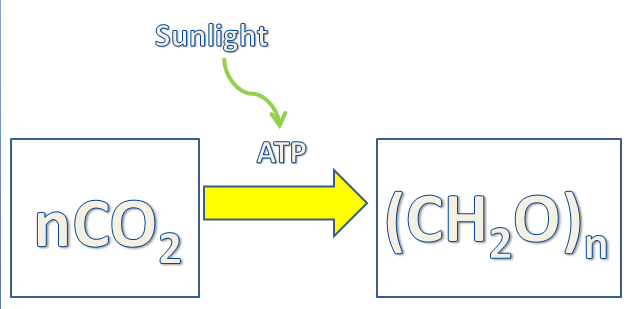
- The chemical process of photosynthesis doesn’t always include the “evolution of oxygen gas”. This is so because there’s an anoxygenic type of photosynthesis too. So the normal equation of photosynthesis is:

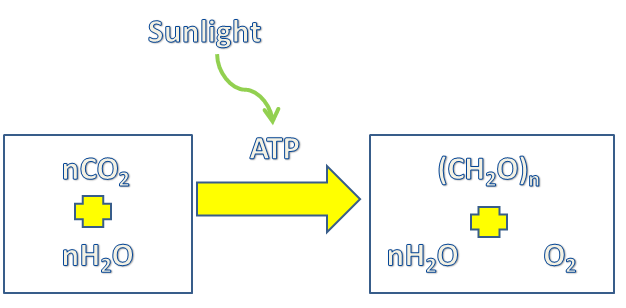
Figure 23: Equation of photosynthesis. Image Source: Akanksha Saxena of Biology Online - The equation of oxygenic photosynthesis takes into account the photolysis of water as well as the evolution of oxygen gas. Look at the equation below.
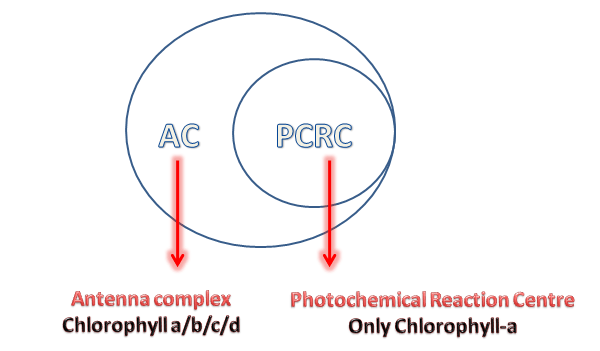
Figure 24: Equation of oxygenic photosynthesis. Image Source: Akanksha Saxena of Biology Online - Photosynthetic Photochemical Reaction Centre (PCRC) and Antenna Complexes: Only chlorophyll-a is present at the PCRC, while all the other chlorophyll molecules (b, c, d) are present at the antenna complex. The precise role of these antenna complex pigments is to deliver the extra energy which is needed at the reaction center for extracting the electrons from the H2O (e- donor).
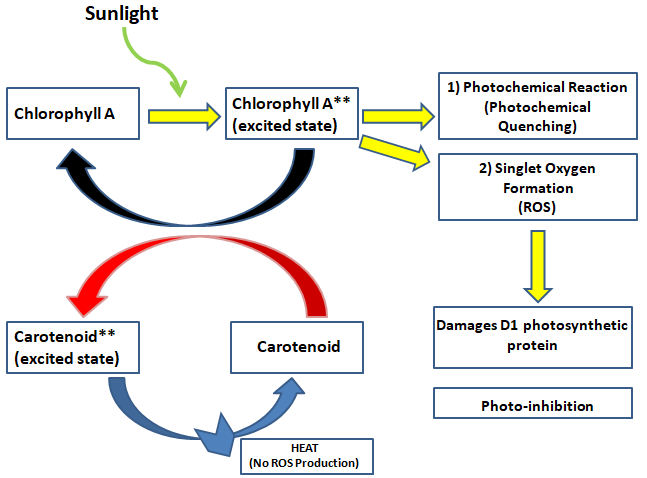
Figure 25: PCRC and AC in the photosynthetic machinery. Image Source: Akanksha Saxena of Biology Online - Photo-protection mechanism of Carotenoids: Although we like to credit chlorophylls for all the major responsibilities of photosynthesis, carotenoids serve an indispensable role that shouldn’t be ignored.
Figure 26: The flowchart shows how carotenoids maintain the order of photosynthesis by continuously tacking the excited state of chlorophyll molecules. If not tackled, it can lead to two dangerous consequences. By the intervention of carotenoids, although heat is produced, no ROS production happens or at least it’s minimized. Image Source: Akanksha Saxena of Biology Online
Evolution
As discussed in the overview and starting of this article, the early photosynthetic organisms must have been primarily “anoxygenic” in nature. These bacteria used some other source than water molecules as their primary electron donors. Even the geological evidence aligns with this fact as the early atmosphere of Earth was highly reducing in nature. Some speculated organisms of the early evolutionary phase are :
- Green sulfur bacteria (Electron donor= hydrogen and sulfur)
- Purple sulfur bacteria (Electron donor= hydrogen and sulfur)
- Green nonsulfur bacteria (Electron donor= various amino and other organic acids)
- Purple nonsulfur bacteria (Electron donor= variety of nonspecific organic molecules)
After this, some filamentous photosynthetic organisms are expected to have evolved. This is scaled to be an occurrence of some 3.4 billion years old timeline. It is around 2 million years ago that oxygenic photosynthesis is believed to have evolved.
The modern and more commonly known photosynthesis in plants and most of the photosynthetic prokaryotes= Oxygenic (Electron donor= Water molecules)
Symbiosis and the origin of chloroplasts
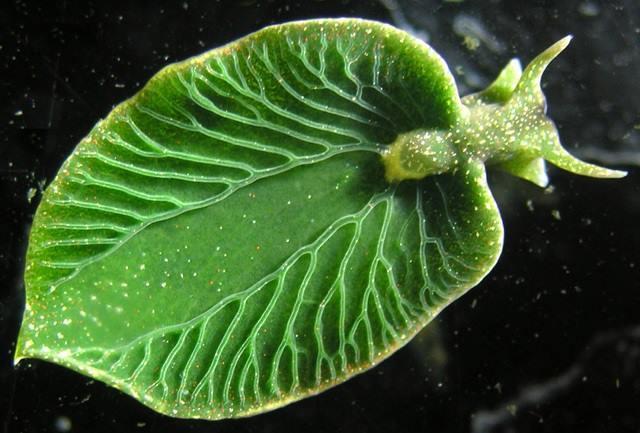
There are some animal groups that have the ability to form and establish symbiotic relationships with photosynthetic organisms. By establishing such a relationship, these organisms can directly rely upon their photosynthetic partner for energy and food requirements. Some examples of such animal groups are:
- Corals
- Sponges
- Sea anemones
- Marine mollusks (example: Elysia viridis & Elysia chlorotica)
- Fungi photosynthesis (Lichens)
When such symbiotic relationships are established, it’s sometimes observed that some genes of the plant cell’s nucleus get transferred to the animal cell. (Observed in some slugs).
-
Origin of Chloroplasts
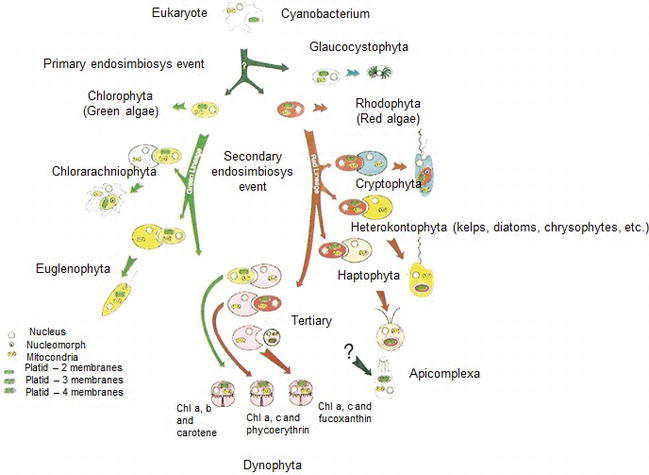
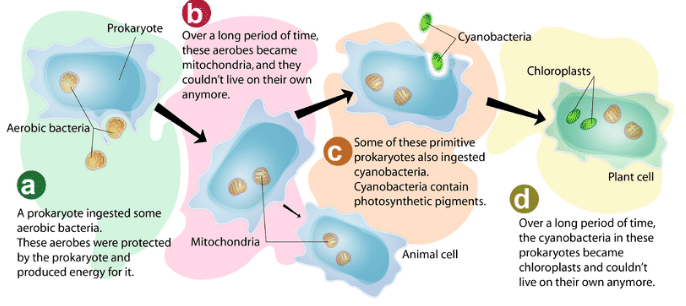
Such symbiosis is popularly claimed to be the source of chloroplast evolution. As we notice many similarities between the photosynthetic bacteria and chloroplasts, the evolution of chloroplasts is often hinted to have occurred from these bacteria. Some of the common features between the 2 are:
- Circular chromosome
- Prokaryotic-type ribosome
- A similar set of proteins in the photosynthetic reaction center
It is for all these commonalities the “endosymbiotic theory” had been proposed for the evolution of chloroplasts and mitochondria in the eukaryotic cells. According to the endosymbiotic theory, the early eukaryotic cells are believed to have acquired the photosynthetic bacteria by the process of endocytosis). Those early eukaryotic cells after acquiring the photosynthetic bacteria transformed to be self-sustainable and became the “first plant cells”. (Mitochondria photosynthesis is true, they are associated with respiration!)
Photosynthetic eukaryotic lineages
Photosynthetic eukaryotic lineages include:
- Glaucophytes
- Chlorophytes
- Rhodophytes
- Cryptophytes (some clades)
- Haptophytes (some clades)
- Dinoflagellates & chromerids
- Euglenids—clade Excavata (unicellular)
Cyanobacteria and the evolution of photosynthesis
Almost all the prokaryotes carry out anoxygenic photosynthesis in contrast to cyanobacteria, which perform oxygenic photosynthesis. This ability to carry out oxygenic photosynthesis is speculated to have evolved at least 2450–2320 million years ago. The first photosynthetic cyanobacteria might not have been oxygenic as Earth’s atmosphere had no oxygen then.
This topic still requires more scientific study to bring out conclusive results. From the paleontological evidence, it is claimed that the 1st cyanobacteria evolved around 2000 Ma.
For the initial years of the Earth’s oxygen-rich environment (after the oxygen-evolving mechanism evolved), cyanobacteria are claimed to be the “principal primary producers of oxygen”. Even to date, cyanobacteria have been proven vital for marine ecosystems. They’re the primary producers of oxygen in oceans.
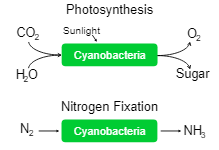
Cyanobacteria also fix nitrogen electrons fixation and play a role in biological nitrogen cycles.
Experimental History
We will list the long experimental history in deciphering the extensive photosynthesis process through the ages.
Discovery, Refinements, and Development of the concept
Find out the discovery, refinements, and development of photosynthesis as summarized in the table below:
Experimental History – Photosynthesis |
||
|---|---|---|
| No. | Scientist | Contribution |
| 1 | Stephen Hales | Role of air and light in building a plant body. |
| 2 | Joseph Priestley | Role of air in the growth of green plants. |
| 3 | Jan Ingenhousz | Role of sunlight in the plant’s functioning of releasing oxygen. |
| 4 | Jene Senebier | The fact that plants utilize CO2. |
| 5 | N.T. de Saussure | The volume of CO2 consumed by plants=Volume of O2 liberated by plants. |
| 6 | Pelletier and Caventou | Coined the term “chlorophyll”. |
| 7 | F.F. Blackman | Photosynthesis= 2-step process (Light and Dark Reaction Concept), Gave the “Law of limiting factors”. |
| 8 | Warburg | Flashing experiments in Chlorella. |
| 9 | Emerson and Arnold | Determined that the 1st stage of photochemical/light reactions has 2 distinct photochemical processes. (led to the elucidation of 2 different pigment systems) |
| 10 | Robert Hill | Proved that oxygen evolution doesn’t require the presence of CO2. The presence of sunlight, water, and a suitable hydrogen acceptor is enough chloroplasts to release oxygen. The light reaction (1st stage) is often called Hill’s reaction in his memory and honor. |
| 11 | Van Niel | Proved that the source of oxygen is H2O and not CO2. Also proved that the hydrogen released from oxidizable compounds reduced carbon dioxide to carbohydrates. |
| 12 | Ruben, Hassid, Kamen | Proved that the source of oxygen is H2O (by doing radioactive studies). |
| 13 | Julius von Sachs | Photosynthesis site in plants= Green parts where chlorophyll is present. |
| 14 | T.W. Engelmann | Described the importance of the red and blue wavelengths of light. Also described the 1st action spectrum of photosynthesis |
| 15 | Melvin Calvin | Described the reactions that convert the CO2 into sugars. C3 or Calvin cycle is named in his honor. |
| 16 | M.D. Hatch and C.R. Slack | Described the C4 cycle and hence the C4 cycle is also called Hatch and Slack cycle. |
| 17 | Hill and Bendall | Proposed scheme of light reaction. |
| 18 | Huber et al. | Studied 3-D structure of reaction center. |
| 19 | Charles Reid Barnes | Coined the terms: Photosyntax and photosynthesis. |
Data Source: Akanksha Saxena of Biology Online
C3 : C4 photosynthesis research
Several studies were conducted using isotopes of radioactive elements to identify the various aspects of the photosynthetic process. A number of organisms like Chlorella, Stellaria media, Cladophora, Spirogyra, Rhodopseudomonas, sulfur bacteria, green plants like maize, etc have been used to understand the photosynthesis process over the years. Gas exchange studies, isotopic studies, light spectrum studies, radioactive studies, plant anatomical and physiological studies, studies involving roles of carbon dioxide and water, etc have all together opened the gates for our deeper understanding of this topic.
Factors
The 3 main factors that directly affect the photosynthesis process are:
- Light irradiance and wavelength
- Carbon dioxide concentration
- Temperature
Although there are many more corollary factors, these 3 are the most important ones.
-
Light intensity (irradiance), wavelength, and temperature
Light is an essential factor for photosynthesis. It directly affects the rate of it. There are 3 different parameters that we should look into:
- Light intensity: Optimum light intensity varies from plant to plant. There are 2 types of plants based on the intensity of light they optimally need to grow under.
- Sciophytes: Grow under “diffuse” light. Example: Oxalis
- Heliophytes: Grow under “direct: light. Example: Dalbergia
- Light quality: PAR as previously discussed is the quality or the fraction of light energy that is ‘photosynthetically active’ in nature. It ranges from 400-700nm in wavelength.
- Duration of light: This parameter doesn’t affect the rate of photosynthesis but affects the total photosynthetic output.
- Light intensity: Optimum light intensity varies from plant to plant. There are 2 types of plants based on the intensity of light they optimally need to grow under.
-
Temperature
Temperature is another very important factor for photosynthesis. The carbon dioxide fixation stage (dark reactions) is affected by the temperature. The optimum temperature range is 20-25°C for the C3 plants. The optimum temperature range for C4 plants is a little higher ranging from 30-45 °C.
-
Carbon dioxide levels and photorespiration
Carbon dioxide concentration is the major factor in determining the rate of photosynthesis. There is no carbon-dioxide enriching system in C3 plants like the C4 plants. So, if you increase the concentration of CO2 in the system, the photosynthetic rate of C3 plants will increase as the CO2 concentration increases. On the other hand, the photosynthetic yield of the C4 plant won’t increase in such a scenario.
- CO2 Compensation Point: A stage in CO2 concentration when there’s no absorption of CO2 by the illuminated plant part.
Featuring… “The curious case of RuBisCO and PEP Carboxylase”
Imagine an equal concentration (50-50%) of the two isotopes of carbon, C-12 and C-13, in the form of 12CO2 and 13CO2, made available to both C3 and C4 plants. Now, can you tell which isotope of the carbon will be fixed more or less by the two types of photosynthetic organisms? Can you guess if there would be a “preferable” isotope between the two? Do you think C3 plants will fix the 12CO2 and 13CO2 equally or unequally? Or do you think the 12CO2 and 13CO2 incorporation would have a biased ratio in any of the two (C3/C4 plants)????
The answer to this lies in the major carbon fixing enzyme involved.
- C3 plants: Major C-fixing enzyme is RuBisCo and RuBisCo has a “discriminatory ability” to preferably fix 12CO2 and not 13CO2. Hence, you will find more 12CO2 fixed than 13CO2 in the C3 plants.
- C4 plants: Major C-fixing enzyme is not RuBisCo but PEP Carboxylase. PEP Carboxylase has “no discriminatory ability”. So, you’ll find an almost equal proportion of 12CO2 and 13CO2 getting fixed in C4 plants. So, in comparison to C3 plants, the chances of getting 13CO2 fixed are more in C4 plants.
Answer the quiz below to check what you have learned so far about photosynthesis.

References
- Rutherford, A.W., Faller, P. (Jan 2003). “Photosystem II: evolutionary perspectives”. Philosophical Transactions of the Royal Society of London. Series B, Biological Sciences. 358 (1429): 245–253. doi:10.1098/rstb.2002.1186. PMC 1693113. PMID 12594932.
- Arnon, D.I., Whatley, F.R., Allen, M.B. (1954). “Photosynthesis by isolated chloroplasts. II. Photophosphorylation, the conversion of light into phosphate bond energy”. Journal of the American Chemical Society. 76 (24): 6324–6329. doi:10.1021/ja01653a025.
- Ehrenberg, R. (2017-12-15). “The photosynthesis fix”. Knowable Magazine. Annual Reviews. doi:10.1146/knowable-121917-115502. Retrieved 2018-04-03.
- El-Sharkawy, M.A., Hesketh, J.D. (1965). “Photosynthesis among species in relation to characteristics of leaf anatomy and CO2 diffusion resistances”. Crop Sci. 5 (6): 517–521. doi:10.2135/cropsci1965.0011183x000500060010x.
- Earl, H., Said Ennahli, S. (2004). “Estimating photosynthetic electron transport via chlorophyll fluorometry without Photosystem II light saturation”. Photosynthesis Research. 82 (2): 177–186. doi:10.1007/s11120-004-1454-3. PMID 16151873. S2CID 291238.
©BiologyOnline.com. Content provided and moderated by Biology Online Editors.