|
|
Dictionary » O » Ovum OvumDefinition noun, plural: ova (1) Female gamete; female sex cell; female reproductive cell. (2) Egg cell.
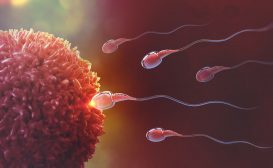
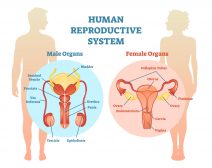
In humans, the ovum is the largest cell visible to the naked eye. It is about 0.1 mm in size in humans. It is produced in the ovary and eventually released into the fallopian tube during ovulation. It consists of protoplasm (with some yolk) surrounded by a think cell wall (vitelline membrane). It may also have a noncellular covering (zona pellucida). Within the cell is a large nucleus (germinal vesicle), with a nucleolus (germinal spot). The cell is haploid so that when a sperm cell fertilizes it, it forms a diploid zygote.
Compare: sperm cell ![]()
Please contribute to this project, if you have more information about this term feel free to edit this page ![]()
Results from our forumHuman ReproductionI read a line in my text stating "after 14 days of ovulation , if ovum is not fertilized , the lining of uterus degenerates and menstruation begins." Why does the endometrium degenerates ? Please Help!! :?
See entire post
Sperm and White blood cellsHi Guys, I have been trying to research about the type of Leukocyte present in 'attacking' the sperm cells during its journey towards the ovum. So far I have had no luck. Now, I would really appreciate it if someone could further explain this process in more detail or give me a resource that ...
See entire post
How does seeds formed after pollination?I guess fertilization can occur many times within one plant. Some flowers might have several ovules. Each ovule contains one ovum. When pollen grains land on the stigma, more than one pollen tubes can be formed and each carries a male gamete to one ovule.
See entire post
Chromosomes And Heredity... gestation cannot describe the process. The answer lie between mitosis and fertilization. Fertilization occurs internally when the sperms meet the ovum as it passes dowm the oviduct and they fuse together. The nucleus of the sperm and the egg must be fused before the genetic materials of the both ...
See entire post
Centrosome... are not required for spindle formation during cell division. -What do they specifically do as microtubule organizing centres? Also in a human ovum (secondary oocyte) a pair of centrioles is absent. This does not seem to confer a selective disadvantage to the ovum.
See entire post
This page was last modified 07:54, 17 September 2009. This page has been accessed 24,834 times. |
© Biology-Online.org. All Rights Reserved.
Register | Login
| About Us | Contact Us | Link to Us | Disclaimer & Privacy