Organic compound
n., plural: organic compounds
[ɔɹˈɡænɪk ˈkɑmpaʊnd]
Definition: xxxx
Table of Contents
Organic Compound Definition
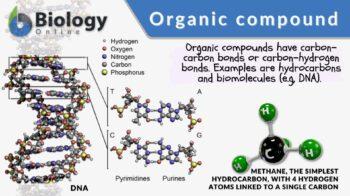
An organic compound is a compound that, in general, contains carbon covalently bound to other atoms, especially Carbon-Carbon (C-C) and Carbon-Hydrogen (C-H) (such as in hydrocarbons). A chemical compound refers to any substance made up of two or more elements that are chemically bonded together.
An element, in turn, refers to that comprised of only one type of atom. Elements that are held together by a chemical bond form a compound. One of the ways to classify compounds is by identifying them as either organic or inorganic.
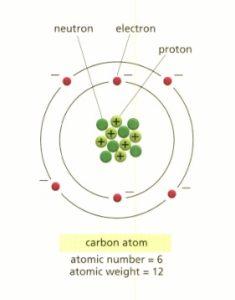
In general, an organic compound is a type of compound that contains a carbon atom. Conversely, an inorganic compound would be one that does not contain carbon.
Etymology: named after the early notion that organic compounds could only be synthesized in living organisms through vis-vitalis(a life-force)
Compare: inorganic compound
Vitalism
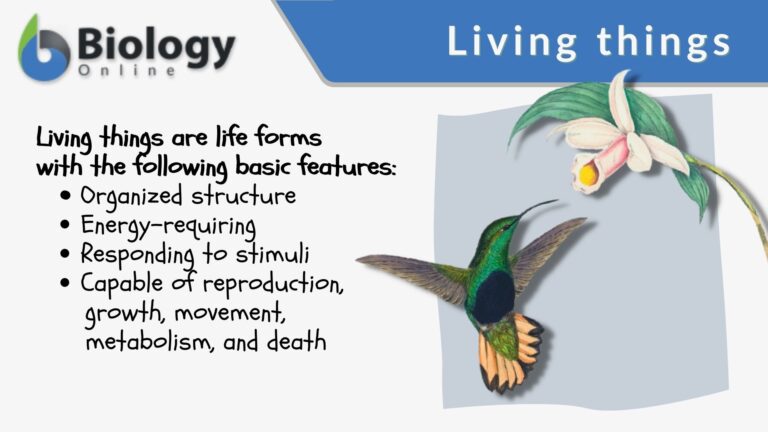
For many centuries, many people believed in vitalism, the prevailing notion that living things had a life force or a vital force – vis-vitalis — that set them apart from non-living things. This force supposedly enabled living things to produce certain chemicals. Otherwise, these chemicals would not be formed.
According to vitalism, only living organisms – since they possess vital force – would be the only ones capable of producing such compounds. Even Louis Pasteur 1822–1895, who helped put an end to spontaneous generation theory through his experiments on fermentation and whose work led to the inception of pasteurization, believed that fermentation was a vital action in which only life would be able to. (Ref.1)
Vitalists (supporters of vitalism) referred to such compounds as organic and called those that could be obtained by chemical manipulations inorganic.
Vitalism eventually lost its support when modern experiments contested its validity. One of them was Friedrich Wöhler 1800 – 1882 who discovered in 1828 that urea could be chemically produced from inorganic salts potassium cyanate and ammonium sulfate. Vitalists believed that urea was an organic compound in the urine and produced only by living organisms.
Living Things vs. Nonliving Things |
|
|---|---|
 |
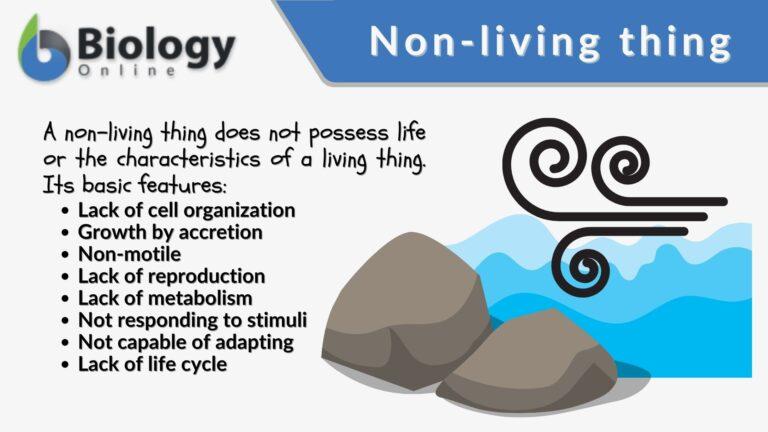 |
| Living things and nonliving things. Image prepared by Maria Victoria Gonzaga of Biology Online | |
Ambiguities
The modern definition of organic compounds is no longer based on their source. Rather, an organic compound is one in which the compound contains carbon atoms attached to other atoms via a covalent bond. However, chemists cannot reach a consensus as to the absolute definition of an organic compound. Defining an organic compound as any compound containing a carbon atom would include those that are classified as inorganic.
- Carbon-containing compounds considered inorganic are the following: carbonates, cyanides, cyanates, carbides, thiocyanates, carbon monoxide, and carbon dioxide.
- Allotropes of carbon (e.g. diamond, graphite, coal) are also an exception. They are made up of only one type of element, which is carbon, and therefore would fail to be categorized as an organic compound since they are not, in the first place, a compound, but a pure element.
Watch this vid about organic and inorganic compounds:
Organic Matter
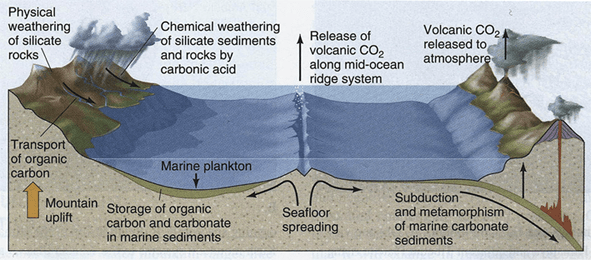
Compared with the other constituents that make up the Earth’s crust, the organic compounds make up a small percentage of it. Nonetheless, they are of vital importance because all living things are based on these compounds. Examples of organic compounds are carbohydrates, lipids, proteins, and nucleic acids.
Because living things are comprised of carbon-based compounds they can, therefore, be broken down into smaller, simpler compounds through decomposition when they die. Living organisms also excrete or secrete material that is considered organic material (matter). An organic matter pertains to any of the carbon-based compounds found in nature.
This organic matter from living things becomes a part of the environment. Thus, organic matter abounds in the ecosystem, e.g. soil ecosystem. It moves into the soil or into the mainstream water where it then serves as a source of nutrition for living organisms.
Classification of Organic Compounds
There are many ways to classify organic compounds. One of them is based on how they are synthesized. Organic compounds may also be classified as small organic molecules or large organic molecules (such as polymers) based on the size or length of the compound.
-
Natural vs. Synthetic Organic Compounds
- A natural organic compound (or simply natural compound) is one that is produced naturally, such as by plants or animals. Natural compounds are organic compounds that can be obtained from natural sources. They may be produced artificially but the process of doing so will make them rather expensive. Examples of natural compounds are sugars, enzymes, hormones, lipids, antigens, fatty acids, neurotransmitters, nucleic acids, proteins, peptides, amino acids, vitamins, lectins, some alkaloids and terpenoids, etc.
- A synthetic organic compound (or synthetic compound) is an organic compound that is prepared by chemical manipulations (chemical reactions). Synthetic compounds are obtained by allowing the compounds to interact in a chemical reaction. They may have a counterpart in natural compounds or without. Many polymers (e.g. plastics, rubbers) are produced synthetically.
-
Small Organic Molecules vs. Large Organic Compounds
- A small organic molecule (e.g., micromolecule) is a small organic compound with a molecular weight of < 900 daltons. (Ref.2) Many of them are involved in the regulation of a biological process. An example of a small molecule is pharmaceutical drugs.
- A large organic compound is exemplified by a polymer (or a macromolecule). A polymer is comprised of many repeated subunits.
- Note: Micromolecules should not be confused with biomolecules, which are relatively larger structures.
Research
The study of the properties and synthesis of organic compounds is known as organic chemistry. Biotechnology is a set of biological techniques developed through basic research and now applied to research and product development. Several organic compounds are produced through biotechnology, particularly by altering the DNA of an organism to express the desired organic compounds, e.g. insulin and other compounds that do not exist naturally.
Take the Organic Compound Biology Quiz!

Reference
- Bechtel, W. & Williamson, R. C. (2018). Vitalism. Retrieved from Link
- Macielag, M. J. (2012). “Chemical properties of antibacterials and their uniqueness” . In Dougherty TJ, Pucci MJ. Antibiotic Discovery and Development. pp. 801–2. ISBN 978-1-4614-1400-1.
© Biology Online. Content provided and moderated by Biology Online Editors