Organelle
n., plural: organelles
[ˌɔɹ.ɡənˈɛl]
Definition: a cell structure that has distinctive functions
Table of Contents
The cell is regarded as the structural, functional, and biological unit of all organisms. It is a membrane-bound structure containing compartments and structures dispersed in the cytoplasm. There are two types of cells based on the presence of cytoplasmic membrane-bound organelles: eukaryotic cell and prokaryotic cell. The presence of membrane-bound organelles characterizes a eukaryotic cell whereas the absence of such characterizes a prokaryotic cell. In a eukaryotic cell, the organelles bound by a double lipid bilayer include the nucleus, mitochondria, and plastids. Also included are the plasma membrane and the cell wall. Some references consider single-membraned cytoplasmic structures as organelles, such as lysosomes, endosomes, and vacuoles. Other less-strict characterization of an organelle includes the non-membrane-bound cytoplasmic structures, such as the nucleolus and ribosomes.
Questions: Which cell structures are involved in protein synthesis? Are they the same for both eukaryotes and prokaryotes? Find the answer here: Where Does Protein Synthesis Take Place? Join now and participate in our Forum.
 Questions: Which cell structures are involved in protein synthesis? Are they the same for both eukaryotes and prokaryotes? Find the answer here:
 Organelle Definition
An organelle is a biological structure that performs a distinctive function inside a cell. Organelle literally means “little organs”. As the body is composed of various organs, the cell, too, has “little organs” that perform special functions. In general, they are membrane-bound compartments or structures of a cell. In a strict definition, an organelle is a membrane-bound compartment or structure in a cell that performs a special function. In the less-stricter definition, an organelle refers to any cellular structure, whether it is membrane-bound or not, that carries a particular function.
Etymology
The term organelle (or·gan·elle, ˌɔɹ.ɡənˈɛl, plural: organelles) came from New Latin organella, diminutive of Medieval Latin organum, meaning “organ of the body”. A derived word organellar is a descriptive word that pertains to, relating to, or characterized by an organelle. Synonym: cell organelle.
Organelles vs. Inclusions
Organelles are the living materials inside the cell. In contrast, cell inclusions are the non-living materials that are also present inside the cell. By non-living, it means that the inclusions do not carry out biological activities that organelles do. Inclusions include the fat droplets, glycogen, and pigment granules, e.g., melanin, lipofuscin, and hemosiderin.(1)
Eukaryotic vs. Prokaryotic Organelles
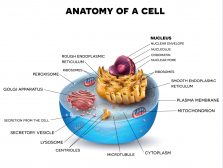
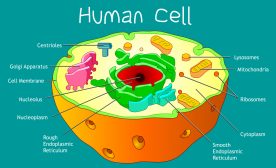
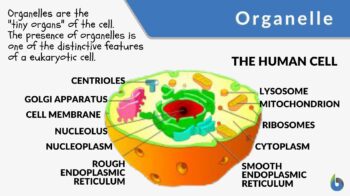
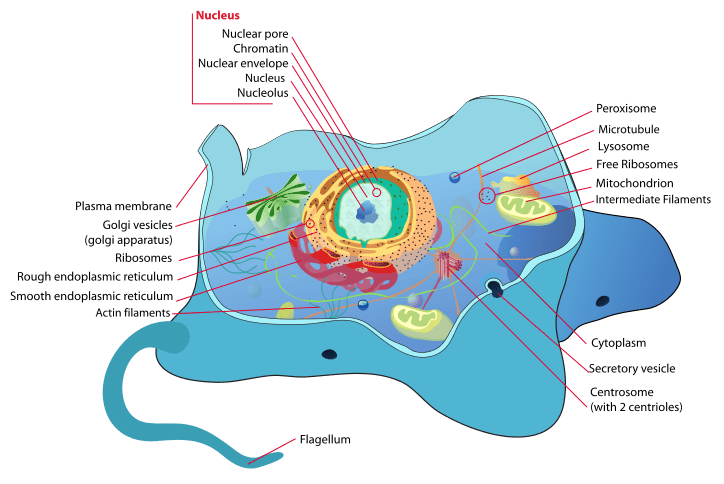
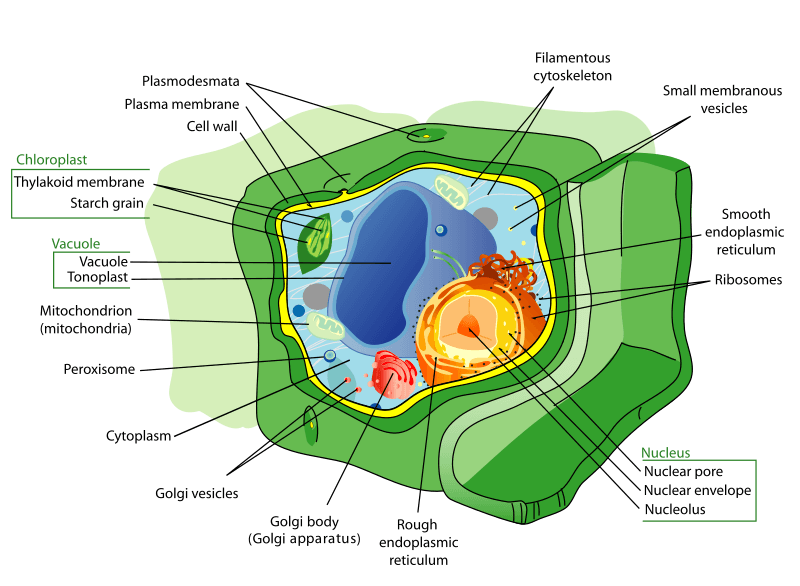
A eukaryotic cell contains many organelles, for example, the nucleus, endoplasmic reticulum, Golgi apparatus, mitochondria, and chloroplast (plastid). However, not all these organelles are found in only one cell or in an organism. The chloroplast, for instance, is abundant in plant cells but not in animal cells. There are organelles that have their own DNA apart from the nucleus and are suggested to have originated from endosymbiotic bacteria according to the endosymbiotic theory. These organelles are mitochondria and plastids.
Prokaryotes, which were believed to have no organelles, have been recently described to possess their own sort of “organelles”. However, some references pertain to them as proteinaceous micro-compartments rather than true organelles. Examples are carboxysome (a protein-shell compartment for carbon fixation in some bacteria), chlorosome (a light harvesting complex in green sulfur bacteria), magnetosome (found in magnetotactic bacteria), and thylakoid (in some cyanobacteria).
Types of organelles
Some references are strict in their definition of an organelle: an organelle is one that is surrounded by lipid bilayers. Based on this definition, they are particularly nucleus, endoplasmic reticulum, Golgi apparatus, mitochondria, and plastids (e.g. chloroplasts). In this sense, ribosomes and nucleosomes are not regarded as organelles because they are not bounded by membranes. In the same way, lysosomes and vacuoles, would not qualify as organelle because they are single-membrane bounded cytoplasmic structures.
Other references, though, are less restrictive. An organelle is one that acts as a specialized subunit inside the cell that performs a specific function. In this regard, there are two types of organelles: (1) membrane-bound organelles (included are double-membraned and single-membraned cytoplasmic structures) and (2) non-membrane-bound organelles (also referred to as biomolecular complexes or proteinaceous organelles).
Membrane-bound organelles
Membrane-bound organelles are cellular structures that are bound by a biological membrane. The membrane may be a single layer or a double layer of lipids and typically with interspersed proteins. Examples of membrane-bound organelles are nucleus, endoplasmic reticulum, Golgi apparatus, mitochondria, plastids, lysosomes, and vacuoles.
-
Nucleus
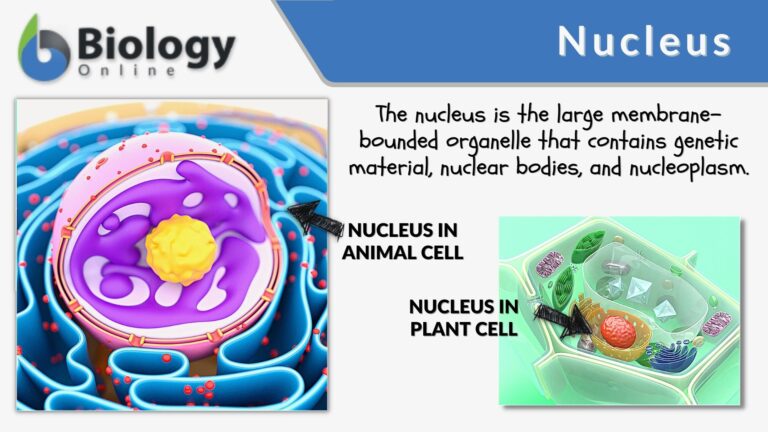
The nucleus is an organelle responsible for maintaining the integrity of DNA and in controlling cellular activities such as metabolism, growth, and reproduction by regulating gene expression. The nucleus is one of the most prominent structures in a cell because of its relatively large size and typically round shape. It is bound by a nuclear envelope, which is a lipid bilayer perforated with nuclear pores. Some cells though lack a nucleus. Red blood cells, for example, lose their nucleus at maturity to provide a larger affinity for respiratory gases, such as oxygen. Inside the nucleus are multiple linear DNA molecules organized into structures called chromosomes.
-
Mitochondria
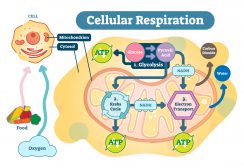
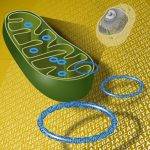
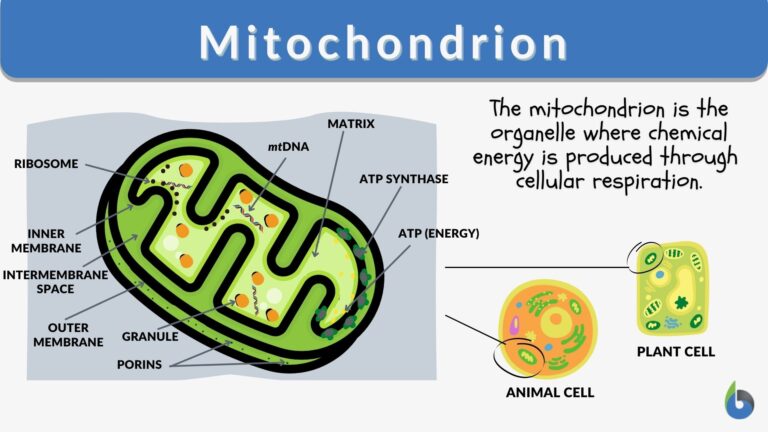
Mitochondria (singular: mitochondrion) are the spherical or rod-shaped double-membrane-bound organelles that contain their own genome, making them semi-autonomous. They are responsible chiefly for the generation of ATP through cellular respiration.
-
Plastids
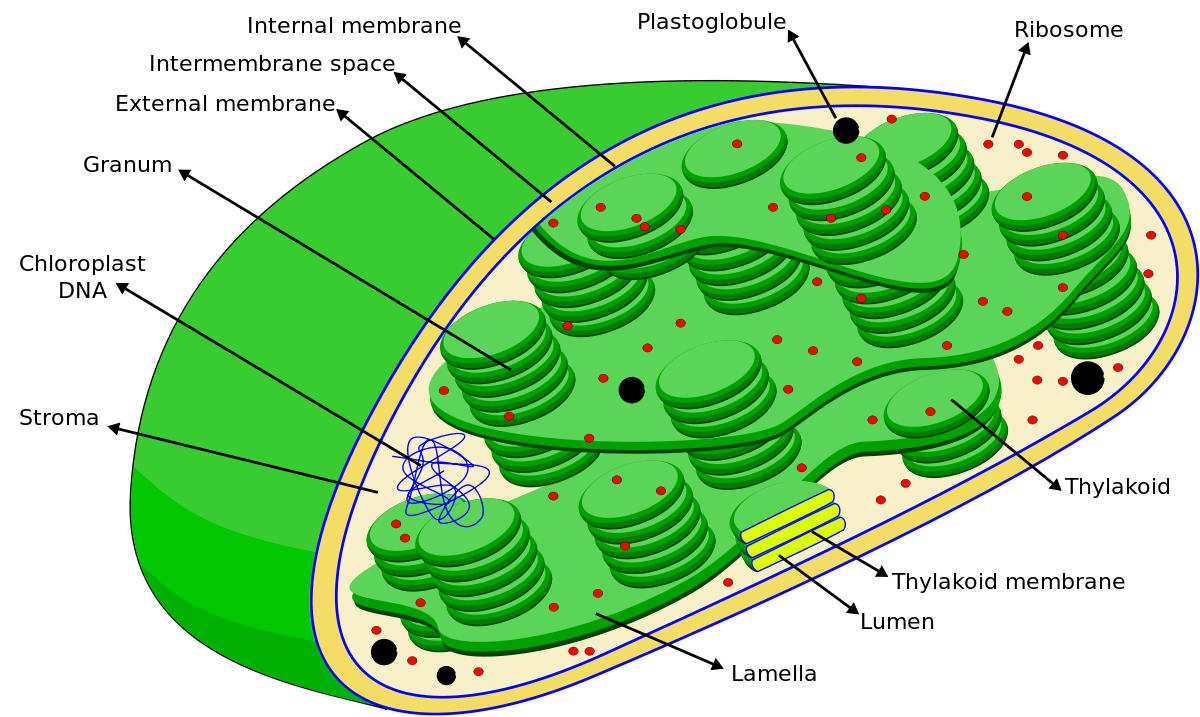
Plastids are double-membrane-bound organelles present in photosynthetic cells, such as plant cells. The three types of plastids are chloroplasts, chromoplasts, and leucoplasts. Chloroplasts are plastids containing green pigment and are involved in photosynthesis. Chromoplasts are plastids containing other pigments aside from green. Leucoplasts are plastids lacking in pigments and are involved in food storage.
-
Endoplasmic reticulum
The endoplasmic reticulum (ER) is a membraned organelle responsible chiefly for protein and lipid syntheses, carbohydrate metabolism, drug detoxification, and intracellular transport. There are two types of ER: the rough ER and the smooth ER. The rough ER is studded with ribosomes on its surface whereas the smooth ER lacks bound ribosomes. Both types are comprised of labyrinthine, interconnected flattened sacs or tubules connected to the nuclear membrane, running through the cytoplasm, and may extend to the plasma membrane.
-
Golgi apparatus
Golgi apparatus is another membraned organelle involved in glycosylation, packaging of molecules for secretion, transporting of lipids within the cell, and giving rise to lysosomes. It is made up of membrane-bound stacks.
-
Lysosomes
Lysosomes are single-membrane-bound cytoplasmic structures containing a large range of digestive enzymes. They are single-membraned and involved primarily in digestion and removal of excess or worn-out organelles, food particles, and engulfed viruses or bacteria.
-
Vacuoles
Vacuoles are membrane-bound vesicles in the cytoplasm of a cell, especially of plants. They are involved in providing structural support, intracellular secretion, excretion, storage, and digestion.
-
Endosomes
Endosomes are membrane-bound cytoplasmic structures through which molecules that are endocytosed pass en route to the lysosome.
Non-membrane-bound organelles
Non-membrane-bound organelles are cytoplasmic structures that are not bound by a membrane but carry out specialized functions. Examples of non-membrane-bound organelles are ribosomes, spliceosome, vault, proteasome, DNA polymerase III holoenzyme, RNA polymerase II holoenzyme, photosystem I, ATP synthase, nucleosome, centriole, microtubule-organizing center, cytoskeleton, flagellum, nucleolus, stress granule, etc.
Main Functions
Each of the organelles performs a particular function. For easy reference, see the tables below.
Table 1: Characteristics and Functions of double-membraned organelles |
||
|---|---|---|
| Double-membraned organelles | Characteristics | Major functions |
| Nucleus | The large, membrane-bounded organelle that contains the genetic material, in the form of multiple linear DNA molecules organized into structures called chromosomes | Responsible for maintaining the integrity of DNA and in controlling cellular activities such as metabolism, growth, and reproduction by regulating gene expression |
| Mitochondrion | Spherical or rod-shaped organelle with its own genome | Responsible for the generation of most of the cell’s supply of adenosine triphosphate through the process of cellular respiration |
| Plastid | A double membrane-bound organelle commonly found within the cells of photosynthetic organisms, like plants | Responsible for food storage and photosynthesis |
Table 2: Characteristics and Functions of Other Membraned Organelles |
||
|---|---|---|
| Other-membraned organelles | Characteristics | Major functions |
| Endoplasmic reticulum | A membrane-bounded organelle that occurs as labyrinthine, interconnected flattened sacs or tubules connected to the nuclear membrane, running through the cytoplasm, and may well extend into the cell membrane | Involved in protein and lipid syntheses, metabolism of carbohydrates and calcium concentration, drug detoxification, attachment of receptors on cell membrane proteins, and intracellular transport |
| Golgi apparatus | An organelle that is comprised of membrane-bound stacks | Involved in glycosylation, packaging of molecules for secretion, transporting of lipids within the cell, and giving rise to lysosomes |
| Lysosome | A single-membrane-bound cytoplasmic structure containing a large range of digestive enzymes | Primarily for digestion and removal of excess or worn-out organelles, food particles, and engulfed viruses or bacteria |
| Vacuole | A membrane-bound vesicle found in the cytoplasm of a cell, especially of plants | Involved in providing structural support, intracellular secretion, excretion, storage, and digestion |
Table 3: Characteristics and Functions of Non-membraned Organelles |
||
|---|---|---|
| Non-membraned organelles | Characteristics | Major functions |
| Ribosome | A minute, sphere-shaped particle composed of protein and ribonucleic acid (RNA) | Serves as the site of protein synthesis |
| Nucleosome | The basic structural unit of chromatin, and is made up of a coil of DNA wound around a histone core | The basic structural unit of chromatin |
| Centriole | A self-replicating, small, fibrous, cylindrical-shaped organelle, typically located in the cytoplasm near the nucleus in cells of most animals | Involved in the process of nuclear division. |
| Cytoskeleton | The lattice or an internal framework of a cell composed of protein filaments and microtubules in the cytoplasm | Involved in controlling cell shape, maintaining intracellular organization, and in cell movement |
Inborn errors, Pathobiology, Genetics
The nucleus contains nuclear genetic material. Mutations involving the genes or the chromosome could lead to deleterious effects or genetic disorders. Mutations of the extranuclear genetic material in the mitochondria and chloroplasts could also result in pathological or dysfunctional conditions.
A metabolic disease due to defects in lysosomal function resulting in an abnormal accumulation of toxic materials in the cell is referred to lysosomal storage disease. Lysosomal storage diseases are hereditary. The dysfunctional lysosomal enzyme is caused by a particular defective gene as a result of mutation.
Lysosomal storage diseases that have been identified so far are as follows: sphingolipidoses, ceramidase (e.g. Farber disease, Krabbe disease, etc.), galactosialidosis, gangliosides, alpha-galactosidase (e.g. Fabry disease, Schindler disease, etc.), beta-galactosidase, GM2 gangliosidosis (e.g. Sandhoff disease, Tay-Sachs disease, etc.), glucocerebroside (e.g. Gaucher disease), sphingomyelinase (e.g. lysosomal acid lipase deficiency), sulfatidosis, mucopolysaccharidosis, mucolipidosis, lipidosis (e.g. neuronal ceroid lipofuscinosis, Wolman disease, etc.), cholesterol ester storage disease, lysosomal transport disease, glycogen storage disease, etc. The symptoms may vary depending on the dysfunctional lysosomal enzyme involved.
Try to answer the quiz below to check what you have learned so far about organelles.

References
- Jennings, R., & Premanandan, C. (2017, August 22). Cell Inclusions. Retrieved from Pressbooks.pub website: https://ohiostate.pressbooks.pub/vethisto/chapter/1-cell-inclusions/
- Cruz, W. S. (2009). Cell Organelles. Retrieved from Wustl.edu website: http://www.nslc.wustl.edu/courses/bio101/cruz/Organelles/Organelle.htm
© Biology Online. Content provided and moderated by Biology Online Editors