Mutualistic symbiosis
n., plural: mutualistic symbioses
[ˈmjuːtʃʊəˌlɪstɪk ˌsɪmbɪˈəʊsɪs]
Definition: mutually beneficial to species in association
Table of Contents
Mutualistic Symbiosis Definition
In order to understand what a mutualistic symbiotic relationship means, we will break down the term into different parts.
First, let’s understand.
What is symbiosis? The term “symbiosis” is derived from the Greek “sύν”, meaning “together” and “βίωsις”, meaning “living“ and so it literally means “living together”. Based on the location where the organisms live there are different types of symbiosis observed in nature:
- Endosymbiotic – when one organism lives inside the other organism it is referred to as endosymbiosis.
For example, bioluminescent bacteria inside the fish, algae inside corals, algae in lichens, fungi inside roots and leaves. It is also interesting to note that the mitochondrion is also considered an endosymbiotic organism that resides inside the eukaryotic cell. [READ: Prokaryotic Ancestor of Mitochondria: on the hunt] - Ectosymbiotic – when one organism lives outside the other organism it is referred to as ectosymbiosis. For example, the head louse lives on our scalp’s surface.
Let’s have a look at the different types of symbiotic relationships and symbiotic relationship examples of each type:
- Mutualistic – In mutualism, the relationship is such that both organisms benefit from the existence of each other. This can be better understood by the mutualism symbiosis examples which are present throughout this article.
- Commensalistic – In a commensalistic relationship, one species benefits from the existence of the other whereas the other is neither harmed nor benefitting from the association. For example, the remora fish attaches itself to the belly of a shark and gets shelter, food, and transportation while the shark is neither harmed nor gaining from it.
- Parasitic – In the parasitic type of symbiosis, one species benefits at the expense of the other. It often causes harm caused to its host species. For example, the head lice feed on human blood and are known to spread disease
For the other types of symbiosis and examples, read: Symbiosis
Now we will define mutualism and dive into the details so that we can know what mutualism means?
In biology, mutualism is a type of ecological interaction between members of the same or different biological species where there is a net benefit for the participating members. Mutualism can either be facultative or obligate. An obligate mutualism is when the symbionts are incapable of survival without the coexistence of each other. For example, lichens consist of algae and fungi that cannot be separated. Facultative mutualism is where the symbionts benefit from each other’s presence but can survive well without it.
So, when asked to define symbiotic mutualism one can tell that when two different biological species live together, maintaining close physical contact to benefit from the presence of each other is called mutualistic symbiosis. Before proceeding further, we will answer some basic questions:
- How do you define a mutual relationship? What is a mutualistic relationship?
Answer: It is a relationship between two symbionts where species benefit from each other. - What is mutualism in an ecosystem?
Answer: In biology, mutualism is a common type of interaction observed where two different organisms help each other with either survival or reproductive benefit. - What is a symbiotic relationship?
Answer: It is the relationship between two or more different biological species that live together and maintain close physical contact. Each individual biological species is referred to as a symbiont.
Mutualistic symbiosis is a symbiotic relationship between individuals of different species in which both individuals benefit from the association. In this type of symbiosis, both organisms of different species rely on one another for nutrients, protection, and other life functions; hence, they are usually found living in close proximity. It can be thought of as a form of “biological barter” since the species trade resources (for example carbohydrates or inorganic compounds), or services such as gamete or offspring dispersal, or protection from predators. Synonym: mutualism. Compare commensalism, parasitism. See also symbiosis.
Types of Mutualism
So far, we have been mentioning the benefits that symbionts can provide to each other. What exactly are the benefits that symbionts provide? The benefits can range from a variety of things. For example, it can be a service provided such as cleaning, pollination, seed dispersal, etc. or it can be a resource provided such as food, micronutrients, and shelter, etc. Based on the type of benefits each symbiont receives, biologists have classified mutualism into three broad categories. Each category along with mutualism examples is presented below: –
1. Service-Service: Each species offers a service to the other.
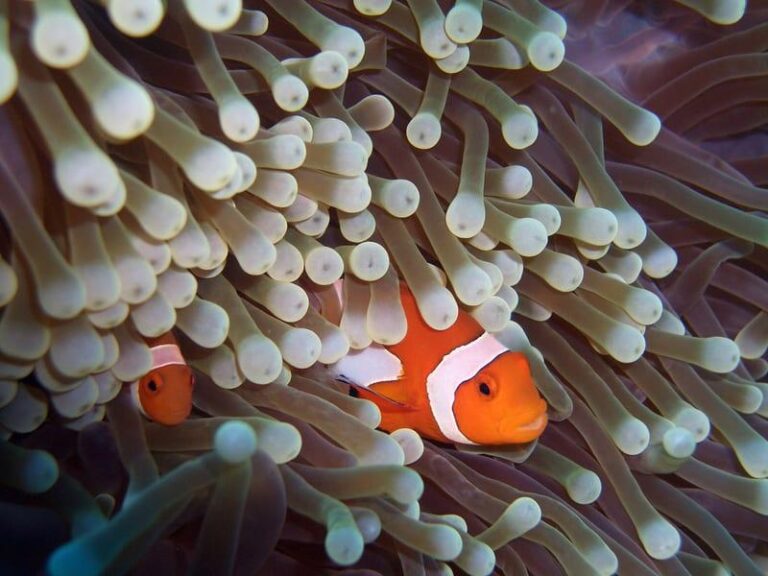
For example, mutualism between anemonefish and sea anemones. The anemonefish takes shelter inside the tentacles of the sea anemone and thus gets protection from the predators which are susceptible to the stings of the sea anemone. In return, the sea anemone is protected from other fish which feed on sea anemones.
2. Service-resource: One species offers a service in exchange for a resource.
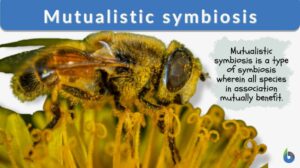
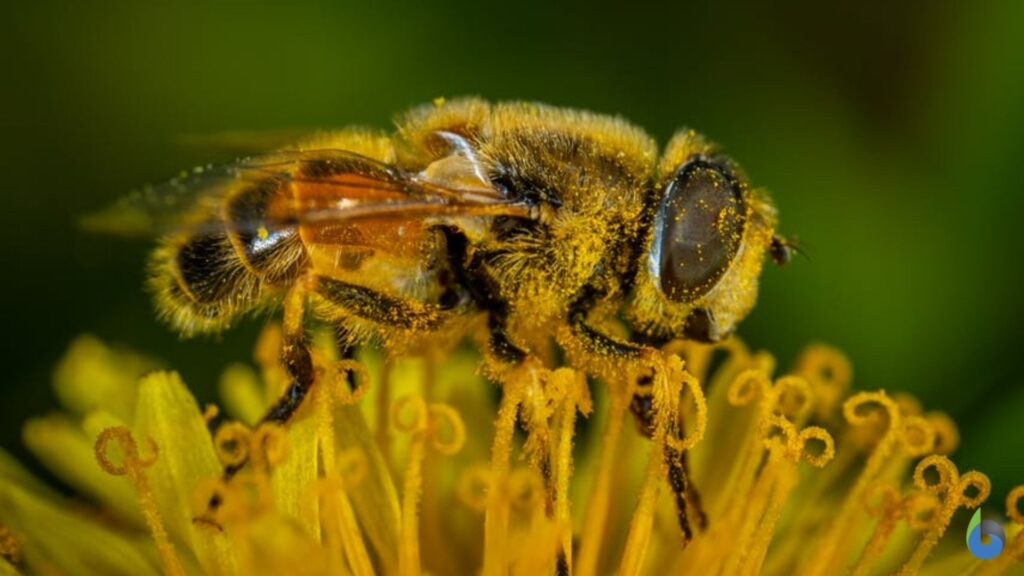
For example, the honeybees helping the plants with pollination in exchange for nectar is one of the most common examples of mutualism observed in nature. The honeybees help the plants in pollination (service) as they jump from flower to flower in search of nectar (resource). While they suck on the nectar their bodies get coated with numerous pollen.
3. Resource-resource: each species offers a resource to the other.
For example, Mycorrhiza is a mutualistic association between plant roots and fungi. The fungi get carbohydrates (resource) from the plant roots and provide micronutrients like phosphorus (resource) and nitrogen (resource) to the plant roots.

Mathematical Modeling
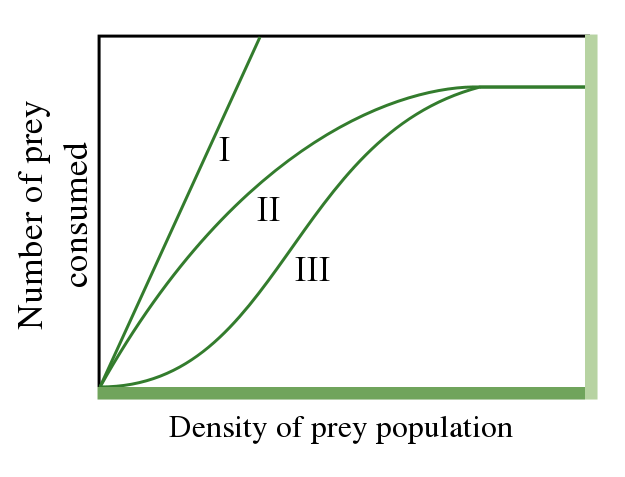
Mathematically, there are two types of functional responses considering the linear and saturating relationships. The function is the representation of the benefit provided to one species and the population density of the other species.
- Type I functional response – this represents the linear relationship of two mutualists. This is the simplest and crude form of mathematical representation that presumes a proportional increase in benefit provided to the species if the population density of other species keeps on increasing. However, in nature, this is not true as multiple factors restrict the growth of any population to infinite levels.
- Type II functional response – this represents the saturating relationship of two mutualists. This is a more realistic and improved form of mathematical representation as it considers the limiting factors such as environmental constraints and carrying capacity that restrict the growth of any population to infinite levels.
Structure of Networks
Mutualistic networks consist of large and complex interactions between multiple plants and animal species that are dependent on each other. These complex networks support terrestrial biodiversity and are important for human food security. It is particularly important in increasing persistence, productivity, abundance, and temporal stability. Although these structures are too complex, it is noted that there are striking similarities in these structures across different geographical sites consisting of entirely different biological species indicating that there might be a common unifying force that builds these structures.
Mathematical and social models are being used to predict how ecosystems respond to anthropogenic perturbations and environmental change. Not only this but the knowledge of these structures is also being used in the restoration of ecology.
Humans
Human relationships are mutualistic with a variety of other biological species for a variety of purposes. Some interesting examples of mutual symbiosis involving human beings, each one highlighting the mutually beneficial relationship, are presented below.
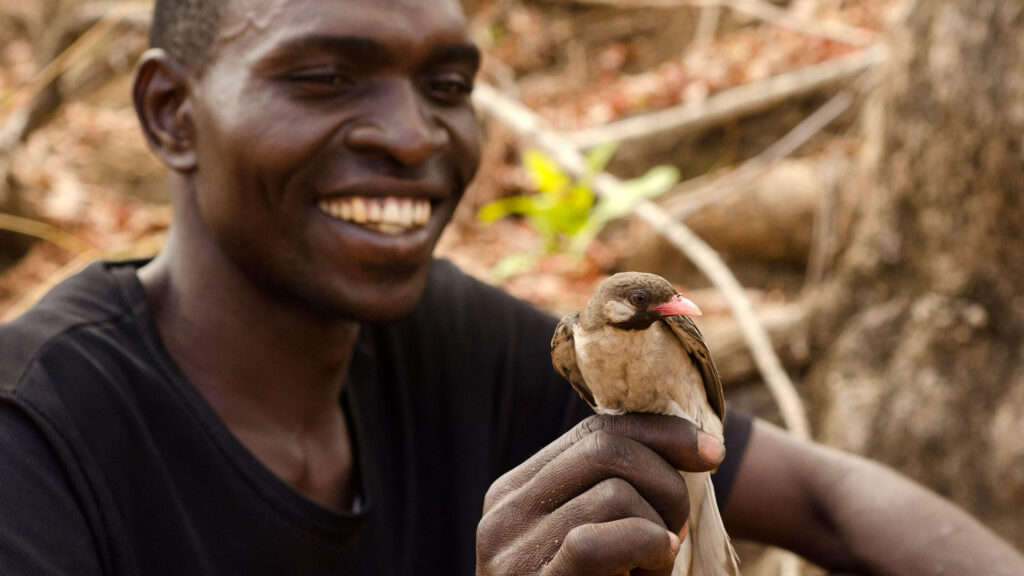
- Humans and greater honeyguides (a species of birds) – this is an interesting example of adaptive mutualism between humans and greater honeyguides. These wild birds have adapted to respond to voices produced by Mozambican honey-hunters seeking bees’ nests. This relationship drastically increases the chances of finding trees with bees’ nests.

Figure 5: Orlando Yassene holding a wild Greater Honeyguide. Photo Credit: Claire Spottiswoode. - Human beings and bacteria – There are numerous bacteria that reside in our guts without which we cannot digest our food properly. Humans benefit from better digestion and bacteria get their food in exchange. As a matter of fact, there are so many bacteria in our guts that they easily outnumber all the human cells combined. They are so abundant that on a per-cell level we are only 10% humans.
- Humans and dogs – Domestication of dogs is beneficial for humans as they get companionship and other services like protection from the infestation of rodents. In return, dogs are benefitted from the food provided by humans.
- Humans and cattle – cattle benefit from humans by getting protection from predators and human-managed fodder in exchange for milk and agricultural work.
- Humans and agricultural plants – Agricultural varieties of corn cannot naturally reproduce without human intervention because of their thick leafy coats. In return human beings benefit from the grain.
Evolution of Mutualism
Mutualisms are not constant in the ecology. They can change with the course of evolution. By virtue of various mechanisms, the mutualistic relationship between organisms can break down. The different mechanisms are listed below.
- Mutualists can abandon their partners and become autonomous
- A partner may stop benefitting and convert into either a parasite or a commensal.
- A partner may go extinct
- A partner may switch to another symbiont or acquire some other means of obtaining the resource.
Role of mutualism in evolution
Mutualism is ubiquitous and has contributed greatly to the evolution of various species. In general, it is noted that pollinators visit a variety of flowers and flowers receive a variety of pollinators. However, some flowers only receive a particular pollinator and some pollinators visit only one particular flower. These specializations are a result of pollination syndromes. Pollination syndromes are specializations that develop as a result of coevolution due to long-term mutualism. The table below highlights the mutualistic relationship examples that result in pollination syndromes.
Table 1: Pollination syndromes |
|
|---|---|
| ANIMAL FEATURES | COEVOLVED FLOWER FEATURES |
| BEES | |
| color vision includes UV, not red |
Often blue, purple, yellow, white (not red colors) |
| Good sense of smell | Fragrant |
| Require nectar and pollen | Provide nectar and abundant Pollen |
| BUTTERFLIES | |
| Good color vision | Blue, purple, deep pink, orange, red colors |
| Sense odors with feet | Light floral scent |
| Need landing place | Provide landing place |
| tongue | Nectar in deep, narrow floral Tubes |
| BIRDS | |
| Color vision includes red | Often colored red |
| Often require perch | Strong, damage-resistant structure |
| Poor sense of smell | No fragrance |
| Feed in daytime | Open in daytime |
| High nectar requirement | Copious nectar in floral tubes |
| BATS | |
| Colorblind | White or light, reflective colors |
| Good sense of smell | Strong odors |
| Active at night | Open at night |
| High food requirements | Copious nectar and pollen provided |
| Often require perch | Pendulous or borne on the tree trunks |
Data Source: Peter Stiling, Ecology global insights & investigations, Pg no. 248
Try to answer the quiz below to check what you have learned so far about mutualistic symbiosis.

References
- Hale, K., Valdovinos, F. S., & Martinez, N. D. (2020). Mutualism increases diversity, stability, and function of multiplex networks that integrate pollinators into food webs. Nature communications, 11(1), 2182. https://doi.org/10.1038/s41467-020-15688-w
- Bascompte, Jordi. (2008). Mutualistic networks. Frontiers in Ecology and The Environment – FRONT ECOL ENVIRON. 10.1890/080026.
- Valdovinos F. S. (2019). Mutualistic networks: moving closer to a predictive theory. Ecology letters, 22(9), 1517–1534. https://doi.org/10.1111/ele.13279
- Spottiswoode, C. N., Begg, K. S., & Begg, C. M. (2016). Reciprocal signaling in honeyguide-human mutualism. Science (New York, N.Y.), 353(6297), 387–389. https://doi.org/10.1126/science.aaf4885
- Sachs, J. L., & Simms, E. L. (2006). Pathways to mutualism breakdown. Trends in ecology & evolution, 21(10), 585–592. https://doi.org/10.1016/j.tree.2006.06.018
- Kumar Abbas Aster, ROBBINS BASIC PATHOLOGY. (9th edition)
- Peter Stiling, Ecology: global insights & investigations
©BiologyOnline.com. Content provided and moderated by Biology Online Editors.