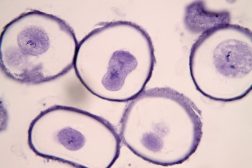
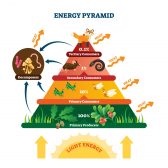
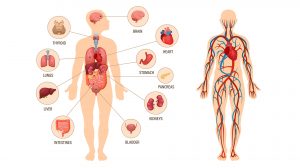
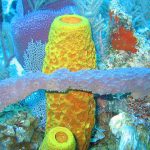
Dictionary » M » Multicellular MulticellularDefinition adjective Having or consisting of many cells or more than one cell to perform all vital functions.
Examples of organisms that are multicellular are humans, animals and plants.
Compare: unicellular ![]()
Please contribute to this project, if you have more information about this term feel free to edit this page ![]()
Results from our forumFlaws of Life in a Tube... forms of life came from the sea as a result of the chemical slosh (chemical revolution). It sais that prokaryotes developed, then eukaryotes, then multicellular eukaryotes (biological revolution). This is found in my Miller science book. Obviously, this is the origin of life. And tagging off of ...
See entire post
How did collective animals evolve genetically?A number of animals such as ants, jellyfish, sponges, slime mold slugs and even we humans are multicellular colonies or live as social groups. Is that explained through genetic evolution? How?
See entire post
Re: Help in identifying growth... like to know please. My guess was a Chlorophyte (green alga). Chlorophytes are usually unicellular, whereas charophytes can form colonies, or multicellular bodies, with usually multinucleate filaments. So I would agree with alzari and say it is probably a charophyte.
See entire post
Theories - Origin of Life... was about a half billion years ago, the creator - Vendian biont large aerobic unicellular ameboid, who built a very complex civilized society - a multicellular organism Myxomycetes). Some terrestrial civilization can not leave behind a "relic" - coelenterates, sponges (archeocyathids), ...
See entire post
This page was last modified 08:30, 9 March 2009. This page has been accessed 43,773 times. |
© Biology-Online.org. All Rights Reserved.
Register | Login
| About Us | Contact Us | Link to Us | Disclaimer & Privacy