Homologous definition
adj., həˈmɒləɡəs
Having similar or corresponding features. For example, homologous structures are structures having similar anatomical features but they do not necessarily have the same function
Table of Contents
Homologous Definition
What is homologous? In general science, the word “homologous” is used to show a degree of similarity. It may be in position, structure, function, or characteristics. In chemistry, homologous pertains to a series of molecules or compounds that differ by a constant increment. For instance, alkanes are a homologous series of hydrocarbons: methane, ethane, propane, and so on.
They have similar chemical properties that follow a trend. For example, as their chain length increases (by the addition of CH2), the boiling point increases as well.
What does homologous mean in biology and genetics? In essence, both of them define homologous as having corresponding parts, similar structures, or the same anatomical positions.
In biology, it is used, for instance, to pertain to bodily parts or structures indicating a common evolutionary origin, as in “homologous structures”.
In genetics, it is used to pertain to a pair of chromosomes that have a similar structure. Referred to as homologous chromosomes, they are chromosomes that are in pairs based on the corresponding chromosomal length and gene sequence.
Etymology: from Greek homologos, meaning “agreeing”, “correspondent”.
Compare: heterologous.
Homologous vs. Heterologous
Both heterologous and homologous are descriptive words but they have opposite meanings. While homologous pertains to biological entities having a corresponding or a similar feature, the heterologous is used to describe an entity whose features are markedly different from one another.
For example, a heterologous tumor is a tumor containing cytologic elements or tissue that is different from where the tumor forms. In contrast, a homologous tumor is a tumor consisting of cells or tissue resembling the tissue in which it forms. (Ref. 1)
Homologous Examples
Homologous structures
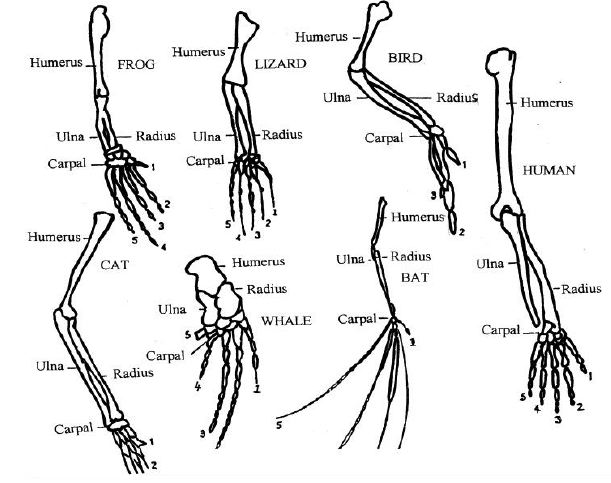
Homologous structures are body parts of organisms that have the same anatomical features, thus, indicating a common ancestor or developmental origin. They may share the same trait but they do not necessarily have the same function. For example, the forelimbs of the bats and of humans are homologous structures.
The bones constituting bat forelimbs are the same as those of humans. This indicates a common ancestral organism. In the picture below, it shows the anatomical features of the different animal forelimbs. Not only do bats and humans have the same forelimb bone components.
Cats, whales, lizards, and birds have the same or corresponding forelimb bones, namely humerus, radius, ulna, carpal, and phalanges. However, these forelimbs from different animals have a different major function.
For example, the bats use their forelimbs essentially for gliding. The birds use them for flying. Cats and lizards use them for walking and climbing.
Whales use them for swimming. Humans lack the wing membrane and they are bipedal, thus, their arms are free to do a variety but a limited set of functions, e.g. reaching, grasping, climbing, swimming, and so on.
Homologous chromosomes
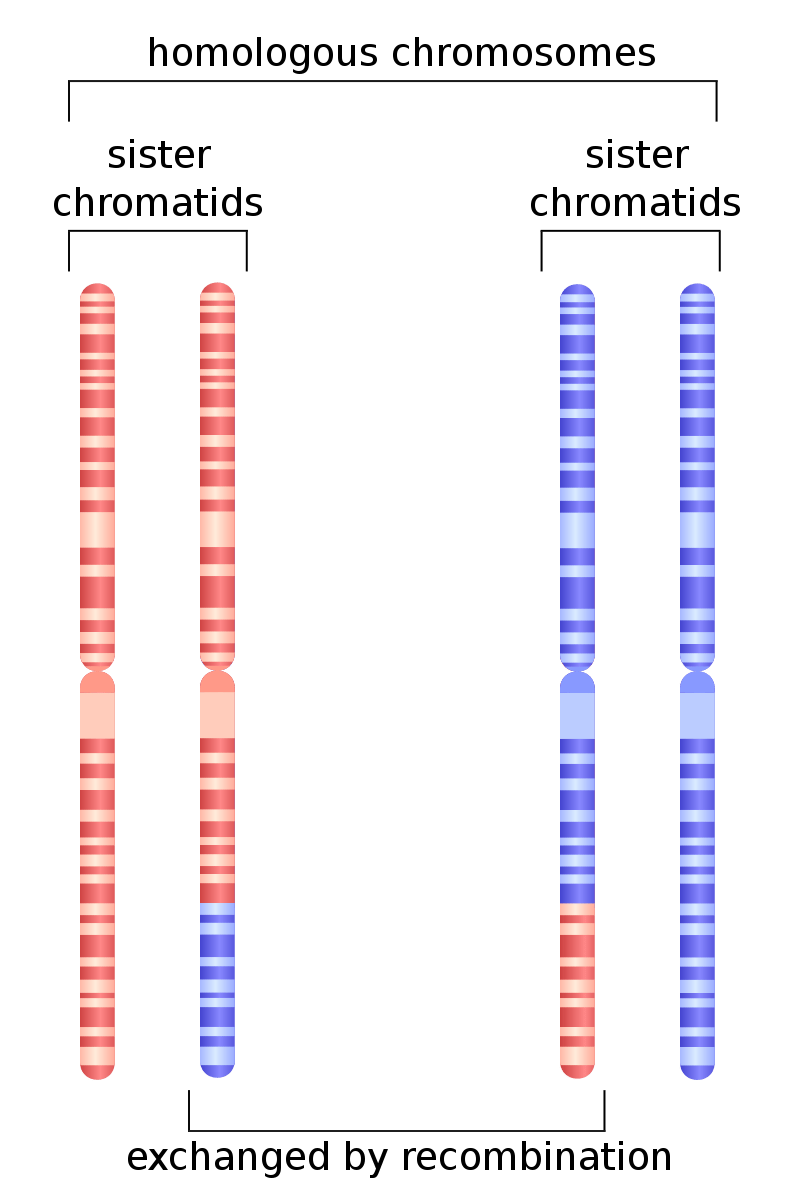
Homologous chromosomes are paired chromosomes. The chromosomes in a pair share the same gene sequence, loci, and centromere location. They also have the same chromosomal length. Nevertheless, they may differ in alleles.
A human cell, for instance, has a total of 46 chromosomes in the nucleus. Half of them (23 chromosomes) comes from the mother and the other half (23 chromosomes), from the father. At fertilization, these chromosomes combine to form a new nucleus within the zygote cell, which subsequently grows and develops into a new human being. Each cell of the human body will contain these two sets of chromosomes.
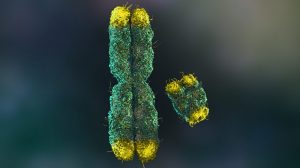
22 of these pairs are autosomes and homologous. The remaining pair is a pair of sex chromosomes. Two X chromosomes are homologous as well but a pair of sex chromosomes consisting of X and Y will not be homologous but heterologous. The diagram below shows an example.
Related terms
- Homology
- Homologous structures
References
- heterologous tumor. (2020). TheFreeDictionary.Com. https://medical-dictionary.thefreedictionary.com/heterologous+tumor
©BiologyOnline. Content provided and moderated by BiologyOnline Editors.