Definition
noun, plural: amino acids
(1) A molecule consisting of the basic amino group (NH2), the acidic carboxylic group (COOH), a hydrogen atom (-H), and an organic side group (R) attached to the carbon atom, thus, having the basic formula of NH2CHRCOOH.
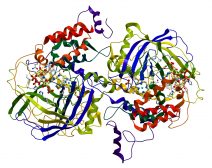
(2) The building block of protein in which each is coded for by a codon and linked together through peptide bonds.
Supplement
There are over 100 amino acids that have been found to occur naturally; each of them differs in R group. Twenty of them are involved in making up a protein, and are classified as whether they are non-essential or essential. Non-essential or dispensable amino acids are synthesized in the body. They are alanine, arginine, aspartic acid, asparagine, cysteine, glutamic acid, glutamine, glycine, proline, serine, and tyrosine. Essential or indispensable amino acids cannot be synthesized in the body and can only be obtained through food. They are histidine, isoleucine, leucine, lysine, methionine, phenylalanine, threonine, tryptophan, and valine.
Related phrases: essential amino acid, nonessential amino acid, basic amino acid, polar amino acid, amino acid transmitter, amino acid permease, nonpolar amino acid, dibasic amino acid, alpha-amino acid.
See also: imino acid.
Dictionary > Amino acid