Generation
1. The act of generating or begetting; procreation, as of animals.
2. Origination by some process, mathematical, chemical, or vital; production; formation; as, the generation of sounds, of gases, of curves, etc.
3. That which is generated or brought forth; progeny; offspiring.
4. A single step or stage in the succession of natural descent; a rank or remove in genealogy. Hence: The body of those who are of the same genealogical rank or remove from an ancestor; the mass of beings living at one period; also, the average lifetime of man, or the ordinary period of time at which one rank follows another, or father is succeeded by child, usually assumed to be one third of a century; an age. This is the book of the generations of adam. (gen. V. 1) Ye shall remain there Babylon many years, and for a long season, namely, seven generations. (Baruch vi. 3) All generations and ages of the Christian church. (Hooker)
5. Race; kind; family; breed; stock. Thy mothers of my generation; what’s she, if i be a dog? (Shak)
6. (Science: geometry) The formation or production of any geometrical magnitude, as a line, a surface, a solid, by the motion, in accordance with a mathematical law, of a point or a magnitude; as, the generation of a line or curve by the motion of a point, of a surface by a line, a sphere by a semicircle, etc.
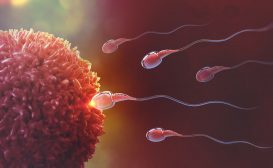
7. (Science: biology) The aggregate of the functions and phenomene which attend reproduction.
there are four modes of generation in the animal kingdom: scissiparity or by fissiparous generation, gemmiparity or by budding, germiparity or by germs, and oviparity or by ova.
(Science: biology) alternate generation, the fancied production of living organisms without previously existing parents from inorganic matter, or from decomposing organic matter, a notion which at one time had many supporters; abiogenesis.
Origin: oe. Generacioun, f. Generation, fr.L. Generatio.
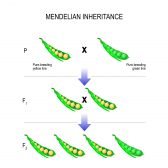
All the people living at the same time or of approximately the same age.Group of genetically related organisms constituting a single step in the line of descent.The act of producing offspring or multiplying by such production.Relating to humans of similar age, or the differentiation of family trees by parent and their offspring.
Dictionary > Generation