Definition
noun, plural: fevers
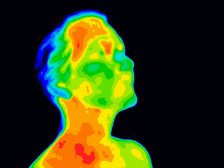
(pathology) A febrile condition; an increase in body temperature that is higher than the normal, usually as caused by the body’s response to a pyrogen inducing upward displacement of the set point of the hypothalamic thermoregulatory center
(pathology) A disease accompanying a rise in body temperature above the normal
(marine biology) A group of stingrays
Supplement
Fever in medicine and pathology pertains to the rise in body temperature above the normal and results from the host’s natural response when infectious agents such as pathogenic bacteria and viruses invade the body tissues. Pyrogens released into the circulation act on the hypothalamic thermoregulatory center, increasing its set point. In humans, a body temperature that is greater than 37.5 or 38.3 °C (99.5 or 100.9 °F) is regarded as having a fever.
Word origin: Old English fēfor, from Latin febris (a fever), from ferveō (to be hot, burn, boil)
Synonym(s):
- pyrexia (pathology)
- febrile response (pathology)
Compare:
See also:
Related term(s):