Definition
noun, plural: dopamines
3,4-dihydroxyphenethylamine (chemical formula: C8H11NO2); a neurotransmitter or a hormone (153 D) formed from the decarboxylation of dihydroxyphenylalanine; a precursor of adrenaline and noradrenaline
Supplement
Dopamine is an endogenous substance that has diverse biological effects. The term dopamine is a contraction of 3,4-dihydroxyphenylamine. Biochemically, it belongs to catecholamines and phenethylamines. It is an amine in which a carboxyl group is removed from L-DOPA. L-DOPA is the main precursor of dopamine.
Dopamine is biosynthesized from L-DOPA through a primary pathway that makes use of the enzyme, DOPA decarboxylase, and the cofactor, pyridoxal phosphate. In this pathway, the L-DOPA is derived from L-Tyrosine (L-Tyrosine, in turn, from L-Pheynlalanine). In the human brain, there are other minor sources of dopamine. In one minor pathway, L-Phenylalanine is converted into L-Tyrosine, which in turn, is converted into p-Tyramine. The enzyme cytochrome P450 2D6 in the brain catalyzes the conversion of p-Tyramine into dopamine. In another minor pathway, L-Phenylalanine is converted into m-Tyrosine, which in turn, is converted into m-Tyramine, and finally, into dopamine. Dopamine from dietary sources cannot cross the blood-brain barrier and therefore is solely sourced from primary and minor metabolic pathways to be employed in certain brain functions.
Dopamine is produced naturally by plants and animals. In humans, dopamine is synthesized in different tissues. However, it is synthesized primarily by the neurons of the brain and the cells in the medulla of the adrenal glands of the kidneys.
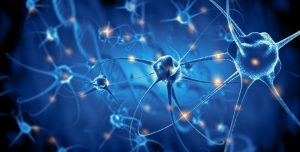
In the brain, it serves as a neurotransmitter and a neuromodulator. It is produced and released by neurons as a chemical signal to other neurons. One of its functions has to do with the reward-motivated behavior. Many consider dopamine as a pleasure (feel-good) chemical. Dopamine level increases from the anticipation for a reward, and thereby promotes motivation. This is one of the underlying biochemical factors in instituting and reinforcing addictive behavior by way of the reward system. Addictive agents promote dopamine release or prevent dopamine reuptake. Apart from motivation, reinforcement, and reward, dopamine inside the brain plays an important role as well in motor control, arousal, and executive functions.
The cell bodies of dopamine-producing neurons are confined in groups. However, they are located in relatively small brain areas (e.g. ventral tegmental area, substantia nigra, ventral tegmental area, posterior hypothalamus, arcuate nucleus, pericentricular nucleus, zona incerta). Nevertheless, their axons project in several brain areas. For instance, the arcuate nucleus and the periventricular nucleus of the hypothalamus have projections that extend to the pituitary gland. Dopamine produced by the arcuate nucleus of the hypothalamus is secreted from the axon terminal into the hypophyseal portal system of the median eminence and reach the anterior pituitary. In the anterior pituitary, dopamine acts on the lactrotrophs, inhibiting their secretion of prolactin. As such, dopamine is considered as one of the hypothalamic hormones and is sometimes referred to as prolactin-inhibiting hormone (or as prolactostatin).
Another example is dopamine that is released from zona incerta projects into certain areas of the hypothalamus. Dopamine, in this regard, is involved in the regulation of gonadotropin-releasing hormone.
Outside the brain, it acts as a chemical messenger. In the bloodstream, it inhibits the release of norepinephrine. It also acts as a vasodilator.
Dopamine is synthesized by other tissues where dopamine exerts its effects locally or on nearby cells. In the kidneys, it is associated with increased urine output as it promotes sodium excretion. In the digestive system, it reduces gastrointestinal motility. It also reduces insulin production in the pancreas. It also has an effect on the immune system by reducing the activity of lymphocytes. In the eyes, though, dopamine is produced and released by neuronal cells in the retina. These are amacrine cells that lack axons. The retinal dopamine enhances cone cell activity while suppresses rod cell activities enabling the increased sensitivity to color and contrast during blight light conditions.
Another important function of the dopamine is it acts as a precursor to norepinephrine. The conversion is mediated by the enzyme, dopamine beta-hydroxylase and the cofactors, O2 and L-ascorbic acid.
Dopamine as a pharmacological drug acts as a precursor of norepinephrine. It also acts by stimulating dopaminergic, alpha and beta-1 adrenergic receptors. It is used pharmacologically to treat hypotension associated with bradycardia and in stimulating cardiac output as well as urine output. Possible adverse effects include increased pulmonary pressure, worsened pulmonary congestion, increased myocardial work without improving coronary blood flow, exacerbated myocardial ischemia, increased heart rate, and supraventricular or ventricular arrhythmias.
IUPAC name:
- 4-(2-Aminoethyl)benzene-1,2-diol
Chemical formula:
Abbreviation:
- DA
Also called:
Synonym(s):
- 2-(3,4-Dihydroxyphenyl)ethylamine
- 3,4-Dihydroxyphenethylamine
- 3-Hydroxytramine
- oxytyramine
- prolactin inhibiting factor
- prolactin inhibiting hormone
- intropin
See also:
Related terms:
- dopamine antagonists
- dopamine agents
- receptors dopamine
- receptors dopamine d1
- receptors dopamine d2
Related form(s):
Mentioned in: