Dominant
adj.
[ˈdɒmɪnənt]
Definition: having primary control, as in genetics, a dominant allele that masks the effect of the other allele
Table of Contents
Dominant Definition
The word dominant or dominant trait is commonly used in biology. The general meaning of dominant is to be in control. Other meanings include commanding behavior, powerful and prevailing over all others. It also means to have authority or influence on another thing. The word dominant is mostly used in two branches of biology, i.e. genetics and ecology. Let’s understand the term dominant in these perspectives.
What is “dominant” in genetics? Find it out here: Incomplete dominance vs. codominance. Join our Forum now!
 What is “dominant” in genetics? Find it out here:
 In genetics, “dominant” is a term that is used to describe an allele, a gene, or a trait that is expressed. It masks the effect of the recessive allele, gene, or trait when present. In ecology, it pertains to an organism or group of organisms having the most considerable influence or control in its ecological community among other organisms. In anatomy and physiology, it pertains to the normal tendency for one side of the body or of one of a pair of organs to dominate or be used in consistent persistence than the other.
Etymology: from French dominant, from Latin, dominant- domin(us), meaning “master” + -ant. Derived term: dominance. Compare: recessive.
In genetics
In genetics, one can define dominant traits as the characteristics that appear in the next generation of a species. These traits are inherited from parents through a dominant allele. Observable characteristics or traits are known as phenotype whereas the genetic factor determining the trait is referred to as the genotype. When a gene is predominant in a population, meaning it is frequently transferred from one generation to another, it is described as dominant. (Miko, 2008) The term dominant, in this regard, however, refers to the relationship between alleles.
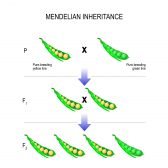
Alleles, by definition, are gene variants. The concept of dominance was first introduced by G.J. Mendel in 1860. Although he didn’t use the terms gene, allele, phenotype, etc., he introduced the principles that later founded the laws of Mendelian Inheritance. One of these laws is the Law of Dominance.
In essence, when the gene determining a trait is heterozygous, meaning the alleles are not the same, one allele is dominant and the other is recessive. The dominant gene variant (allele) expresses itself more strongly than the recessive gene variant (allele). Thus, the allele that is expressed is regarded as the dominant allele whereas the allele that is not expressed is the recessive allele. The dominant allele is represented by a capital letter and the other that is recessive is represented by a lowercase letter.
Mechanism of domination in genetics
The species that reproduce sexually have chromosomes in two pairs. Humans have a total of 46 chromosomes and of these 46, there are 23 pairs in total. A monkey has 48 chromosomes; an elephant has 56. These chromosomes contain thousands of genes. The genes bear the codes to produce proteins. The code contains all the information about how the protein should develop, what should be its characteristics and properties. And so, a liver protein becomes different from a muscle protein and a kidney protein. Not only on a molecular level, but the difference in proteins is also evident in the structural characteristics, such as structure, shape, and size, and physiological properties.
A single chromosome may contain thousands of genes. Mostly, there are at least two copies of each gene present in a chromosome. The position of these copies of a gene (alleles) in a chromosome is the same (called locus). The same position keeps them paired with each other.
Let’s take for example the ear lobe trait. We have two gene variants for it — one allele that results in a detached earlobe trait and another allele for an attached earlobe trait. These two alleles come in pairs. One allele comes from the mother and the other allele comes from the father. So when we say that the gene is dominant, it means that a particular allele is dominant. And when one allele is dominant, the other is recessive. As mentioned, the dominant allele is represented by a capital letter and so for this example, we will represent the dominant allele for the dominant trait, which is the free-hanging earlobe, with “F“. The recessive allele that genetically determines the attached earlobe trait (recessive trait) will then be denoted by a small letter, which, in this example, is “f“. So when one of the parents has a pair of free-hanging earlobes and the child also has the same earlobe trait, it means that the allele from that parent was dominant.
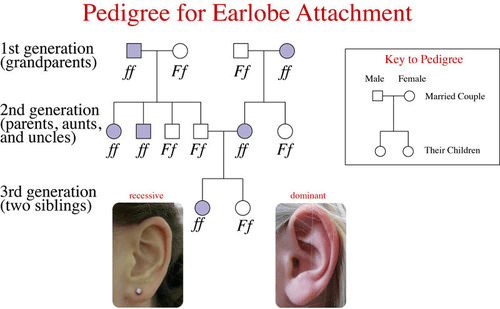
The dominant allele produces a certain phenotype (observable changes in physical characteristics). A dominant allele preferably expresses the functions of proteins. Why does an allele become dominant? This is because the dominant copy of the gene produces enough enzymes to give a cell the required material and code. The result is that the particular cell possesses the same traits as governed by the dominant allele. Moreover, the dominant and recessive behavior of genes is just a description of the relationship between the two alleles; in reality, the interactions are much more complex. A dominant allele can be dominant over a particular allele while recessive to some other alleles. It depends on the type of proteins and the interaction between them. Polygenic trait, for example, is controlled by not just two alleles of a single gene (monogenic) but several genes that, when turned on, are expressed as a unit. The multiple genes that control a single trait are called polygenes and examples of polygenic traits in humans are eye color, hair color, and skin color. In humans, polygenic traits are more common than monogenic traits. Apart from the earlobe trait, other few examples of monogenic traits in humans are widow’s peak, hitchhiker’s thumb, and color blindness.
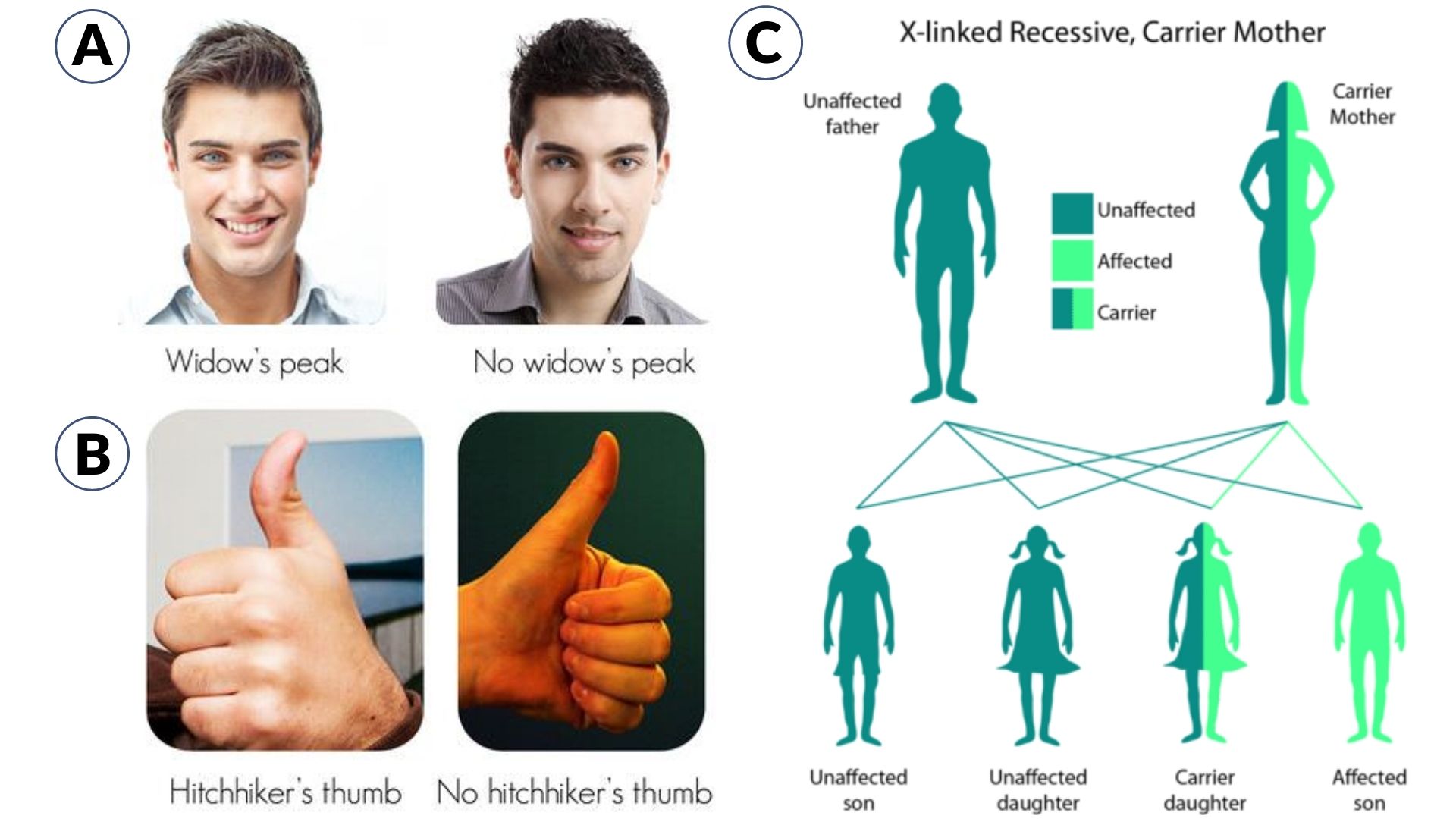
For situations where an allele is completely dominant, it tends to completely hides the effects of the recessive allele. The complete dominance can be seen especially in heterozygous individuals (those that have two different alleles at a locus, e.g. sickle cell trait). As for a homozygous organism, the two alleles that make up the pair are identical. Thus, a homozygous dominant for a trait would, therefore, bear the same code that produces the same protein. As for a homozygous recessive organism, both alleles are recessive and because there is no dominant gene to mask their effect, the recessive trait will, consequently, manifest.
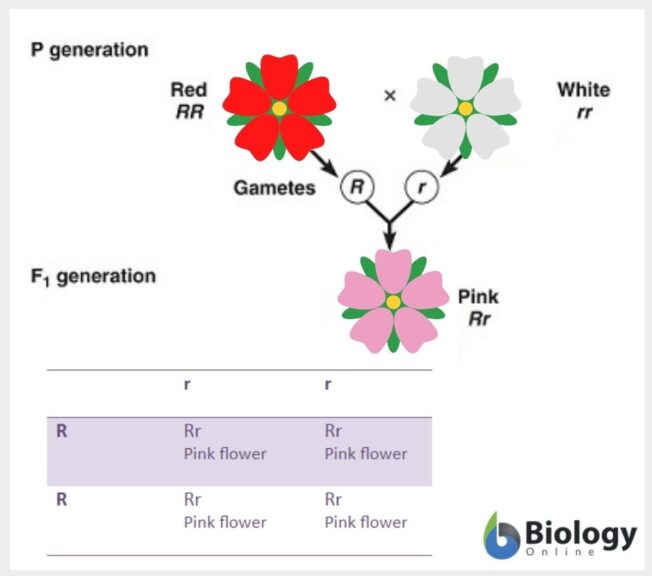
There are some situations wherein the dominance is incomplete. In such cases, the dominant alleles produce different enzymes. However, none of the genes overwhelm the inherent traits. Both the alleles produce an equal amount of physical effect. For example, the Punnett square below shows a cross of two flowers, red and white color. The resultant color is pink. It must be understood here that incomplete dominance is not just in colors but it affects many other enzymes. (Wilkie 1994)
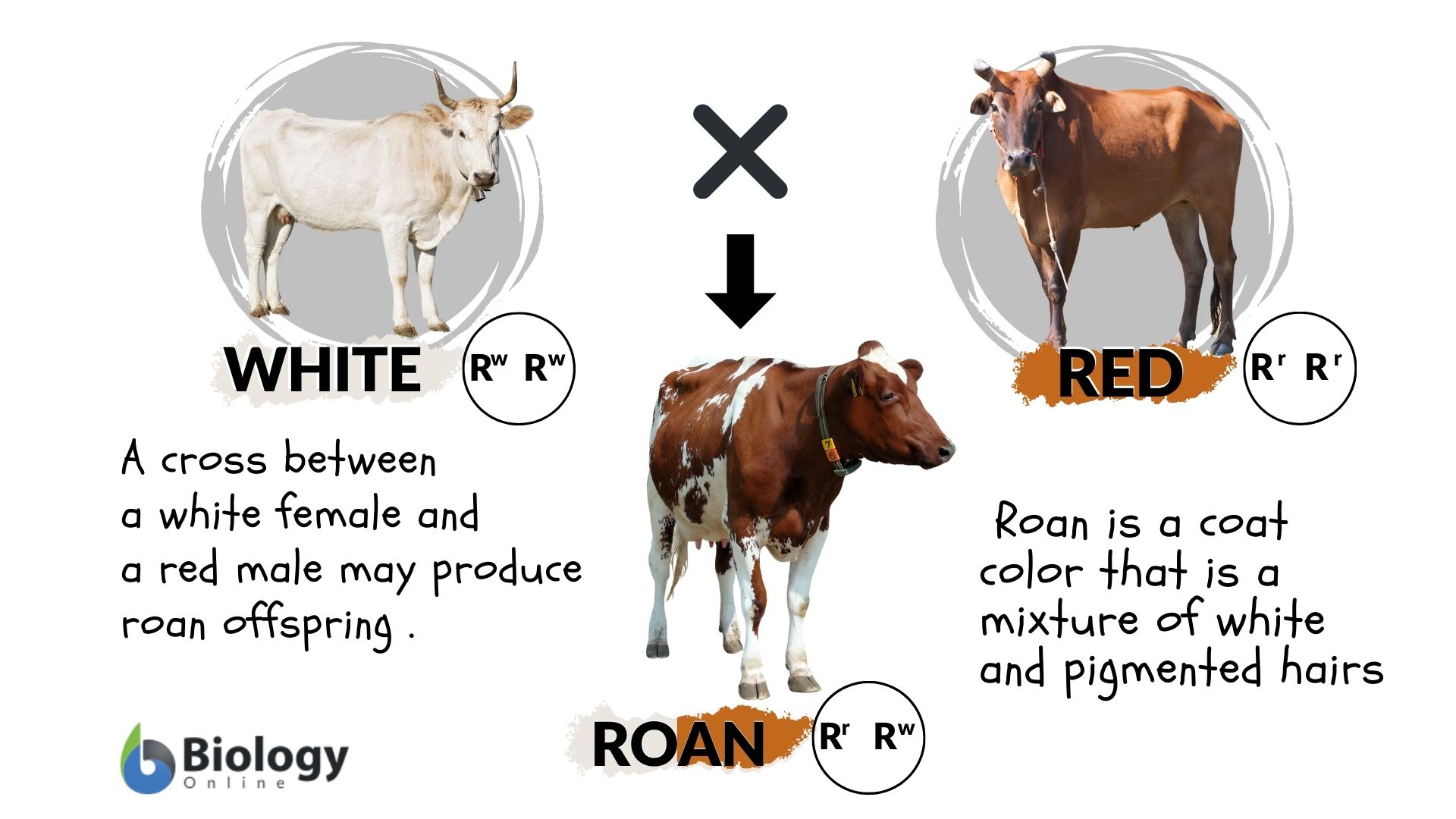
There are some situations where there is a codominance of alleles. In codominance, both the alleles are expressed, however, in their own areas. For example, a red bovine has alleles for a red coat and a white bovine has alleles for a white coat. When both alleles are present in a cow, the result will be a coat with patches of red and white colors. Dogs and cats have shown codominance of alleles, which results in a wide variety of coat and color patterns.
READ: BiologyOnline Free Tutorial – Dominance
In ecology
The word dominant is used in ecology as to the degree by which a particular species is greater in population, productivity, and size than its competitors in the ecological environment. The dominance of species in the ecological environment depends on various factors, such as temperature, humidity, groundwater conditions, and the presence of animals that eat selective plants.
For the species to sustain its generation and reproduce, they try to find a favorable environment. Some species can modify their environment in various ways to keep their dominance. Many birds and animals migrate from colder regions to hotter environments during winters. This behavior also keeps them ecologically dominant over other species.
Other usages
The word dominant is also used to express the behavioral dominance of one individual over another. In ethology (the science of animal behavior), dominance is described as an individual’s preferential access to resources over another. In the context of anthropology, dominance is the state of having higher social status and other individuals react submissively to the dominant species. The benefit of this kind of dominance is that the dominant individual has access to food or potential partners without involving in aggressive fights with another individual. In anatomy and physiology, dominance refers to the normal tendency for one side of the body or of one of a pair of organs to dominate or be used in consistent persistence than the other, such as right-handedness vs. left-handedness.
Dominant Examples
The examples of dominant trait and genetics and ecology are given below
In genetics
In human genetics, there are a number of traits that are controlled by dominant alleles.
The almond-shaped eyes are a dominant trait in humans compared with other eye shapes, e.g. round eyes.
Most people have detached earlobes and few people have attached earlobes. Thus, the allele for the detached earlobe trait is dominant.
The allele responsible for making people right-handed is dominant over the one which makes people left-handed. Furthermore, at the population level, there are more right-handed people than left-handed.
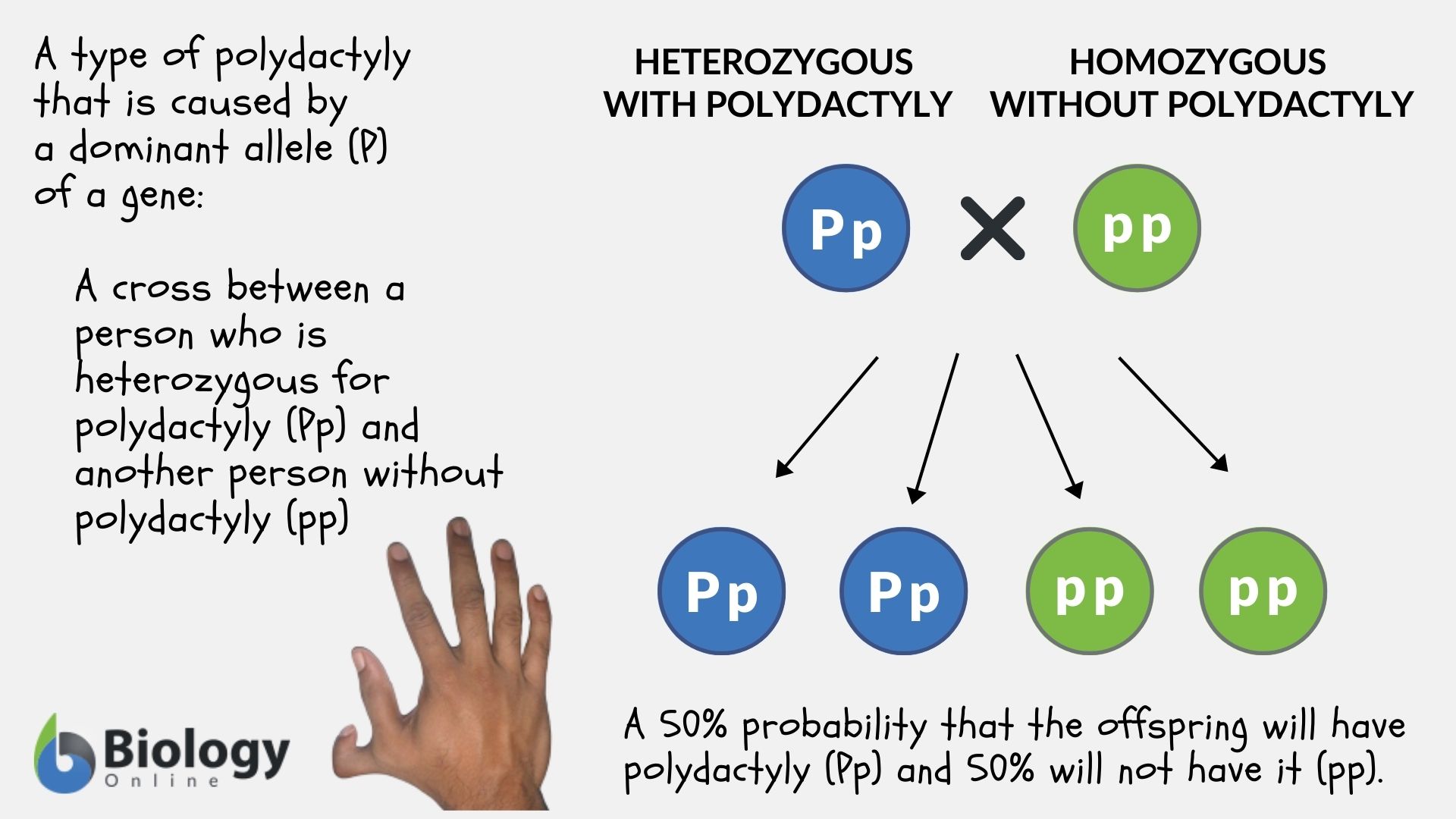
A dominant allele causes the development of 6 fingers instead of 5. The condition of having an extra finger (or toe) is called polydactyly. In humans, mutations involving the GLI3 gene located at chromosome 7 have been found to cause certain disorders and one of them is polydactyly (e.g., preaxial polydactyly IV, postaxial A1, etc.)
The brown color of the eyes is dominant over the blue color. However, it must be remembered that the eye color trait is not controlled by a single gene; it is a polygenic trait.
Humans have been using selective breeding and genetic engineering techniques to propagate desirable dominant traits, such as crops with dominant alleles that confer better resistance against diseases and drought. However, caution should be taken when applying these techniques as it may lead to the transfer of traits among other species, such as weeds acquiring the desired trait and may outgrow important crops. So the scientists need to study the effects of selective breeding, both positive and negative impacts.
READ: Selective breeding and Genetic Engineering Advantages & Disadvantages
In ecology
The examples of dominance in ecology are as follows:
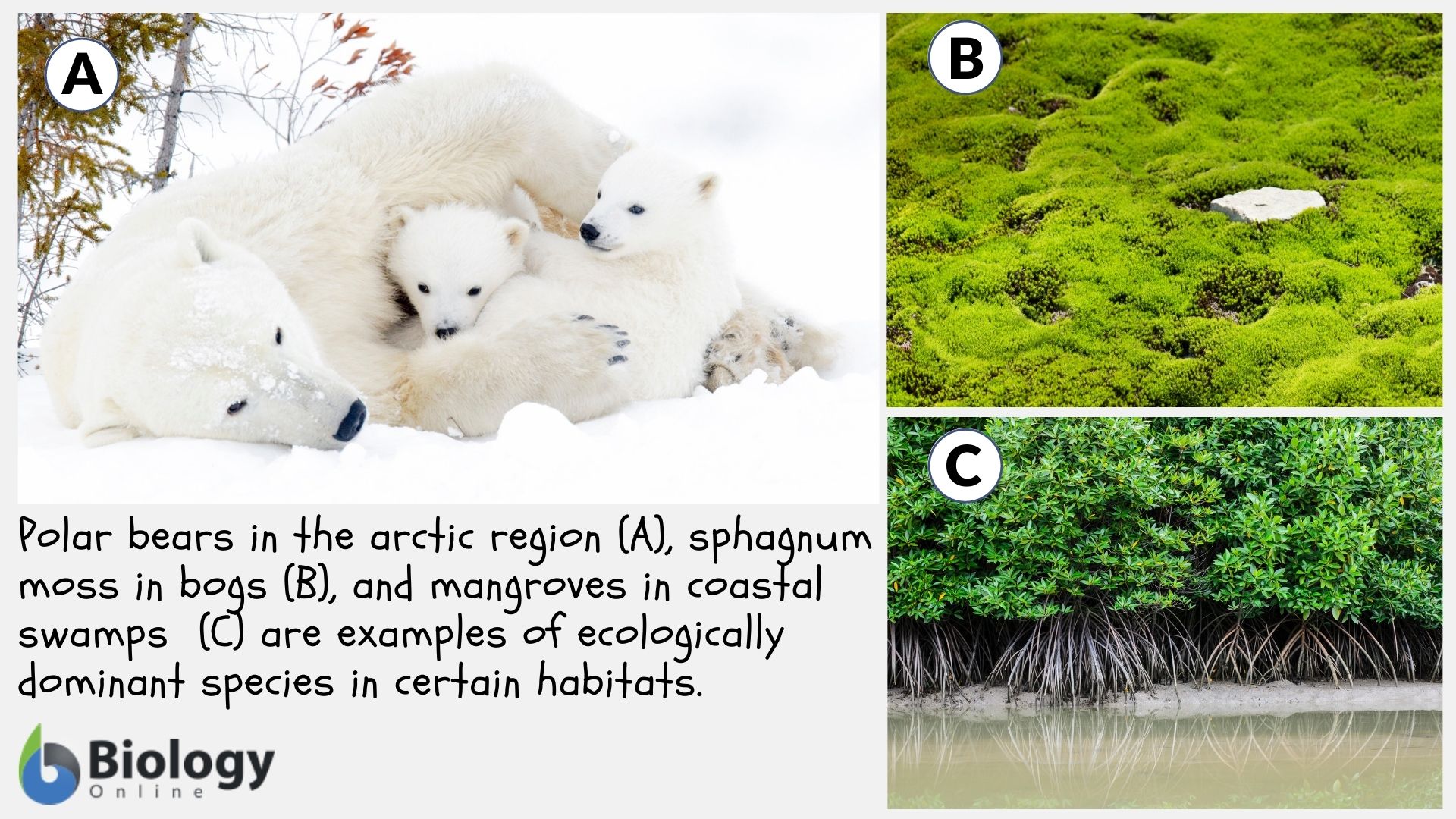
- The Arctic region is dominated by white polar bears because they have the endurance to bear extreme cold environments whereas brown bears dominate the comparatively hotter environments of Asia, Europe, and North America
- Sphagnum (a moss) is dominant in temperate bogs.
- Mangrove species dominate the tidal swamps in tropical regions.
Try to answer the quiz below to check what you have learned so far about the term “dominant”.

References
- Byjus. 2021. “CoDominance and Multiple Alleles.” 2021. https://byjus.com/biology/co-dominance-and-multiple-alleles/.
- Miko, Ilona. 2008. “Genetic Dominance: Genotype-Phenotype Relationships.” Nature Education. 2008. https://www.nature.com/scitable/topicpage/genetic-dominance-genotype-phenotype-relationships-489/.
- RosendeutschschweizerBlatt. 2012. “Punnett Square Showing Codominance in Flower Colour.” 2012. https://commons.wikimedia.org/wiki/File:Incomplete_dominance_punnett_square.png.
Wilkie, Andrew O.M. 1994. “The Molecular Basis of Genetic Dominance.” Journal of Medical Genetics 31 (2): 89–98. https://doi.org/10.1136/jmg.31.2.89.