Diffusion
n., plural: diffusions
[dɪˈfjuːʒən]
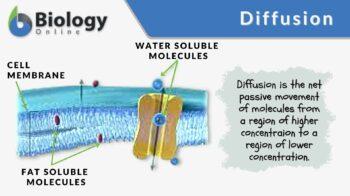
Definition: net passive movement of molecules from region of higher concentration to region of lower concentration
Table of Contents
Diffusion Definition
Diffusion is the net passive movement of molecules or particles from regions of higher to regions of lower concentration. For diffusion to occur there must be a concentration gradient. The dissimilarity in the amounts of solutes, particles, or molecules between the two regions will cause them to move between the two regions. To define diffusion in the biological context, imagine the ions, respiratory gases, glucose, or other particles that move randomly between the crowded and the less-crowded regions (fluids), often across a semi-permeable membrane. The unequal concentration of the particles between two fluids will generate a gradient that will incite them to move in order to equalize the disparity in concentrations. Nevertheless, the movement of solutes during the diffusion process is not a one-way route. There could be movements to and fro. However, the movement is inclined towards the area of lower concentration. Thus, diffusion is characterized by a net movement of the particle down their concentration gradient — or in other words, from the area of greater concentration to an area of lower concentration. The net movement of oxygen and carbon dioxide across the alveolar-capillary membrane of mammalian lungs and the net movement of glucose down the concentration gradient are diffusion examples in biological systems.
Etymology
The word diffusion comes from the Latin diffusionem, diffusio, meaning “a pouring forth”.
Diffusion in Physics, Chemistry, and Biology
Diffusion in physics is the movement of particles from an area of higher concentration to an area of lower concentration as driven by thermal energy. (1) This definition is affirmed as well in chemistry. The particles suspended in liquids and gases, for instance, struck each other resulting in their random constant motion. This motion due to the collisions of particles is called pedesis or the Brownian movement. When these particles increase in number, they become compacted and the Brownian movement is seemingly lost as what can be observed in a concentrated solution. When provided with an augmented space they will start to move but in a rather organized manner from an area of high concentration to an area of low concentration, following Fick’s laws.(2)
The factors that affect diffusion rates are temperature, concentration, distance, and material.(3) In particular, a hot temperature causes the particles to acquire more kinetic energy (i.e. the energy possessed by the particles in motion), and therefore will move and push other particles more. Thus, the diffusion of particles becomes faster when the temperature is higher. Conversely, it is slower at a lower temperature. As for particle concentration, the greater the number of particles in a solution, the rate of diffusion will also be faster. As for the distance, the shorter the distance for the diffusing particles to travel, the faster the rate will be. The kind of material in the solution also affects the rate of diffusion. Smaller and lighter particles can spread more easily than larger and heavier ones. Thus, gaseous particles diffuse faster than the particles in liquids or solids. Liquids, in turn, diffuse quicker than solids. Diffusion in chemistry is s exemplified by food dye dropped in an aqueous solution. The dye particles can be seen moving as they spread out throughout the solution. Another example is when spraying perfume the scent will be picked up as it diffuses throughout the room.
In physics and chemistry, diffusion is basically defined as the “spreading out” of the objects from the initial area of higher concentration. Diffusion in biology applies the same principle but the process involves a biological system, such as a semipermeable membrane. Furthermore, it is defined as a net movement of particles or molecules. In biological systems, it is a type of passive transport. Passive transport refers to the type of cellular transport wherein the net movement of substances is down the concentration gradient. In contrast, cellular transport wherein substances have to be moved to an area that is already saturated or high in concentration is called active transport. Because the movement of substances in passive transport does not go against the concentration gradient it, therefore, does not require chemical energy (e.g. ATP) to proceed. Rather, it is driven by kinetic and natural energy. Other examples of passive transport are filtration and osmosis.
Types of Diffusion
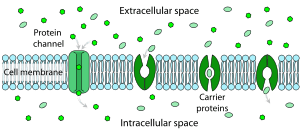
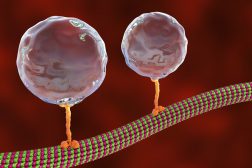
Diffusion is of two major types. The first one does not require assistance when moving down the concentration gradient. This type is called simple diffusion. In contrast, facilitated diffusion, as the name implies, is one in which assistance is required. The assistance comes, for instance, from the proteins embedded in a biological membrane. Basically, these two types of diffusion differ in the mechanism by which substances move – one that occurs without assistance and the other one that occurs with the help of transport proteins. Thus, in facilitated diffusion, the transport only occurs when the molecule is able to bind to the membrane protein transporter. Both of them result in the net downhill movement of substances and do not require chemical energy to proceed.
Diffusion vs. Active Transport
While diffusion is the movement of particles down their concentration gradient, active transport is the movement of particles against the concentration gradient. Since the movement is characteristically uphill this type of transport requires energy often in the form of adenosine triphosphate (ATP).
Diffusion and Osmosis
Diffusion and osmosis are both types of passive transport. Thus, both of them occur in a downhill manner and without energy expenditure. The difference is the diffusing molecules or particles. In diffusion, the diffusing particles are the solutes of a solution. In osmosis, the diffusing particles are the solvent of the solution, i.e. water molecules. In osmosis, water molecules diffuse from an area of high water concentration to an area of low water concentration across a biological membrane. Water that is drawn towards a concentrated solution but does not involve a biological membrane is not osmosis.
Diffusion in Cells
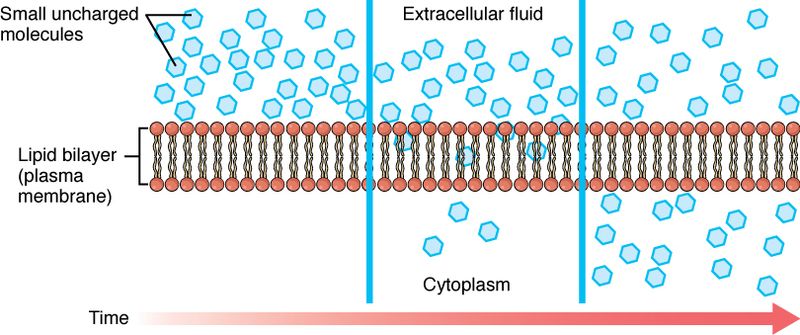
The cell regulates the entry and exit of substances through its plasma membrane. Not all molecules can readily pass across this selective membrane due to its structure. The lipid bilayer feature of the plasma membrane prevents the passage of polar molecules. Nevertheless, small nonpolar molecules and ions can pass through the lipid bilayer. The way through which polar molecules can pass is via the proteins in the plasma membrane. The transmembrane integral proteins are membrane proteins involved in the transport of substances into and out of the cell. (4, 5)
In this table, the mechanism employed by certain types of molecules and ions in order to pass across the plasma membrane down their concentration gradient is shown.
Table 1: Mechanisms for transport |
|
|---|---|
| Molecules for transport | Type of diffusion |
| Small nonpolar molecules (e.g. oxygen, carbon dioxide) |
By simple diffusion, i.e. the molecules can easily diffuse across the membrane |
| Polar molecules (e.g. glucose and amino acids) Larger ions (e.g. sodium ions and chloride ions) |
By facilitated diffusion, i.e. the molecules require membrane proteins such as permeases to move along their concentration gradient |
| Large nonpolar molecules (e.g. retinol) |
By facilitated diffusion, i.e. the molecules require membrane proteins such as retinol-binding protein to move along their concentration gradient |
Diffusion in Plants and Animals
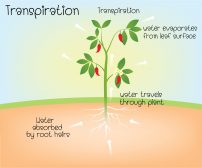
In plants and animals, diffusion is exemplified by the diffusion of gasses. In plants, the openings formed by the guard cells called stomata are where carbon dioxide enters and oxygen leaves the plant. The plant takes in carbon dioxide since it is one of the major reactants in photosynthesis. Oxygen, in turn, is a byproduct of photosynthesis and is then released as it diffuses into the environment through the stomata.
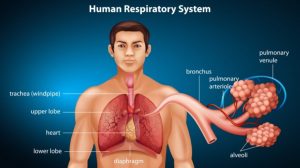
Similarly, in animals, respiratory gases are transported generally by simple diffusion. In humans, the diffusion of respiratory gases takes place at the capillary beds that separate blood from the tissue fluid. In the lungs, carbon dioxide is released by diffusing from the blood into the alveoli and then breathed out. Oxygen, in turn, is breathed in, and then diffuses from the alveoli of the lungs into the blood. The oxygen then diffuses from the circulating blood to the various tissues of the body.
Try to answer the quiz below to check what you have learned so far about diffusion.

References
- Lin, Y.C., Phua, S. C., Lin, B., & Inoue, T. (2013). Visualizing molecular diffusion through passive permeability barriers in cells: conventional and novel approaches. Current Opinion in Chemical Biology, 17(4), 663–671. https://doi.org/10.1016/j.cbpa.2013.04.027
- Lecture 3: Diffusion: Fick’s first law. (n.d.). Retrieved from https://my.eng.utah.edu/~lzang/images/lecture-3.pdf
- Vinzant, A. (2017, September 7). DIY: Diffusion Science Experiment – Astrocamp School. Retrieved from Astrocamp School website: https://astrocampschool.org/diy-diffusion/
- Pratt, C. A., Voet, D., Voet, J. G. (2002). Fundamentals of biochemistry upgrade. New York: Wiley. pp. 264–266.
- TRANSPORT IN AND OUT OF CELLS. (2019). Retrieved from Estrellamountain.edu website: https://www2.estrellamountain.edu/faculty/farabee/biobk/BioBooktransp.html
© Biology Online. Content provided and moderated by Biology Online Editors