Cell
n., plural: cells
[sɛl]
Definition: the structural, functional, and biological unit of all organisms
Table of Contents
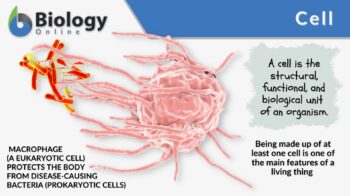
A biological cell is a membrane-bound structure that occurs as a functional independent unit of life (such as in unicellular organisms, e.g. bacteria, protozoa, etc.), or as the structural or fundamental unit in a biological tissue specialized to perform a particular function in multicellular organisms (e.g. plants and animals).
Proteins are made biologically inside the cell. But which specific part of the cell? Find the answer here: Where Does Protein Synthesis Take Place? Join our Forum now!
 Proteins are made biologically inside the cell. But which specific part of the cell? Find the answer here:
 In biology, a cell is the structural, functional, and biological unit of all organisms. It is an autonomous self-replicating unit that may exist as a functional independent unit of life (as in the case of a unicellular organism), or as a sub-unit in a multicellular organism (such as in plants and animals) that performs a particular function in tissues and organs. Etymology: The term ”cell” came from Latin ”cella”, ”cellula”, meaning “a small room”.
Types of Cells
Cells may be typified in different ways. For instance, based on the presence of a well-defined nucleus, a cell may be eukaryotic or prokaryotic. Cells may also be classified based on the number of cells that make up an organism, i.e. ”unicellular”, ”multicellular”, or ”acellular”.
Prokaryotic cell vs. eukaryotic cell
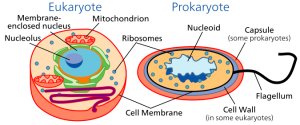
Cells may be classified into two major types: prokaryotic cells (e.g. bacterial cells) and eukaryotic cells (e.g. plant or animal cells). The main difference between the two is a well-defined nucleus surrounded by a membranous nuclear envelope present only in eukaryotic cells. However, for some multicellular eukaryotes, such as humans, there are cells in the body without a nucleus. An example is the mature red blood cells (erythrocytes), which have lost their nuclei at maturity to maximize space for hemoglobin so as to optimize their capacity for carrying oxygen.
Apart from the nucleus, there are other organelles found in eukaryotic cells. These organelles are mitochondria, plastids, endoplasmic reticulum, and Golgi apparatus. These organelles are not present in prokaryotic cells. Also, the number of organelles depends on cell physiology. For instance, the muscle cell tends to have more mitochondria than the other cells of the human body because muscle cells have a high demand for energy due to their role in contraction and movement.
Despite these differences, prokaryotic and eukaryotic cells share a number of common features: the genetic information is stored in genes, proteins serve as their main structural material, ribosomes are used to synthesize proteins, adenosine triphosphate is the main source of metabolic energy to sustain various cellular processes, and a cell membrane that controls the flow of substances into and out of the cell.
Unicellular vs. multicellular vs. acellular
Cells may be used as a basis to describe organisms as unicellular or multicellular. Unicellular organisms are those that have only one cell, i.e. single-celled. Examples are prokaryotes and protists. Multicellular organisms are those possessing more than one cell. Examples are plants and animals. The cells of a multicellular organism may share common features and functions.
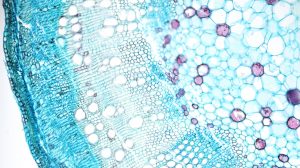
These cells that act as a unit make up tissue. The fundamental types of tissues in animals are epithelial tissues (or epithelium), nerve tissue, connective tissue, muscle tissue, and vascular tissue. In plants, the different types of tissues are the embryonic or meristematic tissues (such as apical meristem and cambium), the permanent tissues (e.g. epidermis, cork, trichome), and the reproductive tissues (i.e. sporogenous tissues). The permanent tissues may be further classified into fundamental (e.g. parenchyma, collenchyma, sclerenchyma) and complex (e.g. phloem and xylem tissues). Tissues that work in unison to carry out a specific set of functions form a biological organ. Conversely, the term “acellular” pertains to a tissue that is not made of cells or not divided into cells. An example of acellular tissue is the hyphae of certain fungi.
Structure of a Cell
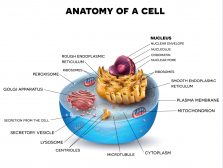
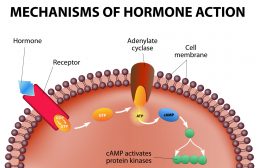
A cell is a membrane-bound structure containing cytoplasm and cytoplasmic structures. The cell membrane is made up of two layers of phospholipids with embedded proteins. It separates the contents of the cell from its outside environment, as well as regulates what enters and exits the cell. Another interesting feature of the cell membrane is the presence of surface molecules (e.g. glycoproteins, glycolipids, etc.) that act as a ‘signature’ for a cell. Every cell has a different ‘signature’ or ‘marker’ that is thought to function in cell recognition, or in a sort of cellular identification system. Other cells have additional protective cell layers on top of the cell membrane, e.g. cell wall in plants, algae, fungi, and certain prokaryotes.
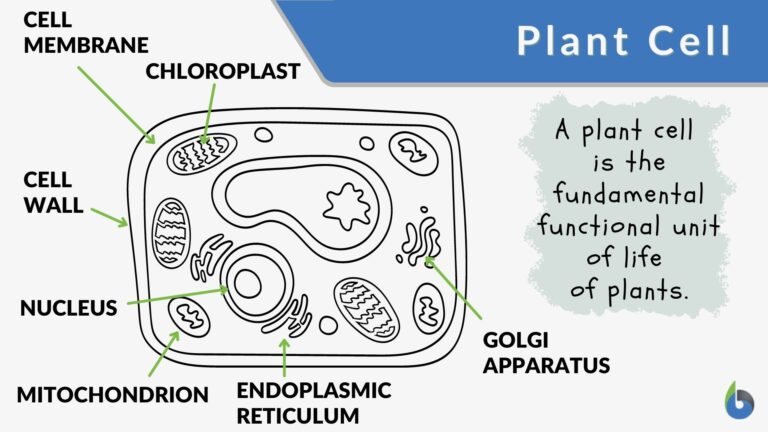
The liquid component of the cytoplasm surrounding the organelles and other insoluble cytoplasmic structures in an intact cell where a wide variety of cell processes take place is called cytosol. The cytosol is comprised of water, ions (e.g. potassium, sodium, chloride, bicarbonate, magnesium, and calcium), and diverse biomolecules, such as nucleic acids, proteins, lipids, and carbohydrates. The potassium ions are greater in number in the cytosol than in the surrounding extracellular fluid. It is in the cytosol that many metabolic reactions take place, e.g. glycolysis, osmoregulation, action potential generation, and cell signaling.
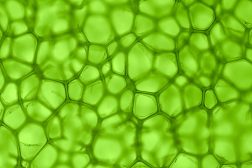
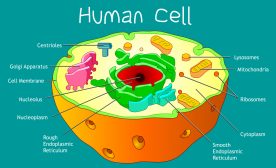
In eukaryotic cells, cellular organelles are the “little organs” inside the cell. These organelles perform special functions. Eukaryotic cells that carry out photosynthesis (e.g. plant cells and algae) would have numerous plastids, especially chloroplast (a type of plastid containing green pigments). The presence of chloroplasts is one way to distinguish a plant cell from an animal cell. Other organelles that can be found in both plant cells and animal cells are the nucleus, mitochondria, endoplasmic reticulum, and Golgi apparatus.
The nucleus is the large organelle that contains the genetic material (DNA) organized into chromosomes. Mitochondria are regarded as the powerhouse of eukaryotic cells. That is because it is the organelle that supplies energy by generating adenosine triphosphate (ATP) through cellular respiration. The endoplasmic reticulum occurs as an interconnected network of flattened sacs or tubules involved in lipid synthesis, carbohydrate metabolism, drug detoxification, and attachment of receptors on cell membrane proteins. It is also involved in intracellular transport, such as the transport of the products (of the rough endoplasmic reticulum) to other cell parts like the Golgi apparatus. The Golgi apparatus is comprised of membrane-bound stacks. It is involved in glycosylation, packaging of molecules for secretion, transporting of lipids within the cell, and giving rise to lysosomes.
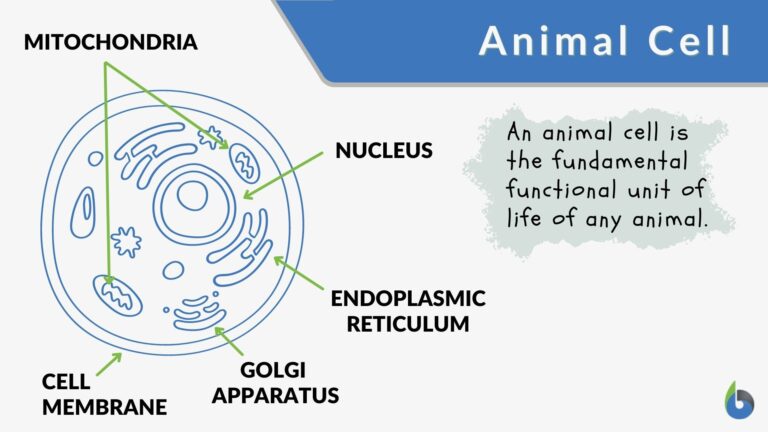
Lysosomes are single-membraned structures containing various digestive enzymes, and thus, are involved in intracellular digestion. Vacuoles, in turn, are membrane-bound vesicles involved in intracellular secretion, excretion, storage, and digestion.
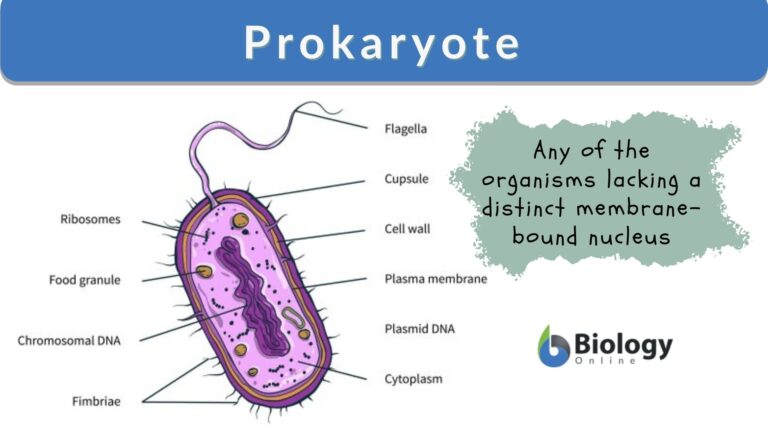
A prokaryotic cell lacks the typical membrane-bound organelles present in a eukaryotic cell. Nevertheless, it may possess certain organellar-like structures such as carboxysome (a protein-shell compartment for carbon fixation in some bacteria), chlorosome (a light-harvesting complex in green sulfur bacteria), and magnetosome (found in magnetotactic bacteria), and thylakoid (in some cyanobacteria). It also has a nucleosome, which is not a double-membraned structure but a region in the prokaryotic cell containing nuclear material.
The mitochondria and plastids have their own DNA (referred to as extranuclear DNA to distinguish it from the DNA found inside the nucleus). These organelles are semi-autonomous. Because of this, they are presumed to have come from endosymbiotic bacteria (according to the Endosymbiotic theory).
Cell Cycle
The cell cycle pertains to the sequence of growth and division of a cell. In essence, the cell cycle involves the duplication of DNA via DNA replication and this leads to the division of the parent cell, yielding two daughter cells. These processes are essential for cell growth, replication, and division. In eukaryotes, the cell cycle is comprised of a series of biological events namely the resting phase, the interphase, and the cell division. During the resting phase, the cell is in an inactive, non-cycling state. Interphase is that phase of the cell cycle where the cell next grows in size, its DNA replicated and makes a copy of the cell’s DNA to prepare for the next cell division. The interphase is comprised of three stages: G1, S phase, and G2. The final stage is cell division.
Cell Division
Cell division is the process wherein a parent cell divides, giving rise to two or more daughter cells. It is a vital cellular process because it enables growth, repair, and reproduction. In eukaryotes, cell division may be in the form of mitosis or meiosis. In mitosis, the result is two genetically identical cells. In meiosis, the result is four genetically non-identical cells. Sex cells, such as egg cells (female gametes) and sperm cells (male gametes), are haploid cells produced by meiosis. Stem cells are cells that are capable of dividing via mitosis. The stem cells through mitosis proliferate and give rise to multifarious cells with specialized functions, such as neurons, myocytes, hepatocytes, and so on. Cells of the body apart from the sex cells are referred to as somatic cells. Therefore, mutations in somatic cells tend not to be passed on to the next generation. However, mutations in the sex cells are likely to be inherited or passed on to offspring.
Cell Growth and Metabolism
Cells after dividing will undergo growth. The growth of the cell is enabled by metabolism. Metabolism may be categorized into two: catabolism and anabolism. Catabolism includes a series of degradative chemical reactions that break down complex molecules into smaller units, usually releasing energy in the process. Anabolism includes a sequence of chemical reactions that constructs or synthesizes molecules from smaller units, usually requiring an input of energy (ATP) in the process.
Biomolecules, such as nucleic acids, proteins, carbohydrates, and lipids are produced, stored, and degraded inside the cell. For example, the site of DNA and mRNA biosyntheses is the nucleus. Proteins, in turn, are synthesized by the ribosomes. Lipid synthesis occurs in the endoplasmic reticulum.
Motility
Some cells have specialized structures involved in locomotion. Flagella, for instance, are long, slender, threadlike, whiplike extensions that enable movement by propulsion. Some flagella though are not used for movement but for sensation and signal transduction, e.g. rod photoreceptor cells of the eye, olfactory receptor neurons of the nose, kinocilium in the cochlea of the ear.
Cilia are hair-like projections on the surfaces of some cells. Cilia are generally of two kinds: motile cilia (for locomotion) and non-motile cilia (for sensory). Examples of tissue cells with cilia are the epithelia lining the lungs that sweep away fluids or particles. Examples of organisms that have cilia are protozoans that use them for movement.
Research
Cell biology (or cytology) is the scientific study of cells. Robert Hooke was named as the first to discover cells, in 1665. Matthias Jakob Schleiden and Theodor Schwann were the ones who first formulated the Cell theory, in 1839.
Try to answer the quiz below to check what you have learned so far about cells.

Further Reading
- Biological Cell – Introduction (Tutorial)
- Prokaryotic cell and Eukaryotic cell
- Tissue – Group of Cells with Distinct Function
References
- kazilek. (2009, September 27). Cell Parts | Ask A Biologist. Retrieved from Asu.edu website: https://askabiologist.asu.edu/cell-parts
- Genetics Home Reference. (2019). What is a cell? Retrieved from Genetics Home Reference website: https://ghr.nlm.nih.gov/primer/basics/cell
- CELLS II: CELLULAR ORGANIZATION. (2019). Retrieved from Estrellamountain.edu website: https://www2.estrellamountain.edu/faculty/farabee/biobk/BioBookCELL2.html
- CELL AND ORGANELLE NOTES. (2019). Retrieved from Edu.pe.ca website: http://www.edu.pe.ca/gray/class_pages/rcfleming/cells/notes.htm
- Cell Structure and Function. (2019). Retrieved from Msu.edu website: https://msu.edu/~potters6/te801/Biology/biounits/cellstructure&function.htm
© Biology Online. Content provided and moderated by Biology Online Editors.
Test your knowledge: Overview of the Cell Quiz