Cell wall
n., plural: cell walls
[sɛl wɑːl]
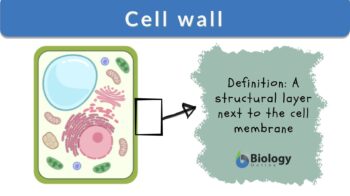
Definition: A structural layer surrounding a cell, in juxtaposition to the cell membrane
Table of Contents
The cell is the structural, functional, and biological unit of all organisms. It is a membrane-bound structure containing cytoplasm and cytoplasmic structures. The membrane that surrounds the cell and separates it from the outside environment is the cell membrane whereas a cell wall is another structural layer surrounding the cell, next to the cell membrane.
Cell Wall Definition
What is a cell wall and how is it formed? You can simply define the cell wall as a semi-rigid thick protective structure that surrounds the cell membrane of some types of cells for protection and defining the shape of the cell. The cell membrane alone cannot provide the required rigidity or strength.
All living organisms are composed of cells. The cells are responsible for performing all vital functions such as metabolism, reproduction, and excretion. The cell is composed of intracellular structures, such as organelles. The organelles have specific functions and are embedded in the cytoplasm. The cell is surrounded by a plasma membrane (or cell membrane) to separate the cell contents from the external environment.
Question: Do all cells have a cell wall?
Answer: Not all cells have cell walls.
Question: Which cells, therefore, have a cell wall?
Answer: Prokaryotes -except mycoplasma and L-form bacteria- and some eukaryotes have a cell wall.
Question: Do animal cells have a cell wall?
Answer: Cell walls are not present in animal cells. That’s why animal cells are not as rigid as other cells surrounded by cell walls. Animal cells are, therefore, have more flexibility than plant cells.
Cell Wall vs. Cell Membrane
Cell walls and cell membranes differ in their structure, function, and other features. See below for the summary.
| Table 1: Cell wall vs. Cell membrane | |
|---|---|
| Cell wall | Cell membrane |
| The outermost layer, next to the cell membrane | A bilipid layer surrounding the cell contents, such as cytosol and organelles |
| Typically, 0.1 μm to several μm in thickness; but varies depending on the composition, i.e. if a new (secondary) cell wall is deposited by the old (primary) cell wall | Typically, 7.5–10 nm in thickness |
| Components vary depending on the species | Made up of lipid bilayer, with carbohydrates and lipoproteins |
| Confers rigidity, giving the cell a more definite shape | With only a cell membrane (lacking in cell wall), the cell is more flexible and can change shape as needed |
| Confers protection, e.g. against the impact of osmotic pressure; more permeable to small molecules | Confers protection, e.g. by being selective, regulating the passage of substances, and so, not all can readily enter the cell even if they are small, due to its semi-permeability; protection against osmotic pressure only up to a certain point |
| Lacks cell surface receptors | Have cell surface receptors |
| Present in plants, fungi, protists (e.g. algae and molds), and bacteria | Present in all cells |
Cell Wall Functions
What does a cell wall do? What are the specific biological functions of the cell wall? The main function of a cell wall is to provide protection to the internal structures of the cell since the plasma membrane is considered to be a fragile layer that cannot provide similar protection against different environmental conditions. Additionally, cell walls are responsible for providing the distinctive shapes of cells. When the internal pressure inside the cell increases due to the entrance of water, the cell wall prevents the expansion and rupture of the cell. What does the cell wall do? The cell wall controls the passage of molecules across the cell allowing only small metabolic molecules to pass, thus, protecting the cell from different toxins and drugs. In multicellular organisms having cell walls, they help in the adhesion of cells giving them a distinctive shape.
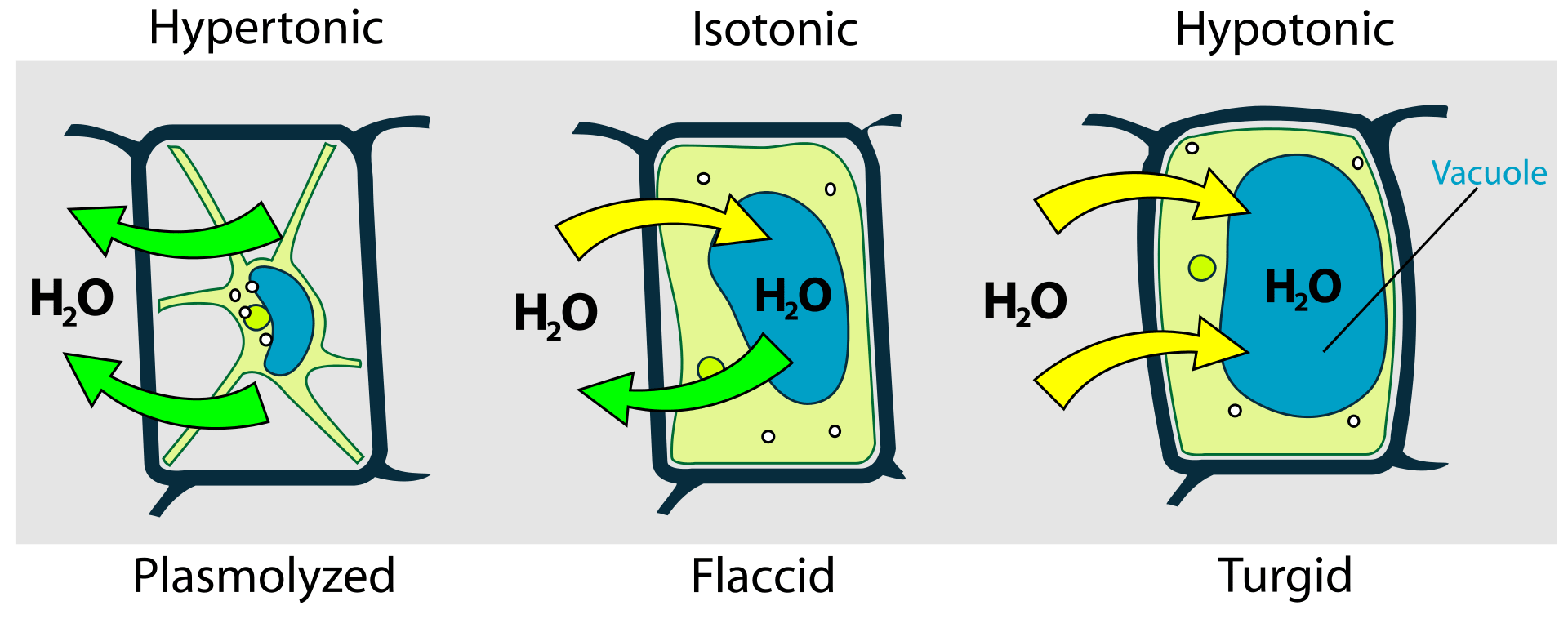
In plants, the cell wall accounts for plant turgidity. The cell wall protects the plant cell from bursting when too much water has entered the cell. Rather than bursting, the cell is able to withstand the osmotic pressure exerted by the water molecules. Consequently, the cell is kept turgid. Some plant cells have a cell wall consisting of a single layer. Other plant cells have two: primary and secondary cell walls. The second cell layer is high in lignin and therefore helps waterproof the cell.
Cell Wall Structure
What is the cell wall made of? The structure of cell walls is not similar in all species; it depends on the developmental stage and cell type. The plant’s primary cell wall consists of pectin, cellulose, and hemicellulose along with other anchored or embedded polymers such as suberin, lignin, or cutin. Algae cell walls are composed of polysaccharides and glycoproteins such as agar and carrageenan; these molecules are not present in terrestrial plants. Bacterial cell walls are composed of peptidoglycans whereas archaeal cell walls are composed of pseudopeptidoglycan, S layer, or polysaccharides. Cell walls of fungi are made of chitin polymer, N-acetylglucosamine.
Plant cell walls
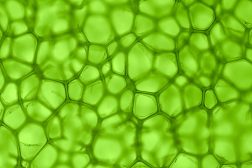
Do plant cells have cell walls? Yes, plant cells have a cell wall, which is a structure that covers each plant cell. The cell membrane cannot provide the structural integrity of plant cells alone. Therefore, the plant cell structure is stronger with a cell wall. However, it is also for this reason that the plant cells are more rigid and less flexible than the animal cells.
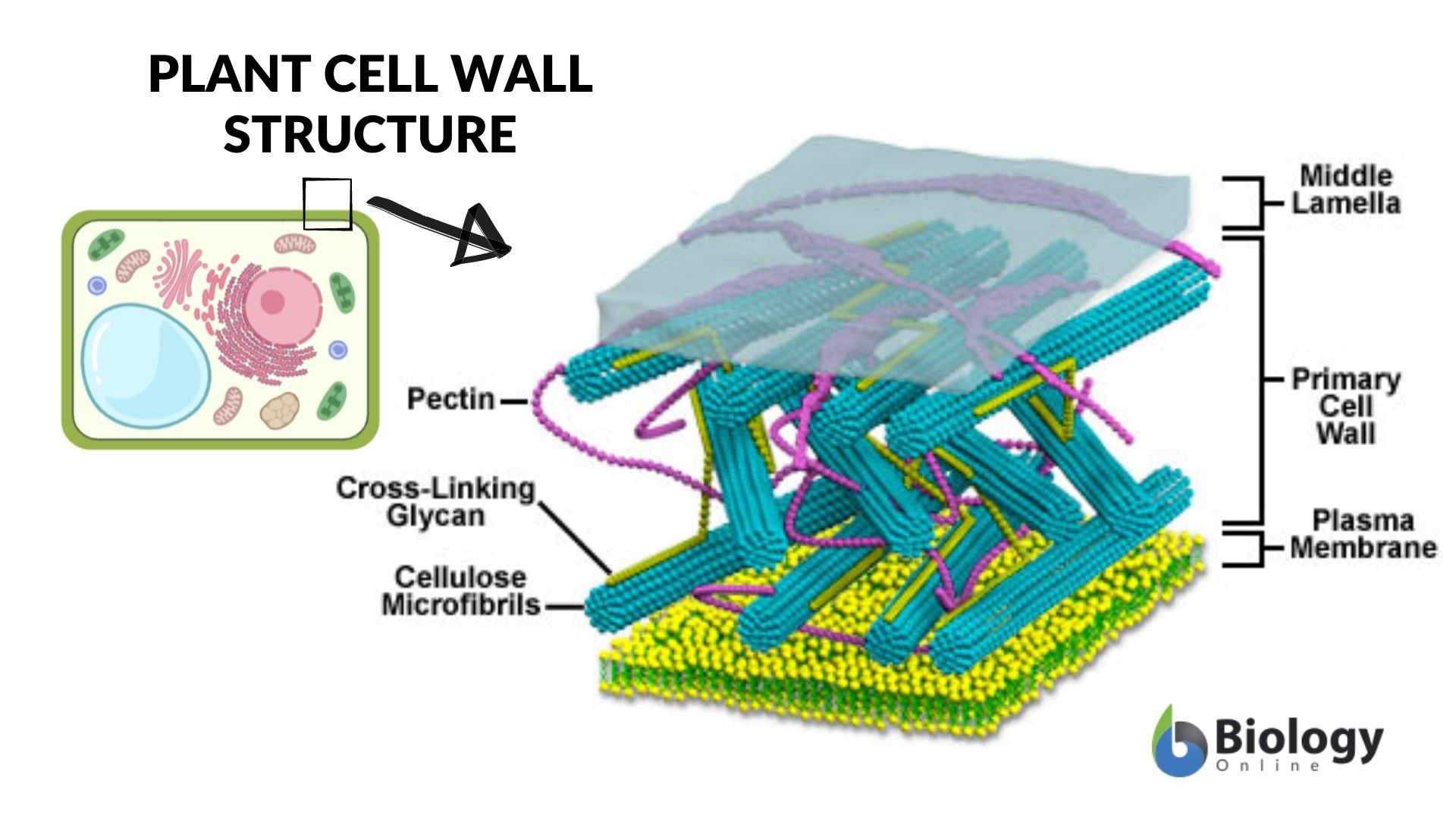
Plant cell parts are enclosed within a tough, extensible, and thin primary cell wall during their growth composed of pectin, cellulose, and hemicellulose. The major component of a plant cell wall, though, is cellulose. What is cellulose? Cellulose is a polysaccharide consisting of a linear chain of β (1→4) linked D-glucose units: (C6H10O5) n.
The cell wall may deposit another layer of cell wall beneath it. When it does, the old cell wall is referred to as the primary cell wall and the newly deposited cell wall is referred to as the secondary cell wall. The secondary cell wall is a thick and strong cell wall located between the primary cell wall and the cell membrane. It is rich in lignin. What is lignin? Lignin is the most abundant substance in the secondary cell wall and it is composed of phenolic compounds forming a complex network. It makes the cell wall impermeable to water.
The middle lamella is present between the two primary cell walls. It is a pectin-rich intercellular material that glues the adjacent cells together. See Figure 2.
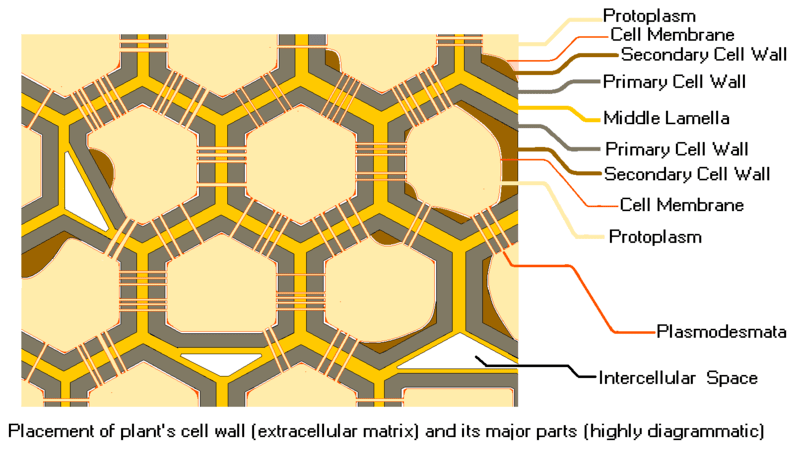
What is the cell wall function in a plant cell? The plant cell wall functions are as follows:
-
- Supports cell structure and provides definite shape
- Encloses the cell
- Helps transport material across the plant cell and the environment and the transportation of fluids in channels
- Resists change in osmotic pressure
What are plant cell walls made up of in different types of plant cells? In higher plants, cellulose polysaccharide forms the tensile fibers. They are connected together tightly by a glycan cross-linkage. In primary cell walls, cellulose is a network embedded in pectin. Secondary cell walls contain lignin that hardens and strengthens the cell wall. Cell wall molecules are linked together forming a complex structure.
What does the cell wall protect the plant from? The plant cell wall protects it from the external environment and from bursting. The imbalance of solute concentration between the inside and the outside of the cell creates a pressure that distends the cell wall outward. What does a plant cell look like due to this pressure? The plant cell appears swollen (turgid).
Fungi cell walls
Do fungi have cell walls? Fungi are eukaryotes with cells that contain cell walls. The cell wall of fungi protects it from predators. The fungal cell wall and cell membrane are attached together. They regulate all the relationships between the external environment and the cell. Many signaling and synthetic pathways contribute to the formation of cell walls.
The fungal cell wall protects the internal cellular structures from pressure and stress. It protects the cell from rupture, controls the cell permeability, molecules absorption from the external environment defines the architecture of the cell, and provides rigidity. In addition to its protective function, cell wall proteins can mediate the interaction with external environments since it usually contains receptors and adhesive proteins. Moreover, cell walls contain antigenic proteins that trigger the host’s immune system during infection to suppress the growth and reproduction of pathogenic fungi. The structure of a cell wall is arranged in different layers where all the components deposited on the innermost layer are in contact with the plasma membrane.
The fungal cell wall mainly consists of chitin, glucans, and glycoproteins. These structures are not present in human and animal cells. Therefore, antifungal drugs usually target these structures to provide selectivity against fungal cells without affecting the host cell. Proteins and polysaccharides in the cell wall are usually associated with each other forming glycoproteins.
The fungal cell wall is mainly composed of Glucans polysaccharide, which represents about half the dry weight of cell wall components. Glucan polymers mostly consist of 1 to 3 linked units of glucose. Chitin is one of the dry components of a fungal cell wall, it represents about 2% of the dry components in the yeast cell wall while it forms about 10-20% in fungi. Fungi can synthesize chitin by the action of chitin synthase enzyme using N-acetylglucosamine, then it is accumulated next to the cytoplasmic membrane in the extracellular space. Proteins form about 30-50% of dry weight in the yeast cell wall, while it forms about 20-30% of the filamentous fungi cell wall. Cell wall proteins are linked to carbohydrates by N or O linkage forming glycoproteins.
Cell walls of fungi contain melanin that is high molecular weight and negatively charged pigment. Melanin is insoluble in water and acts to protect the fungal cell from stressors such as UV light, high temperature, and toxins so that it can survive inside the host cell. Melanin production is one of the virulence factors of fungi; it is essential for the dissemination and invasion of the host cell. Moreover, melanin can affect the host immune response and inhibit phagocytosis.

Algae cell walls
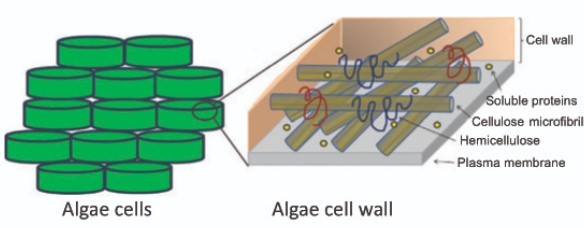
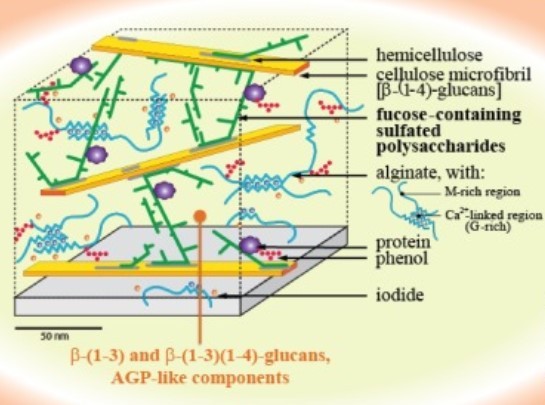
Algae cell walls are structurally related to the plant cell walls. They are made of polysaccharides, such as glycoproteins or cellulose. Some red and green algae contain microfibrils of mannan while the cell wall of brown algae contains alginic acid. Different substances may accumulate in the cell wall of algae as calcium ions and sporopollenin. Diatoms are a group of algae that use silicic acids in synthesizing their cell walls. The synthesis of silica saves the energy of the cell since it requires less energy during synthesis.
Molds
Molds, e.g. slime molds and water molds, are fungus-like protists. These organisms are likened to fungi because both of them lack chloroplasts, are heterotrophic (saprophytes), and with cell walls. The difference between them though is that in molds, the cell wall is mainly made up of cellulose and lacks chitin. Fungal cell walls, in contrast, have chitin.

Bacteria and Archaea cell walls
Most prokaryotes are surrounded by cell walls that protect the fragile cytoplasmic membrane and other cellular components. Do bacteria have cell walls? Bacteria and archaea are unicellular prokaryotes. The cell wall of prokaryotes is a semirigid, complex structure.
The prokaryotic cell wall contributes to the pathogenicity of some species and it is the site of action of several antimicrobial drugs. Moreover, bacterial cell walls are used to differentiate between the two major types of bacteria: Gram-positive and Gram-negative bacteria.
The bacterial cell wall consists of a rigid network of peptidoglycan which can be found either in combination with other molecules or alone, peptidoglycan network consists of repeating units of disaccharides forming a lattice and connected together by polypeptides. Disaccharide units consist of monosaccharides called N-acetylmuramic acid (NAM) and N-acetylglucosamine (NAG). These monosaccharides are structurally related to glucose. The peptidoglycan cell wall is composed of rows of alternating NAM and NAG units forming a backbone of carbohydrates linked together by polypeptides. The antimicrobial drug penicillin damages the bacterial cell wall by interfering with the linkage between peptidoglycan rows resulting in the lysis and rupture of the cell due to loss of its integrity.
The gram-positive cell wall definition biology is a rigid, thick layer of peptidoglycan formed of several rows. Plasmic space is present between the plasma membrane and cell walls of gram-positive bacteria. That space contains lipoteichoic acid forming a granular layer. Additionally, other substances such as phosphate and teichoic acid which consist mainly of alcohols such as ribitol or glycerol are found in gram-positive bacteria cell walls. Teichoic acid is responsible for the regulation of cation movement across the cell wall due to its negative charge. Moreover, teichoic acid prevents the damage and lysis of cell walls, thus it has a role in cellular growth. Furthermore, it provides antigenic character to the cell so it can easily be detected and tested.

Gram-negative bacterial cell walls consist of only a few layers of peptidoglycan and an outer membrane. The periplasmic space in the outer membrane is composed of a gel-like substance containing a high concentration of transport proteins and degradative enzymes. Because the cell walls of Gram-negative bacteria contain only a few rows of peptidoglycan and it doesn’t contain any teichoic acid, consequently, it is more susceptible to damage and breakage by external factors.
The outer membrane consists of lipoproteins, lipopolysaccharides, and phosphate. The outer membrane contributes to the pathogenicity of gram-negative bacteria since it evades the complement action and phagocytosis owing to its negative charge. Moreover, it is resistant to bile salts, digestive enzymes, heavy metals, detergents, and some antibiotics. However, the outer membrane contains porins which are channels formed due to the presence of proteins that provide some permeability to allow the entrance of metabolic molecules such as carbohydrates, amino acids, and vitamin B12.
The lipopolysaccharide of the outer contains a lipid molecule known as lipid A. Lipid A is released from the bacterial cell after dying, it functions as an endotoxin that causes the symptoms of bacterial infection such as fever, blood clotting, blood vessels dilation, and shock. Compared to gram-positive bacterial cell teichoic acid, O polysaccharide molecule is attached to lipid A, it provides specific antigenicity so it is used in distinguishing between different strains of gram-negative bacteria.
Archaeal cell walls are atypical cell walls composed of proteins and polysaccharides but not peptidoglycan. However, their cell wall contains a peptidoglycan-like molecule called pseudopeptidoglycan or pseudomurein S layer. It lacks NAM and contains N-acetyltalosaminuronic acid instead. When microscopically examined, archaea usually appear similar to Gram-negative bacteria based on their lack of peptidoglycan in their cell wall structure.
Try to answer the quiz below to check what you have learned so far about cell walls.

References
- Alberts, B., Johnson, A., Lewis, J., Raff, M., Roberts, K., & Walter, P. (2002). The plant cell wall. In Molecular Biology of the Cell. 4th edition. Garland Science.
- Archibald, A. R., Hancock, I. C., & Harwood, C. R. (1993). Cell wall structure, synthesis, and turnover. Bacillus subtilis and Other Gram‐Positive Bacteria: Biochemistry, Physiology, and Molecular Genetics, 379-410.
- Cassab, G. I. (1998). Plant cell wall proteins. Annual review of plant biology, 49(1), 281-309.
- Domozych, D., Ciancia, M., Fangel, J. U., Mikkelsen, M. D., Ulvskov, P., & Willats, W. G. (2012). The cell walls of green algae: a journey through evolution and diversity. Frontiers in plant science, 3, 82.
- Garcia-Rubio, R., de Oliveira, H. C., Rivera, J., & Trevijano-Contador, N. (2020). The fungal cell wall: Candida, Cryptococcus, and Aspergillus species. Frontiers in microbiology, 10, 2993.
- Heredia, A., Jiménez, A., & Guillén, R. (1995). Composition of plant cell walls. Zeitschrift für Lebensmittel-Untersuchung und Forschung, 200(1), 24-31.
- Houston, K., Tucker, M. R., Chowdhury, J., Shirley, N., & Little, A. (2016). The plant cell wall: a complex and dynamic structure as revealed by the responses of genes under stress conditions. Frontiers in plant science, 7, 984.
- Synytsya, A., Čopíková, J., Kim, W. J., & Park, Y. I. (2015). Cell wall polysaccharides of marine algae. In Springer handbook of marine biotechnology (pp. 543-590). Springer, Berlin, Heidelberg.
- Tortora, G. J., Funke, B. R., & Case, C. L. (2015). Microbiology: An Introduction, Global Edition. USA: Pearson Education.
- Varner, J. E., & Lin, L. S. (1989). Plant cell wall architecture. Cell, 56(2), 231-239.
© Biology Online. Content provided and moderated by Biology Online Editors