Bacteria
n., singular: bacterium
[bækˈtɪɹ.i.ə]
Definition: prokaryotes, especially of Kingdom Monera, and comprise the Domain Bacteria
Table of Contents
Bacteria Definition
What are bacteria? What is the definition of bacteria in biology? Bacteria are defined as organisms that are microscopic, unicellular, independently reproducing, and mostly free-living. Bacteria are ubiquitous in nature. They are structurally simple but functionally complex organisms that form the basis of all life on earth. Most bacteria, barring a few, are beneficial for their environment. They play a variety of important roles in the ecosystem such as breaking down the toxic components, recycling the nutrients, fixing nitrogen in the soil from the air, among many others.
Now, we know how to define bacteria and the meaning of bacteria. Before proceeding any further, let’s answer some of the basic questions about bacteria.
Question: What is the singular form of bacteria?
Answer: Bacterium. Note: the word “bacteria” is the plural form of bacterium, not “bacterias”.
Question: Are bacteria prokaryotic or eukaryotic?
Answer: Bacteria are characteristic prokaryotic organisms.
Question: are bacteria unicellular or multicellular organisms?
Answer: Bacteria are single-celled organisms that can live independently. Hence, they are unicellular.
Question: What are microorganisms? Are bacteria microorganisms?
Answer: Yes, bacteria are microorganisms. Microorganisms are organisms that are microscopic, and thus, individual cells of bacteria can be seen using a microscope. Other microorganisms are archaea, protists, and certain fungi.
Question: What is largest the single-cell organism? Is it a bacterial cell?
Answer: Caulerpa taxifolia is regarded as the largest single-cell organism that can grow to a length of six to twelve inches. It is an alga and not a bacterium. The largest single bacterial cell is the Thiomargarita namibiensis (a Gram-negative coccoid Proteobacterium), which can grow up to 0.75 mm (750 μm) in diameter.
Question: Do bacteria have cell walls?
Answer: Yes, almost all bacteria have cell walls. However, there are exceptions, Mycoplasma and Chlamydia.
Question: Do bacteria have a nucleus?
Answer: No, bacteria are prokaryotic organisms. Hence, they do not possess a nucleus.
Question: Do bacteria have cells?
Answer: Tricky! The bacterium itself is a cell! However, bacteria are single-celled, and thus unlike multicellular organisms with several cells organized into tissues and organs, bacteria have only one cell (hence, unicellular).
Question: Are bacteria living?
Answer: Yes, bacteria are living things. These organisms live independently.
Question: What is Eubacteria? What are some examples of eubacteria?
Answer: Eubacteria is just another name for bacteria. The term is used to distinguish them from another group of prokaryotes, the archaeabacteria, which are now simply referred to as archaea. Eubacteria examples can be found throughout this article.
Question: What is the bacteria’s kingdom?
Answer: Bacteria belong to the Kingdom Monera
Question: What are some unique characteristics of bacteria?
Answer: The following is the list of characteristics of bacteria:
- Unicellular
- Free-living
- Independently reproducing
- Ubiquitous
- Prokaryotic
- Functionally Complex
- Structurally simple
- Divide by binary fission
Bacteria are microscopic, single-celled organisms belonging to Kingdom Monera that possess a prokaryotic type of cell structure, which means their cells are non-compartmentalized, and their DNA (usually circular) can be found throughout the cytoplasm rather than within a membrane-bound nucleus. They reproduce by fission or by forming spores. They can practically live everywhere. They can inhabit all kinds of environments, such as in soil, acidic hot springs, radioactive waste, seawater, deep in the Earth’s crust, the stratosphere, and even in the bodies of other organisms. Word origin: from Ancient Greek baktēria, meaning “rod” or “stick”. Synonym: eubacteria. Compare archaea. See also prokaryote.
Origin and Early Evolution
Bacteria are supposedly one of the first forms of life that originated on earth. The oldest known fossils are that of bacteria. The bacteria as we know today are a result of natural selection of 3 billion years. They have emerged out to be one of the most successful life forms on earth as they have colonized almost the entire earth and its different habitats. It is also one of the most diverse organisms known to mankind. Bacteria and archaea probably got separated from their common ancestor very early on during the course of evolution.

Do you know when bacteria were discovered? Antony van Leeuwenhoek is credited for his discovery of bacteria in 1676 with the use of his primitive microscopy techniques.
Types of Bacteria
Bacteria can be classified according to different criteria. The most widely accepted and the most common criteria are discussed below.
1. Bacterial Classification based on Oxygen requirements
- Obligate Aerobes – They need oxygen for survival as they are incapable of respiring anaerobically. For example, Pseudomonas aeruginosa, Mycobacterium tuberculosis
- Obligate Anaerobes – They cannot grow in the presence of oxygen as they are poisoned by it. For example, Clostridium perfringens, Clostridium botulinum
- Facultative Anaerobes – They can grow either with or without oxygen. They respire aerobically in the presence of oxygen and can ferment in the absence of it. For example., Enterobacteriaceae group, Staphylococcus aureus
- Microaerophiles – They grow best in low oxygen concentrations. If the oxygen concentrations are increased beyond a certain point, they get poisoned by it. For example, Campylobacter jejuni, Helicobacter pylori
- Aerotolerant – They do not require oxygen for respiration. However, unlike obligate anaerobes, they are not poisoned by oxygen. For example, Lactobacillus sp.
2) Bacterial classification according to the shape of the bodies of organisms
- Cocci – bacteria that are round shaped
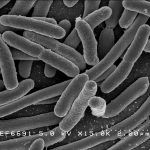
- Bacilli – rod-shaped bacteria, are generally 0.2 to 2 µm wide and 1 to 10 µm long.
- Coccobacilli – Small rod-shaped bacteria that are often mistaken to appear like cocci. Hence, they are named coccobacilli.
- Spirilla – bacteria with a spiral shape and a stiff body.
- Spirochetes – bacteria with a spiral shape and a flexible body.
- Fusiform – thick central body with tapering ends.
- Vibrio – comma-shaped bacteria.
3) Bacterial classification according to the types of staining in microbiology.
- Gram-positive bacteria – They have the tendency to retain the crystal violet stain in their cell walls due to their thick peptidoglycan layer. Hence, purple appearing bacteria under the microscope are gram-positive.
- Gram-negative bacteria – They do not retain the crystal violet stain during the decolorization step of gram staining and get stained with the counterstain, safranin. Hence, they appear pink when observed under the microscope.
- Acid-fast bacteria – they are a group of bacteria that resist decolorization with strong acids during the staining process. For example, Mycobacteria are acid-fast in nature due to the high amount of mycolic acid present in their cell wall.
4) Bacterial classification according to the temperature requirements for growth
- Psychrophiles – These bacteria grow optimally at refrigerator temperatures.
- Thermophiles – these bacteria grow optimally at temperatures above 50° C.
- Mesophiles – these bacteria grow optimally between 30-40° C.
5) Bacterial classification according to the source of nutrition
- Heterotrophs – bacteria that derive their energy from organic compounds. For example, lactic acid bacteria are used to make yogurt from milk by fermenting lactose.
- Chemoautotrophs – bacteria that derive their energy from inorganic compounds. They are generally extremophiles.
Bacteria structure
The structure of bacteria can be discussed under the following heads.
1. Size
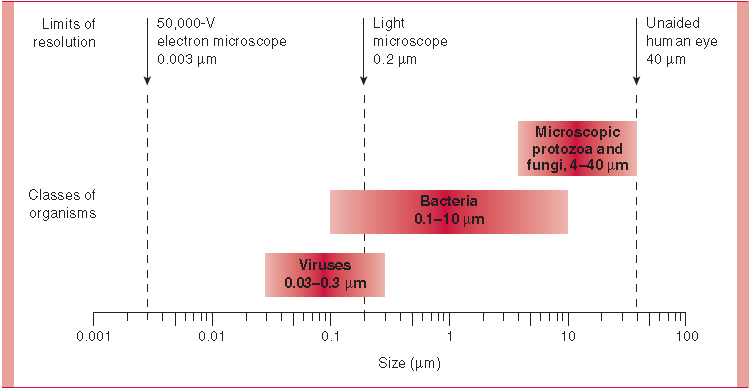
Bacteria are by far the smallest independently reproducing organisms. Most pathogenic bacteria are 0.1 – 10 µm in size. Have a look at some interesting facts about bacteria
- The largest bacterium is Thiomargarita namibiensis that can reach up to a size of 0.75 mm.
- The smallest bacterium is Mycoplasma genitalium of size 200 to 300 nm.
2. Shape
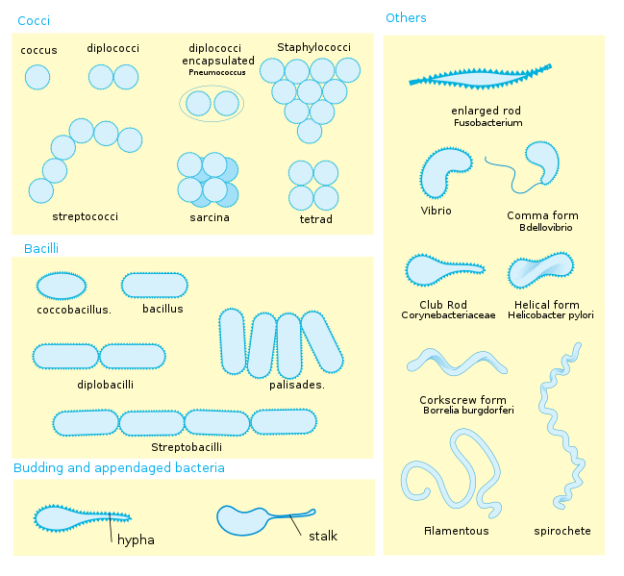
As previously discussed, there are a variety of shapes of different bacteria. Some of the common shapes of bacteria are named below.
- Coccus
- Bacillus
- Coccobacillus
- Spirilla
- Spirochete
- Fusiform
- Vibrio
3. Arrangement
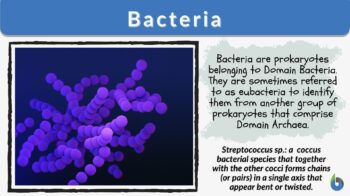
Newly divided bacteria from certain genera have a special ability to stick together and form peculiar arrangements. For example, Streptococci often arrange themselves in chains, Staphylococci arrange themselves in irregular clusters, Diplococci can be seen arranging themselves in pairs. These arrangements, however, should not be used for the purpose of identification of bacteria.
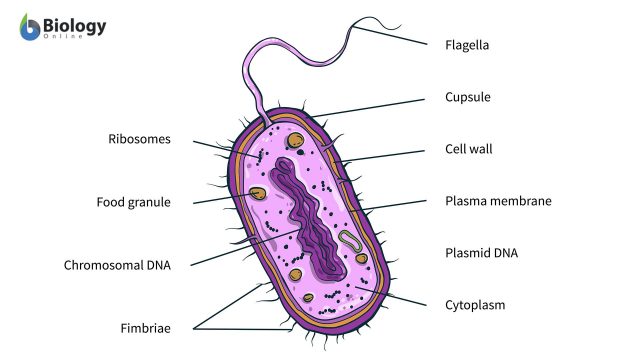
4. Capsule
Bacteria often coat themselves with a slimy layer, mostly made up of polysaccharides and sometimes made up of polypeptides such as in the case of Bacillus anthracis, the causative pathogen of anthrax disease.
The capsule is thick, transparent, and hydrophilic in nature and gives protection to the bacteria from its immediate environment.
Colonies of capsulated bacteria give a mucoid appearance and are described as smooth colonies. The production of the capsule depends on the growth medium. Serial culture in a lab can make the bacteria lose their capsules and such colonies are described as rough.
The virulence of certain organisms depends on their capsules. Capsules help the bacteria to attach and colonize different surfaces, evading host defense. For example, Streptococcus pneumoniae, with its capsule intact, can easily evade opsonization and phagocytosis and thus cause disease in the host organism.
| Table 1: Mnemonic to remember common harmful bacteria that are encapsulated | ||
|---|---|---|
| Mnemonic | Organism | Commonly caused infections |
| Yes | Yersinia pestis | Plague |
| Some | Streptococcus pneumoniae | URTI, Meningitis, Pneumonia |
| Killer | Klebsiella | Pneumonia |
| Bacteria | Bordetella | Pertussis |
| Bacillus anthracis | Anthrax | |
| Have | Haemophilus influenzae | Anthrax |
| Very | Vibrio parahaemolyticus | Pneumonia |
| Pretty & | Pseudomonas | Seafood poisoning |
| Nice | Neisseria meningitidis | Nosocomial infections |
| Capsules | Clostridium perfringens | Meningitis |
5. Cell wall
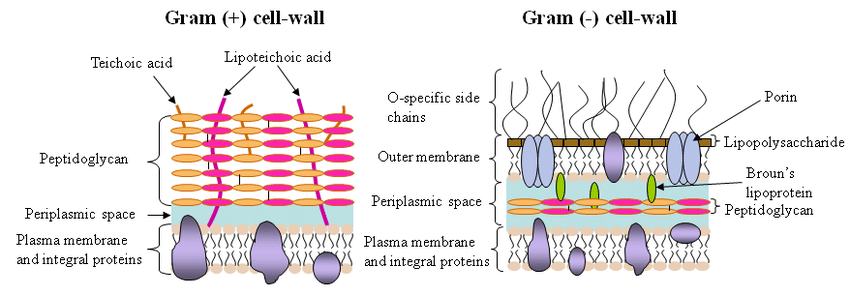
The cell wall is a rigid coat present inside the capsule but outside the proper cell. The cell wall is a characteristic feature of prokaryotic cells. It helps the bacteria in maintaining its specific shape, preventing osmotic lysis of the cell, attaching to the surfaces, evading host defense mechanisms, and preventing mechanical damage to the cell. Based on the bacterial cell wall organisms are majorly classified into gram-positive and gram-negative ones. Their differences can be seen in the table below.
Table 2: Differences between Gram-Positive and Gram-Negative Cell wall |
|
|---|---|
| Gram-positive | Gram-negative |
| Single layered, smooth cell wall with uniform attachment to the cell membrane | Double layered, wavy cell wall with interrupted attachment to the cell membrane |
| The cell wall is 20-80 nm thick | The cell wall is 8-10 nm thick |
| Retain the Crystal violet stain during gram staining | Do not retain the crystal violet stain during gram staining |
| Appear purple under the microscope | A thin layer of peptidoglycan present |
| Little to no Lipopolysaccharide content | High lipopolysaccharide content |
| High in Lipoteichoic acid and Teichoic acid content | No Teichoic acid content |
| More susceptible to antibiotics | More resistant to antibiotics |
6. Cell membrane
The cell membrane is a selectively permeable membrane of the bacteria made up of a phospholipid bilayer. It is unusually rich in protein content which may be as high as 70%. It contains no sterols; however, Mycoplasma is an exception. The cell membrane is important for a variety of functions of the cell. It plays a role in DNA synthesis, cell wall synthesis, electron transport chain, cell division, and exotoxin secretion. Hence, it is also considered a functional equivalent of most of the eukaryotic organelles.
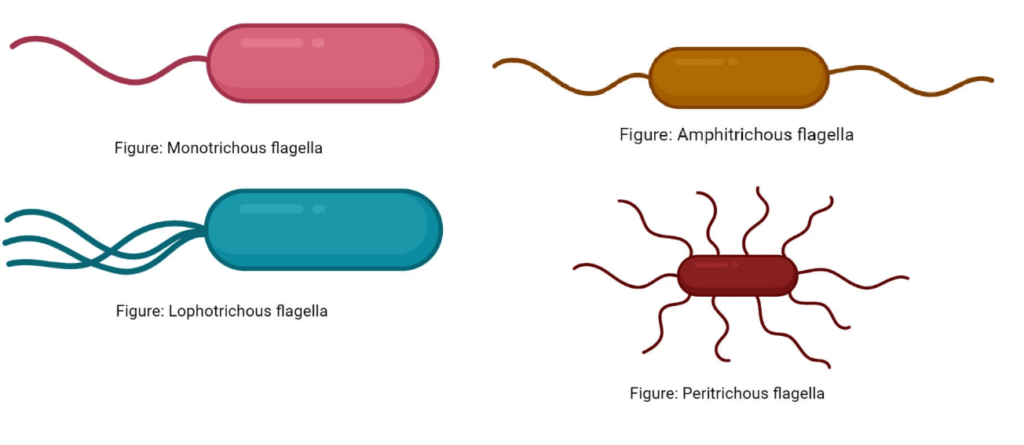
7. Flagella
Flagella are long filamentous structures distributed around the bacteria helping them with motility. Flagella has 3 major parts: (1) basal body – provides the torque, (2) hook – forms the joint, and (3) filament -provides the motion.
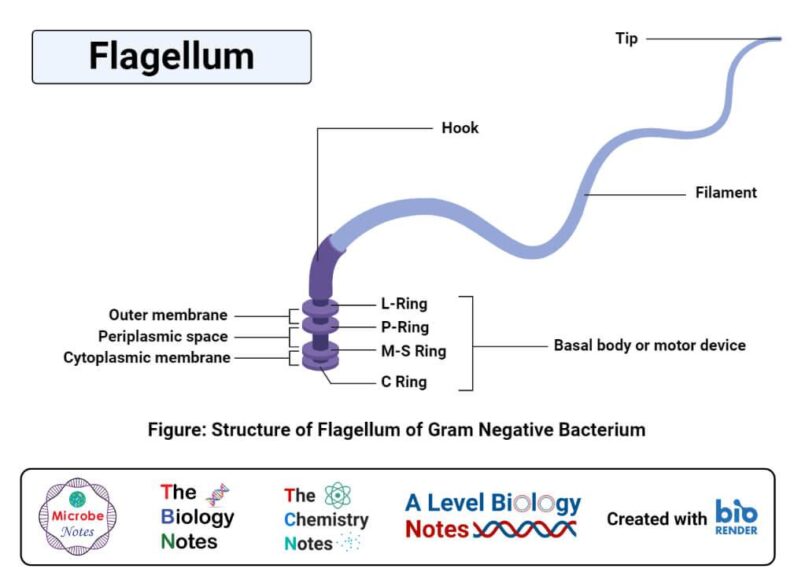
The bacteria can be classified on the pattern of distribution of the flagella.
8. Pili
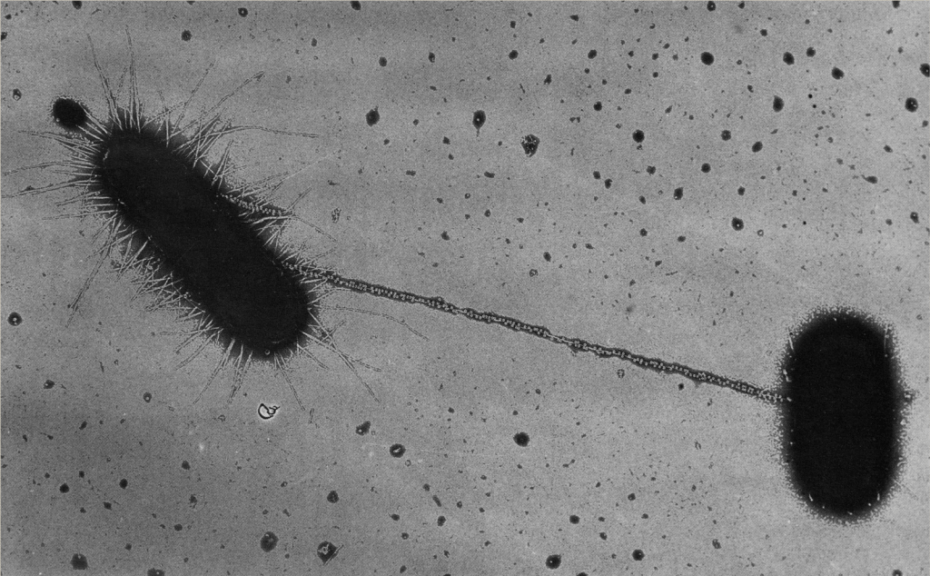
Pili are tiny hairlike projections with a tiny hollow-core present over the surface of the bacteria. The common pili are used for adherence and hence, they are important structures of virulence. Some authors describe the common pilus as fimbriae. For example, Neisseria gonorrhoeae uses pili to attach to the uroepithelial cells, without which it cannot penetrate and cause disease gonorrhea. A special type of pilus, known as sex pilus, is used to exchange genetic information between two different bacteria.
9. Cytosol
The cytosol is the granular interior of the bacterium. It appears granular due to abundant ribosomes present in its core.
10. Nucleoid
Nucleoid or nuclear body contains one large, tightly packed, circular, double-stranded DNA molecule that encodes all the information needed by the bacterium. It consists of approximately 4000 genes. Unlike eukaryotic cells, there is no nuclear membrane found in bacteria. This gives them the ability to divide rapidly in changing environments.
11. Plasmids
Plasmids are additional genetic material present in the form of small circular double-stranded DNA which is functionally separate from the chromosomal DNA. It may code for enzymes providing antibiotic resistance, information for the production of sex pilus enhancing intercellular genetic exchange through conjugation, and certain virulence factors such as exotoxins.
12. Spores
Certain bacteria form non-reproductive, dormant, resistant, and dehydrated structures called spores when they sense a change in their environment which is difficult to survive. These spores can reproduce the cells which originally morphed into spores. Examples of bacteria that are spore-forming; Clostridium tetani, Clostridium botulinum, Bacillus anthracis.
Habitat
Bacteria are ubiquitous in nature. They are so abundant that their collective biomass is only exceeded by that of plants. There is an estimate of 2 x 1030 bacteria on earth. They have been successful in inhabiting most of the earth’s habitats such as oceans, soil, deep biosphere, hydrothermal vents, glacial rocks, etc. They even form commensal and parasitic relationships with plants and animals. They are known to reside in the gut and skin of animals. The commensal bacteria of the gut are so important that animals cannot digest their food without the help of bacteria. In humans, there are so many bacteria in our gut that on a per-cell level we are only 10% humans.
Extremophiles are bacteria that are capable of survival in extreme environments that are hostile to almost every other life form. Different types of organisms living in extreme conditions are presented in the table.
Table 3: Extremophiles and their examples |
||
|---|---|---|
| Terminology | Condition | Example |
| Thermophiles | Hot | Thermus aquaticus |
| Psychrotroph | Cold | Pseudomonas syringae |
| Halophilic | Salt | Vibrio sp. |
| Alkaliphile | pH > 9 | Proteobacteria |
| Acidophile | pH < 3 | Acetobacter aceti |
| Piezophiles | High pressure | Moritella, Shewanella |
| – | Space | Bacillus subtilis |
| Radioresistant | Radiation | Deinococcus radiodurans |
| Sulphophile | Sulfur | Sulfurovum (Epsilonproteobacteria) |
Bacterial Metabolism: Growth, Reproduction, and Transformation
Let’s now learn about the metabolism of bacteria, particularly the metabolic activities relating to their growth, reproduction, and transformation.
Growth
The small size and simple structure of the bacteria enable them to reproduce rapidly. Theoretically, they can reproduce exponentially until the nutrients are available. The growth of the bacteria in a medium with a finite quantity of nutrients can be divided into four phases:
1st Phase: Lag Phase
In this phase, no active division of the cells is taking place. The cells are in the process of mobilizing the nutrients to synthesize the macromolecules needed for division. No change in the population of cells occurs during this phase.
2nd Phase: Exponential phase
In this phase active division of the bacterial cells Is taking place. The population of the bacteria can be seen to be increasing exponentially. The slope of this phase is directly proportional to the growth rate of the bacteria. Theoretically, this exponential growth can continue indefinitely provided the nutrients are available.
3rd Phase: Stationary phase
Due to the ongoing division of bacterial cells depletion of the nutrients occurs. This limits the number of active divisions of the bacteria. During this phase, the number of bacteria dying is equal to the number of new appearing bacteria. Hence, a straight line is observed on the graph. Most of the mutations occur during this phase due to the endogenous reactive oxygen species.
4th Phase: The death phase
The bacteria start to die due to the depletion of nutrients and intolerable environmental conditions.

Reproduction
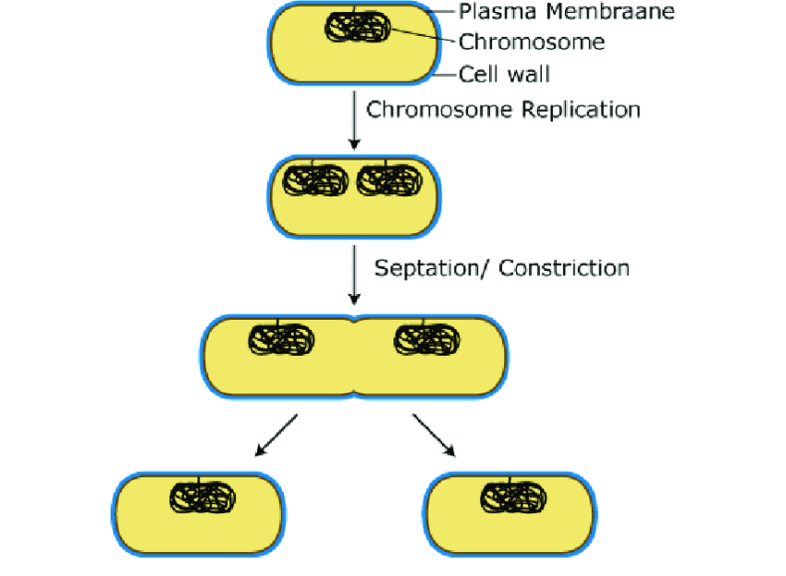
Have you ever wondered how bacteria reproduce? Most prokaryotes, including bacteria, are reproduced by binary fission. So, what is binary fission? Binary fission is a form of asexual reproduction which is used by most prokaryotic organisms including bacteria. During the binary fission the organism first grows in size, duplicates its genome and then the cell splits into two daughter cells each receiving a copy of the genome.
Transformation
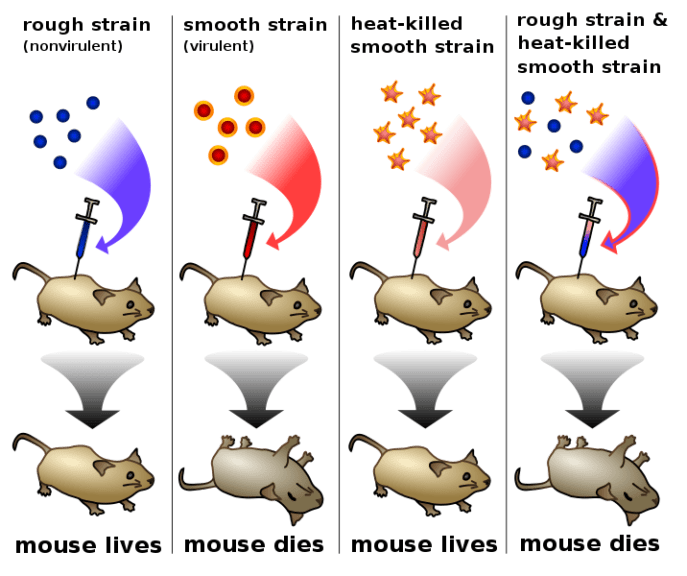
Transformation is the process of horizontal gene transfer where the bacterium acquires the new genetic material from its immediate environment. The discovery of transformation was done by the scientist Frederick Griffith. The experiment was done on a Streptococcus pneumoniae. When he injected the rough strain along with the heat-killed smooth strain of Streptococcus pneumoniae into the mouse, the mouse died. This showed that the rough strain was capable of acquiring genetic material from its surroundings thus giving it the necessary virulent genes. Both rough strain and heat-killed smooth strain were individually incapable of causing the disease in the mouse.
Genetics
The genome of the bacteria is usually a single circular chromosome made up of double-stranded DNA. It measures up to 1000 times the length of the bacterium. Hence, the genome is supercoiled to compact itself. Due to this compaction, the nucleoid stands out from the transparent granular cytosol. The genome has attachments to the cell membrane which helps the bacteria during the cell division. Since most bacteria reproduce asexually, evolution in bacteria mostly occurs due to mutations. These mutations mostly occur due to errors in the replication of bacterial DNA.
The bacteria may additionally contain plasmids. A single bacteria can contain different plasmids or multiple copies of the same plasmid.
Gene transfer in bacteria
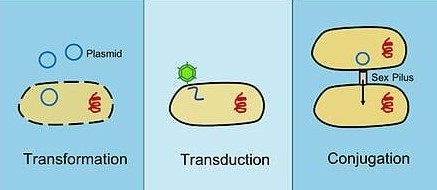
There are ways with which bacteria can acquire new characteristics like antibiotic resistance, exotoxin production. The gene transfer occurs mostly between members of the same bacterial species. However, sometimes it can also occur between members of different species. These new characteristics are acquired due to the new genetic material that the bacteria may receive through the process of conjugation, transformation, or transduction.
- Conjugation – Conjugation occurs when there is a genetic exchange between two bacteria with the help of the conjugation tube or the sex pilus.
- Transformation – as previously discussed, during transformation the bacteria acquires the genetic material from its surroundings.
- Transduction – When a phage virus attacks a bacterial cell, it may introduce new genetic information. For example, the tox gene which is responsible for the production of botulinum toxin is acquired by the clostridium through transduction.
Uses
Although we are familiar with bacteria causing diseases, there are many other species of bacteria that are not pathogenic, and in fact, are crucial to the survival of other living things.
Human survival
Numerous commensal bacteria are responsible for the digestion of the food that keeps us alive. Without these bacteria, we would not be able to assimilate our food properly. The microbiome of the gut also forms a defense against other pathogenic bacteria. This is the reason why we often suffer from gastric issues when on antibiotics. It is generally a good practice to incorporate foods that contain probiotics and prebiotics. Probiotics are beneficial bacteria that have a beneficial role in our digestive systems Prebiotic are the food on which the microbiome of our gut survives.
Nitrogen fixation
Nitrogen-fixing bacteria play a crucial role in the nitrogen cycle. They help fix the atmospheric nitrogen. There are two kinds of nitrogen-fixing bacteria that reside in the soil.
- Free-living Nitrogen-fixing bacteria – for example, cyanobacteria aka blue-green algae.
- Commensals with leguminous plants – for example, Rhizobium. Rhizobium converts the free nitrogen into ammonia in the roots of leguminous plants. The plants can use this nitrogen for their own development.
Food technology
The usage of bacteria is widespread in the food industry. Following are some of the examples of its use.
- Yogurt – The milk is inoculated with a culture of lactic acid bacteria. These bacteria use the milk sugar lactose and release lactic acid as a byproduct. This is beneficial for humans, as it enhances taste, nutritive value, and digestibility. The commonly used strains are Streptococcus salivarius, Streptococcus thermophilus, and Lactobacillus bulgaricus.
- Cheese – Cheese is made from inoculating milk with different species of bacteria, which confers cheeses their characteristic flavors. For example, Propionibacterium shermanii is used in making Swiss cheese. It is known for its big holes which are created due to the production of carbon dioxide by the bacteria.
- Protein source – Certain bacteria are cultured in large quantities to be consumed directly as a single cell source of protein. Along with the protein, it may be a useful source of other micronutrients as well. The cultures do not require large areas as conventional crops and their yield is much larger and quicker.
- Chocolate making – Naturally occurring Lactobacillus and Acetobacter sp. are used for fermenting the chocolate pod, from which the seeds are harvested later.
- Vinegar – acetic acid-producing bacteria are used for making vinegar. Commonly used bacteria are Acetobacter sp., Gluconobacter sp., Gluconacetobacter sp.
Bacteria in industry and research
Bacteria can be used on an industrial scale to produce valuable substances on a large scale. Bacteria work like cheap molecular machines and are extremely cost-effective. Let’s understand the role of bacteria in industrial applications with the help of examples.
- Alcohol – For thousands of years bacterial cultures are used to ferment sugars, a byproduct of which is alcohol. This is used by breweries across the world for the industrial production of liquor.
- Insulin – People living with diabetes across the world require insulin. Before the onset of recombinant DNA technology, insulin was produced from other species which had side effects. Now, using rDNA technology we can produce insulin that is identical to human insulin with the least side effects.
- Antibiotics – many antibiotics that we use to treat infections caused by pathogenic bacteria are sourced from bacteria. For example, Streptomyces erythreus produces erythromycin, Streptomyces fradiae produces neomycin, Streptomyces griseus produces streptomycin.
- Organic compounds – many organic compounds on an industrial scale are produced with the help of bacteria. For example, Clostridium sp. can be used for the production of compounds such s butyric acid, acetone, isopropanol,
- PCR – polymerase chain reaction used to amplify DNA, uses the heat-stable Taq polymerase sourced from Thermus aquaticus. PCR has widespread use in research and medical diagnosis.
- Papermaking – Clostridium thermocellus is used for its enzyme cellulase to extract sugars from the cellulose waste agricultural material.
- MSG – monosodium glutamate, a flavor enhancer is obtained from the fermentation of sugars by Micrococcus. Sp.
Hazards
Not all microorganisms are harmless, some can pose a serious threat to life. There are many deadly bacterial infections caused by bad bacteria. For example, the bubonic plague was caused by Yersinia pestis. It has taken many lives across the world in the past. Some bacteria can be used as agents of bioterrorism. Bioterrorism is microbiological warfare that has the potential to take many lives and cause serious damage to humanity. Many patients die in the hospital daily due to nosocomial infections.
Resistance
Bacteria that are causing disease can be further detrimental to health when they develop resistance to antimicrobial agents. Antibiotic resistance, in particular, emerged when bacteria evolved and mutated into new strains that are capable of resisting the destructive effects of these pharmacological drugs. One of these strategies is the production of β-lactamases that destroy β-lactam antibiotics (e.g. penicillin and cephalosporin). Not only are they capable of making these drugs ineffective but they are also capable of passing this ability to other bacteria. Some of the ways are by vertical gene transfer and horizontal gene transfer.
READ: First Video Proof That Could Explain Antibiotic-Resistant Superbug Bacteria
Try to answer the quiz below to check what you have learned so far about bacteria.

References
- Ryan, K. J., Ray, C. G., & Sherris, J. C. (2010). Sherris medical microbiology. New York: McGraw Hill Medical.
- Lorenz, M. G., & Wackernagel, W. (1994). Bacterial gene transfer by natural genetic transformation in the environment. Microbiological reviews, 58(3), 563–602. https://doi.org/10.1128/mr.58.3.563-602.1994
- Carlson M. Bruce, Principles of Regenerative Biology
- Kim, K.W. Electron microscopic observations of prokaryotic surface appendages. J Microbiol. 55, 919–926 (2017). https://doi.org/10.1007/s12275-017-7369-4
©BiologyOnline.com. Content provided and moderated by Biology Online Editors.