Archaea
n., plural: archeon
[ɑːˈkiːə]
Definition: prokaryotes that live in extreme environmental conditions and are genetically distinct from bacteria, which is another group of prokaryotes
Table of Contents
Archaea is a group of prokaryotic life forms distinct from bacteria forming a separate domain of life. They possess pseudo-peptidoglycan cell wall, archaeol plus ether-linked plus highly branched isoprenoid chain lipids in their cell membrane with no nuclei or cell organelles. They have a ubiquitous distribution and are widely known extremophiles.
Let’s gain a deeper understanding of archaea definition, habitats, characteristics, structure, metabolism, genetics, reproduction, placement in the tree of life, and many more.
Archaea Definition
What are archaea? In biology, the definition of archaea is that they are prokaryotic forms of life sharing some features with bacteria and other features with eukarya. Archaea constitute one major domain of life and comprise only single-celled organisms devoid of nuclei.
Now we know how to define archaea, let’s move ahead and learn more.
Archaea Etymology
Archaea is a modern Latin word derived from the Greek word “arkhaios” meaning ‘primitive’. The singular of archaea is archaeon. Archaea is the plural form of “archaeon“.
Domain Archaea and other Classification Systems
When biological sciences are studied, a variety of different organisms come into the picture. Understanding one organism in relation to the other is very difficult due to the vast diversity.
For ease of studying, classification systems are proposed. In the history of life science, several such methods have been proposed. Look at the table below for a brief summary of the different classification systems over the course of time.
Table 1: Summary of the Different Classification Systems |
|||
|---|---|---|---|
| Year | Scientist | Systems of classification | Groups under the system |
| 1735 | Carl Linnaeus | 2-kingdom system | Primary kingdoms-Vegetabilia & Animalia |
| 1866 | Ernst Haeckel | 3-kingdom system | Plantae, Protista & Animalia |
| 1925 | Édouard Chatton | 2-empire system | Prokaryota & Eukaryota |
| 1938 | Herbert Faulkner Copeland | 4-kingdom system | Monera, Plantae, Protista & Animalia |
| 1969 | Robert Harding Whittaker | 5-kingdom system | Monera, Plantae, Fungi, Protista & Animalia |
| 1990 | Carl Richard Woese | 3-domain system | Domain bacteria, domain archaea, third domain eukarya |
| 1998 | Thomas Cavalier-Smith | 2 empire, 6 kingdom system | Bacteria, Protozoa, Chromista, Plantae, Fungi, & Animalia |
| 2015 | Thomas Cavalier-Smith | 2 empire, 6 kingdom system | Bacteria, Archaea kingdom, Protozoa, Chromista, Plantae, Fungi, & Animalia |
Data Source: Dr. Harpreet Narang of Biology Online
Notice the introduction of archaea in 1990 by Carl R. Woese. It was at this time that nucleotide sequences of the small subunit of rRNA (16S ribosomal RNA) were compared from all the cellular life forms from common ancestors. Since this molecule is conserved in all other life forms that are cellular in nature, the genome phylogeny (phylogenetic structures derived from phylogenetic trees upon phylogenetic analyses) derived from this work turned out revolutionary. What was earlier believed to be just “monera” was now split into “bacteria and archaea”. This global phylogeny overturned the existing notions of purely prokaryotic and eukaryotic cell dichotomy. An understanding of the prokaryotic domain deepened from this point.
Archaea versus Archaebacteria
Since they were earlier placed under the monera kingdom up till the 5-kingdom classification (1969), they are called archaebacteria then. But after the introduction of the 3-domain system (1990) and the identification of the major differences between archaea and bacteria, the term “archaebacteria” has fallen out of use in the scientific community.
Difficulties with Studies of Archaea Group
Although the discovery of this group from the studies of Carl R. Woese and group ignited interest in the subject, there were some legit problems associated with it. Most of the archaeal cells haven’t been discovered or isolated in the lab. They have only been detected in some environmental samples with the aid of gene sequencing.
This has made their classification into different phyla relatively difficult. In recent years, a lot of evolutionary biology-related work has been undertaken to better understand evolutionary relationships between different archaeal species.
Evolutionary relationships and evolutionary history can bring a lot of clarity to the table. Evolutionary histories help in clearly deciphering the origin, evolution, and directions of further changes at molecular levels (molecular evolution). Molecular biology tools help in such work.
Differences between Archaea and Bacteria
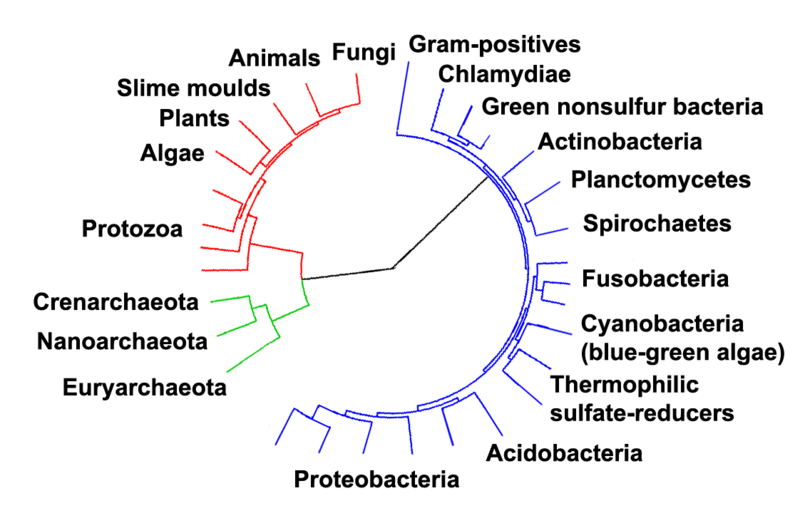
Look at the table of comparison below to learn about the major differences between these 2 domains of life; archaea vs bacteria. Both of these domains have been found to be evolutionarily distinct as per 16S rRNA phylogeny.
Table 2: Summary of the Differences between Archaea and Bacteria |
||
|---|---|---|
| Characteristics of prokaryotic cells | Archaea | Bacteria |
| Membrane constitution | Prominence of ether-linked lipids | Prominence of ester-linked lipids (like Eukarya) |
| Peptidoglycan in cell wall | Absent | Present |
| Pseudopeptidoglycan in cell wall | Present | Absent |
| Types of RNA | 3 | 1 |
| Transcription similar to Eukarya | Yes | No (Unique) |
| Number of RNA polymerases | Many | Only one |
| Translation similar to Eukarya | Yes | No (Unique) |
| Translation initiation codon (for protein synthesis) | Methionine | Formylmethionine |
| Major reproductive strategy |
|
|
| Rigid or fragile towards harsh environmental conditions | Very rigid | Relatively fragile |
| Major metabolic activity |
|
|
| Genetic similarity to Eukarya | More | Less |
| Sensitivity to diphtheria toxin | Sensitive | Resistant |
| Example | Halobacterium spp. | Escherichia coli |
Data Source: Dr. Harpreet Narang of Biology Online
Watch this vid about archaea:
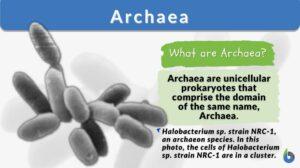
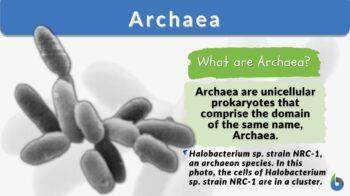
Archaea are unicellular prokaryotes that comprise the domain of the same name, Archaea. These microorganisms physically resemble the bacteria but are genetically distinct from the latter. Archaea are typically found inhabiting and thriving in extreme environmental conditions. They include halophiles (archaea inhabiting extremely salty environments), methanogens (archaea producing methane), and thermophiles (archaea that thrive in scorching environments).
Characteristics:
Archaea or archaebacteria evolved separately from eubacteria and eukaryotes. They are similar to eubacteria in being prokaryotes and lacking a distinct nucleus. However, they differ in terms of ribosomal structure, the presence of introns (in some archaeal species), and membrane structure or composition. They are similar to eukaryotes in ways that archaea possess genes and several metabolic pathways that are more closely related to those of eukaryotes, notably, the enzymes involved in transcription and translation. They are regarded to be living fossils and survivors of an ancient group of organisms that bridged the gap in evolution between eubacteria and eukaryotes.
Etymology: The term archaea (ar-KAY-ə) (singular: archeon) came from Greek arkhaion, arkhaios, meaning “ancient”. Synonyms: archaebacteria.
Compare: eubacteria
See also: prokaryote, eukaryote
Habitats of the Archaea
Archaea were first identified from extreme environments like volcanoes, hydrothermal vents, etc. But as the sequencing technology became more widely available, the archaeal presence was found to be ubiquitous. Now they are known to inhabit a vast range of natural environments and habitats. Besides constituting a major part of the ecosystem, they play an instrumental role in its functioning, too. They inhabit both terrestrial and aquatic ecosystems.
Where do archaebacteria live? To answer that, here’s the list of some of their major habitats:
- Deeps seas and oceans (archaea form nearly 20% of microbial diversity of the oceans)
- Geysers
- Hot water springs
- Hydrothermal vents
- Volcanoes
- Black smokers
- Mines and oil wells
- Very cold habitats like ice sheaths of tundra
- Highly saline lakes
- Highly acidic places
- Highly alkaline waters
- Swamps, wetlands, and marshlands
- Sewage
- Intestinal tracts of humans and animals
- Highly degraded soils, anoxic muds (archaea in soil)
Archaeal Groups Inhabiting Different Extreme Habitats
Since archaea inhabit extreme habitats, they are called extremophiles. Within extremophiles, there are different physiological categories or types of archaea like:
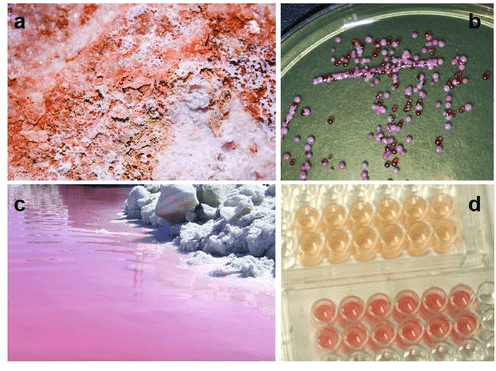
- Halophiles (live in extreme salt conditions like salt lakes, and brackish waters)
Example: Halobacterium spp. - Thermophiles (live in extremely high temperatures like hot springs and vents)
Example: Methanopyrus kandleri - Alkaliphiles (live in extreme alkaline conditions like marine hydrothermal systems)
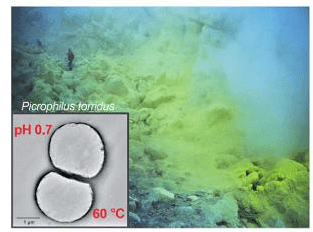
Example: Thermococcus alcaliphilus is a marine archaea. - Acidophiles (live in extremely acidic conditions like dry hot soil and volcanic sites)
Example: Picrophilus torridus
An archaeon doesn’t necessarily come under only one of these categories. In fact, many archaea are a combination of two or more of these features.
Characteristics of the Archaea
So, read the archaea characteristics in this section and get an answer to what is special about archaea.
-
Energy sources used by archaea
- Relatively diverse group sources than eukaryotic organisms, like sugars, ammonia, metal ions, and hydrogen gas
- Based on their preference of source for deriving energy, they are divided into different nutritional groups. Some of them are:
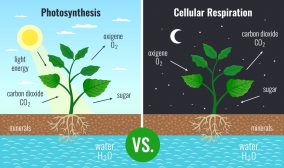
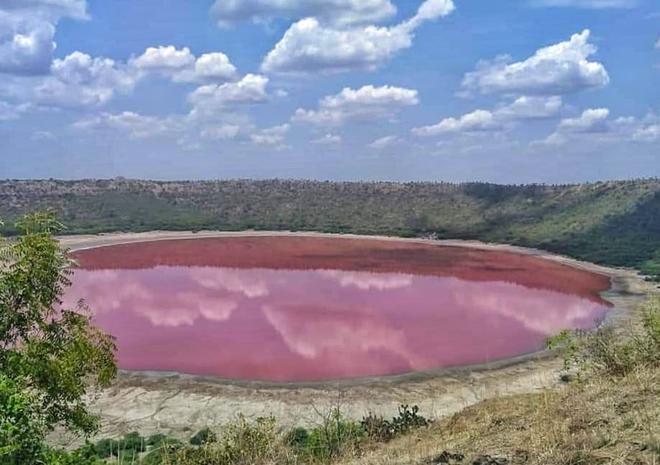
- Phototrophic Archaea: Some species of archaea are known to utilize energy from the sun. Hence they are called phototrophic archaea. Although they can utilize sunlight like the plants, they can’t fix atmospheric carbon. So, the answer to the query “if archaea photosynthesize” is NO. They can be “PHOTOTROPHIC” and “NOT PHOTOSYNTHETIC”.Example: Haloarchaea or Halobacterium.
-
-
- Lithotrophic Archaea: Some species of archaea are known to utilize inorganic compounds (chemical energy) to take care of their energy needs like metal ions, hydrogen, ammonia, etc.Examples: Pyrolobus, Ferroglobus, Methanobacteria, ammonia oxidizing archaea, sulfate reducing archaea.
-
-
-
- Organotrophic Archaea: Some species of archaea are known to utilize organic compounds to take care of their energy needs like pyruvate, starch, maltose, etc.Examples: Methanosarcinales, Pyrococcus, Sulfolobus
-

-
Extremophiles
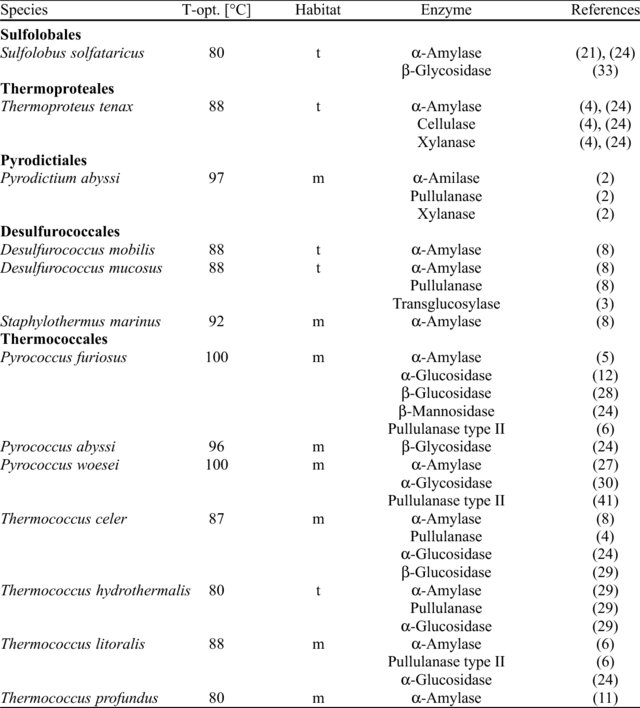
Most of the members of the archaeal phylum are extremophilic in nature growing in vents, springs, salt lakes and ditches, volcanoes, marshlands, and deep surfaces of seas and oceans. In fact, archaea were first discovered in such habitats.
-
Reproduction
Asexual reproduction is the only way for archaea. They reproduce asexually via binary fission, budding, or fragmentation. No archaeal member has been reported to undergo endospore formation.
-
Roles in Earth’s biomes functioning
Archaea play a multitude of ecological roles ranging from that in the nitrogen cycle to the maintenance of microbial symbiotic communities. Most of the known archaea either build mutualistic or commensalistic relationships. Their pathogenic or parasitic representatives haven’t been observed yet.
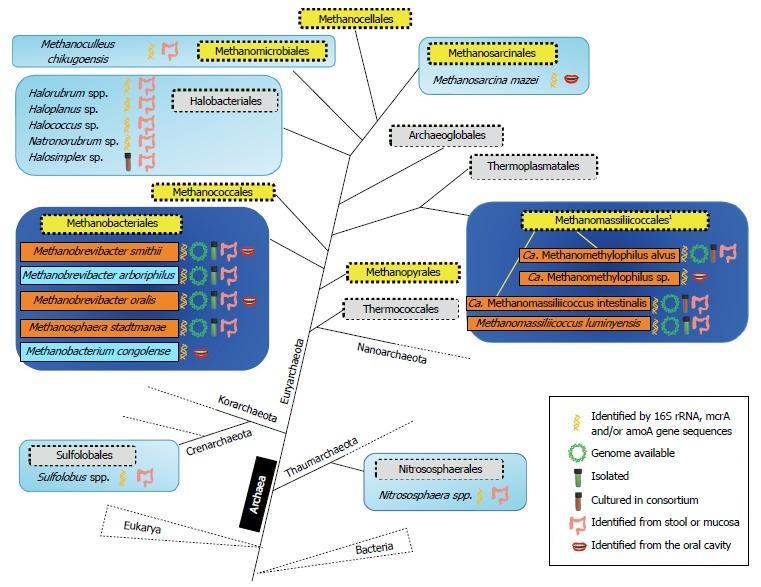
Example of mutualistic archaea: Methanogenic archaea inhabiting the GIT of humans and other organisms like ruminating animals like cows, buffalo, etc. Archaea in the gut help in the facilitation of digestion.
-
Archaea in biogas production
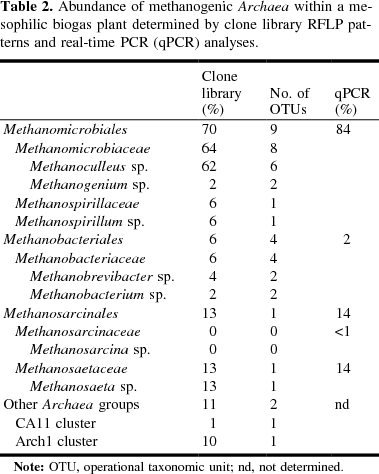
Because of their methanogenic and extremophilic activity, archaea are extensively used in the commercial production of biogas and also in sewage treatment plants. Biotechnological advancements enable the exploitation of archaeal enzymes from these extremophilic species. Since processes including high temperatures, pressures, and usage of organic solvents are mainstream in biogas production and sewage treatment; these hydrogenotrophic species widen the scope.
Example: Methanoculleus sp., Methanobrevibacter sp., etc.
Structure, Composition Development, and Operation
Archaea, although different from bacteria, share many common features with bacteria too. Both of them being prokaryotic life forms lack nuclei and membrane-bound cell organelles.
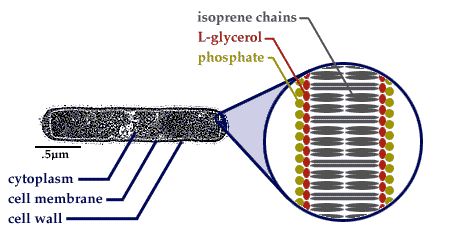
- Size range: 0.1-15 micrometers
- Shape range: Spherical, rod-like, spiral, plates, irregularly shaped, lobed, needle-like filamentous, rectangular rods, flat square shape.
-
Cell wall and archaella (archaeal flagella)
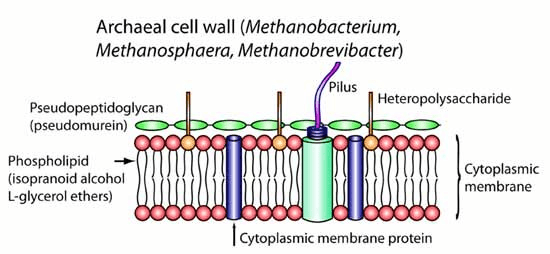
The cell wall is present in most archaea except Thermoplasma and Ferroplasma. The surface-layer proteins encoded constitute the cell wall or S-layer. The role of the S-layer or cell wall in archaea is for physical and chemical protection. While bacterial cell walls are made up of peptidoglycan, archaea cell walls lack it. They rather possess pseudo-peptidoglycan like in Methanobacteriales.
Pseudopeptidoglycan is similar to bacterial peptidoglycan (morphologically, functionally) but is chemically distinct (no D-amino acids & N-acetylmuramic acid). Rather, they have N-Acetyltalosaminuronic acid.
The name for archaeal flagella is archaella. It functions similar to bacterial flagella.
-
Membranes
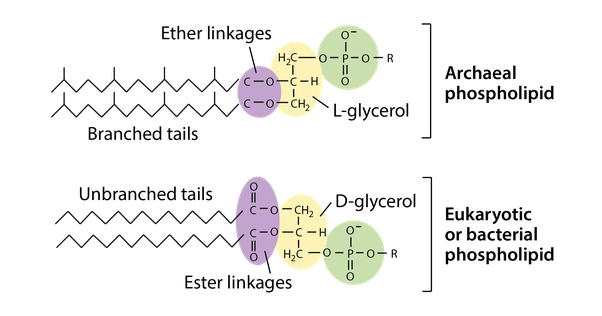
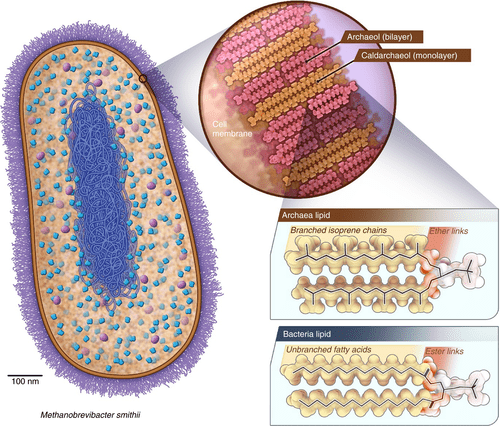
While bacterial and eukarya cell membranes have ester-linked lipids, archaea cell membranes have ether-linked lipids. Bacterial and eukarya cells have D-glycerols in their membranes but archaeal membranes have L-glycerols.
The bacterial and eukarya backbone is built on “sn-glycerol-3-phosphate” whereas the archaeal phospholipid backbone is built on “sn-glycerol-1-phosphate”.
The enzymes used by archaea for their membrane synthesis are different from those used by bacteria and eukarya.
Archaeal membrane lipid tails possess multiple side branches whereas the bacterial and eukarya membranes lipid tails are devoid of side branches or rings.
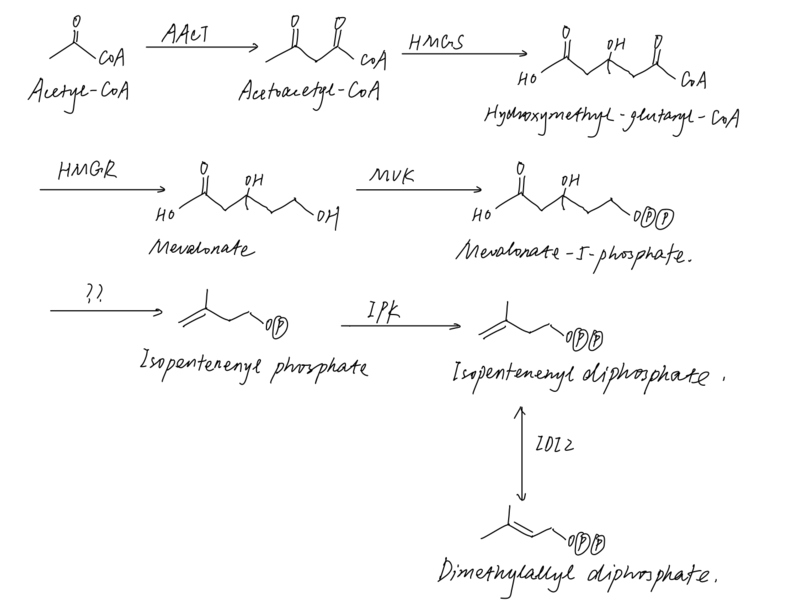
Isoprenoids find their distinct usage in the archaeal membrane phospholipids. Other microbes/organisms have isoprenoids in their bodies but not in membrane phospholipids.
Archaea also have archaeols, a type of core membrane lipids. These are often used as “archaeal biomarkers” associated with methanogens.
FAQs on Archaea
- Are archaea prokaryotes? Answer: Yes
- Do archaea have cell walls? Answer: Yes (of pseudo-peptidoglycan and not peptidoglycan)
- Are archaea unicellular or multicellular? Answer: Unicellular
- Which are the most culturable species of archaea? Answer: Crenarchaeota and Euryarchaeota. Crenarchaeota and korarchaeota were included in a superphylum in 2011 and are closely related to the evolution of eukarya.
- Is Thermus aquaticus archaea? Answer: No, it’s a bacterium.
- What are asgard archaea? Answer: They are a supergroup that have been speculated to be “a connecting link between prokaryotic and eukaryotic life”)
- Do archaea have circular or linear chromosomes? Answer: One circular chromosome.
Metabolism
Archaeal metabolism displays a range of biochemical reactions. Some of these are common to all archaeal species; others are specific to certain taxa.
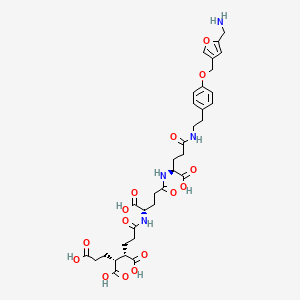
- As discussed in previous sections, there are 3 major nutritional groups namely phototrophic, lithotrophic and organotrophic. Lithotrophic and organotrophic are sometimes placed under a broader category called chemotrophic. They, as chemotrophs, play vivid roles like:
- Nitrifiers
- Methanogens
- Anaerobic methane oxidizers (main inhabitants of anaerobic environments)
- Phototrophic archaea carry out the chemiosmosis process without fixing atmospheric carbon.
- Archaea also carry out aerobic and anaerobic respiration. The process of glycolysis occurring in the archaea is a modified form of the one happening in eukarya and bacteria.
- Archaea carry out citric cycles; complete or partial.
- Archaea residing in anaerobic conditions are often methanogenic (produce methane). Studies have found that this metabolic reaction would have evolved very early on, probably signaling the methanogenic nature of the 1st free-living organisms on this planet.
- Archaea are in possession of a unique set of coenzymes for methanogenesis activity. Example: Methanofuran and coenzyme M.
Genetics
Let’s briefly discuss archaeal genomes and genetic material.
- Number and nature of chromosome: 1 and circular
- The largest known genome for archaea: Methanosarcina acetivorans (5,751,492 bp)
- The smallest known genome for archaea: Nanoarchaeum equitans (490,885 bp)
- The presence of plasmids is also noted in archaea just like in bacteria. And their inter-cell transfer is also similar via conjugation-like processes. Both archaea and bacterial conjugation aid plasmid transfer.
- Genetically quite different from bacteria and eukarya.
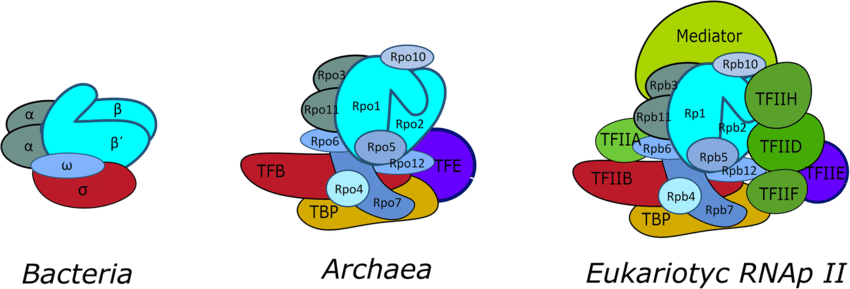
- Transcription: Close resemblance to eukaryotic transcription (archaeal RNAP is also similar to that of eukaryotes RNAP II).
- Some of the archaeal transcription factors (TFs) have a resemblance with those of bacteria.
- Post-transcriptional modification (PTMs): Closely resemble those of eukaryotes.
Gene transfer and genetic exchange
Gene transfer, exchange, and horizontal gene transfer/ lateral gene transfer happen via inter-cell cytoplasmic bridges.

Cellular aggregations are also known for genetic exchange and recombinations in archaeal species. These aggregations are induced by physical agents (UV, pH, temperature) or chemical agents (mitomycin C, bleomycin). These homologous recombinations serve as the repair mechanisms for the DNA damage caused due to different agents. Some scientists have also speculated this as an alternative type of sexual reproduction in primitive archaeal species.

Pic A: Cellular aggregation after different UV doses.
Pic B: Light micrographs of Sulfolobus solfataricus cell aggregates at different UV doses.
Pic C: A cell aggregate at 75 J/m2 UV dose.
Image Credit: Sabrina Fröls.
Archaeal viruses
A number of viruses target archaea; some are archaea-specific while some are cosmopolitan. In contrast to bacterial viruses which either conduct lytic or lysogenic pathways or display a mixed version of both, archaeal viruses usually maintain stable, lysogenic-like pathways.
Archaea Reproduction
Archaea reproduction strategies encompass:
- Binary fission
- Multiple fission
- Fragmentation
- Budding
There is no endospores formation of archaea as in bacteria and some eukarya.
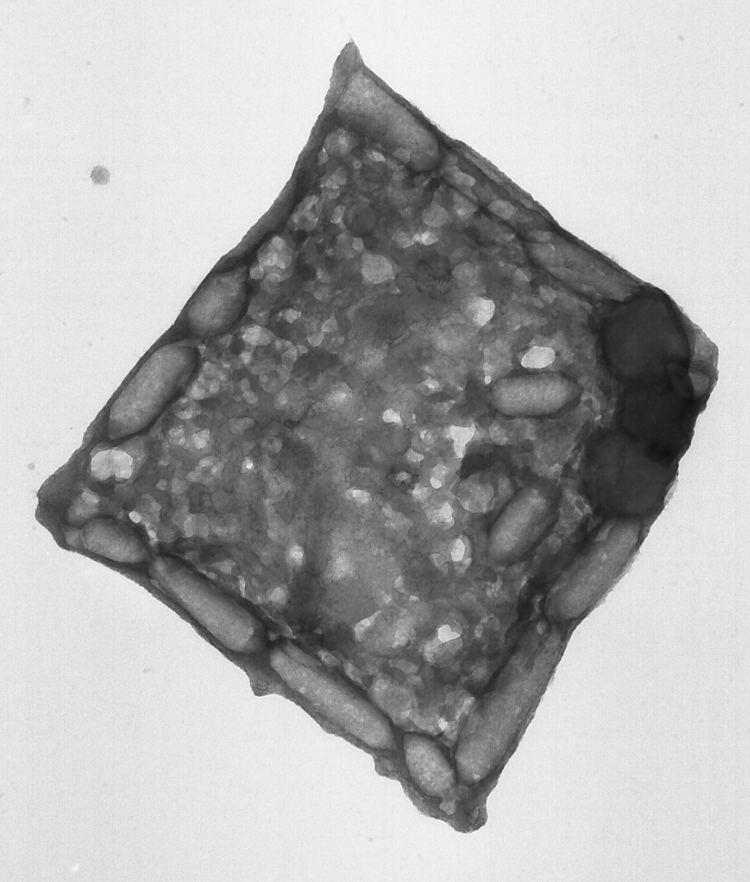
Featuring … the Archeon “Haloquadratum walsbyi”
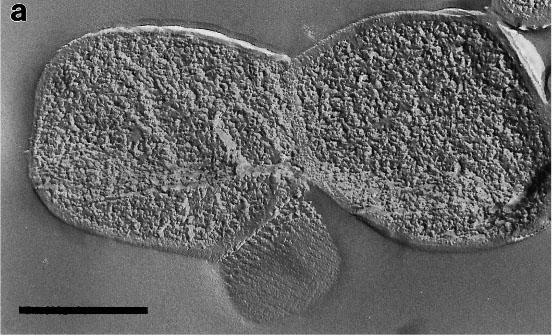
Haloquadratum walsbyi is a unique species of archaea with “typically flat, square-shaped cells”. This taxon was discovered in a brine pool by British microbiologist, Dr. A.E. Walsby in Egypt in 1980. Hence the species was named after him. This is a halophilic archaeon that survives highly saline conditions rich in sodium chloride (NaCl) and magnesium chloride (MgCl2). This species is also phototrophic in nature.

Answer the quiz below to check what you have learned so far about archaea.

References
- Howland JL (2000). The Surprising Archaea: Discovering Another Domain of Life. Oxford: Oxford University Press. pp. 25–30. ISBN 978-0-19-511183-5.
- Woese CR, Fox GE (November 1977). “Phylogenetic structure of the prokaryotic domain: the primary kingdoms”. Proceedings of the National Academy of Sciences of the United States of America. 74 (11): 5088–90. Bibcode:1977PNAS…74.5088W. doi:10.1073/pnas.74.11.5088. PMC 432104. PMID 270744
- Ciccarelli FD, Doerks T, von Mering C, Creevey CJ, Snel B, Bork P (March 2006). “Toward automatic reconstruction of a highly resolved tree of life”. Science. 311 (5765): 1283–87.
- Bibcode:2006Sci…311.1283C. CiteSeerX 10.1.1.381.9514. doi:10.1126/science.1123061. PMID 16513982. S2CID 1615592
- Tortora, G.J., Funke, B.R., Case, C.L. and Johnson, T.R., 2004. Microbiology: an introduction (Vol. 9). San Francisco, CA: Benjamin Cummings.
- Gaci, N., Borrel, G., Tottey, W., O’Toole, P. W., & Brugère, J. F. (2014). Archaea and the human gut: new beginning of an old story. World journal of gastroenterology, 20(43), 16062–16078. https://doi.org/10.3748/wjg.v20.i43.16062
- I.BergmannI. Bergmann, E.NettmannE. Nettmann, K.MundtK. Mundt, and M.KlockeM. Klocke. Determination of methanogenic Archaea abundance in a mesophilic biogas plant based on 16S rRNA gene sequence analysis. Canadian Journal of Microbiology. 56(5): 440-444. https://doi.org/10.1139/W10-021
- Wagner, A., Whitaker, R., Krause, D. et al. Mechanisms of gene flow in archaea. Nat Rev Microbiol 15, 492–501 (2017). https://doi.org/10.1038/nrmicro.2017.41
- Fröls, S., Ajon, M., Wagner, M., Teichmann, D., Zolghadr, B., Folea, M., Boekema, E. J., Driessen, A. J., Schleper, C., & Albers, S. V. (2008). UV-inducible cellular aggregation of the hyperthermophilic archaeon Sulfolobus solfataricus is mediated by pili formation. Molecular microbiology, 70(4), 938–952. https://doi.org/10.1111/j.1365-2958.2008.06459.x
- Pace, N. R. (May 2006). “Time for a change”. Nature. 441 (7091): 289. doi:10.1038/441289a
© Biology Online. Content provided and moderated by Biology Online Editors