Algae
n., singular: alga
[ˈæl.ɡi]
Definition: photosynthetic organisms that lack true roots, stems, and leaves
Table of Contents
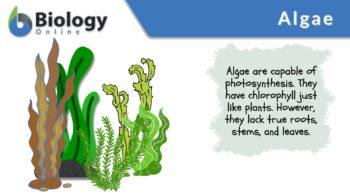
Algae are photosynthetic organisms that possess photosynthetic pigments such as chlorophyll. However, they lack true roots, stems, and leaves characteristic of vascular plants. Some of them are unicellular whereas others are multicellular. They may also form colonies. Most algae are aquatic. Others are terrestrial and may be found on moist soil, trees, and rocks. Some algal species form symbiosis with other organisms. For example, a lichen is a symbiotic association between fungi and green (and occasionally blue-green) algae. Algae belong to a polyphyletic group. This means that the organisms in this group are not necessarily closely related and do not have a common ancestor. However, they share a common feature; they are eukaryotes capable of photosynthesis with chlorophyll as their primary pigment but they lack other morphoanatomical features common among vascular plants. The scientific study of algae is called phycology. Some references include blue-green algae. However, they are prokaryotes, and as such, other authorities do not consider them as algae.
Algae Definition
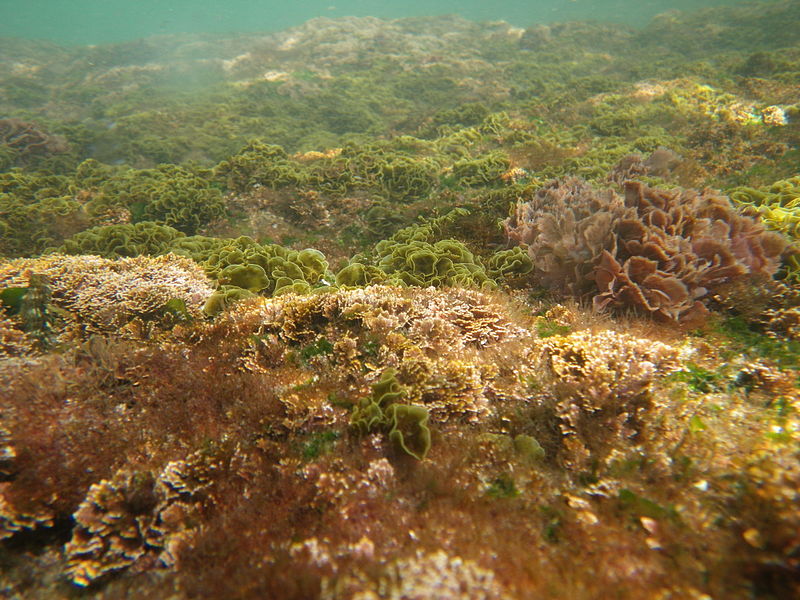
Algae (singular: alga) are organisms that belong to Domain Eucarya and are distinct from animals by being photosynthetic. However, they differ from the vascular plants by lacking true roots, stems, and leaves.
Etymology
The term algae is from the Latin alga, meaning “seaweed”. The descriptive word algal pertains to, characterizes, or relates to alga(e).
Classification
In the 5-kingdom scheme of classification, the algae, together with the protozoa, belong to Kingdom Protista. They are distinct from the protozoa by being photosynthetic. The algae are further grouped into various phyla and the suffix –phyta is used in the classification of algae: Euglenophyta (euglenids), Chrysophyta (diatoms), Pyrrophyta (dinoflagellates), Chlorophyta (green algae), Phaeophyta (brown algae), and Rhodophyta (red algae). The Cyanophyta or blue-green algae, which are prokaryotic organisms, are traditionally included in this group but in modern classification, they are now grouped together with bacteria under Kingdom Monera. It should be noted, however, that the taxonomic classification of organisms is bound to change as further studies of the species would lead to a newer system of classification, such as that in The NCBI taxonomy database.(1)
Characteristics of Algae
Morphology
The basic feature characterizing the algae is being aquatic and photoautotrophic eukaryotes. All species are photosynthetic and they have relatively simple anatomy compared with the other phototrophic eukaryotes. Nevertheless, their body plan could range from single-celled to colonial, to multicellular. Most of the algal species are unicellular. Some of them are non-motile whereas others are motile (flagellated). Some of them live independently while others form colonies or filaments. Multicellular forms have a somewhat complex structure that is organized into parts performing distinct functions. However, the body parts are organ-like and are not specialized into true leaves, stems, and roots as seen in bryophytes and tracheophytes. Nevertheless, algae have a cell wall similarly made up largely of cellulose. However, their cell wall also contains pectin, which renders algae somewhat slimy.
Nutrition
Although most algae are phototrophic (relying on energy derivation from photosynthesis), some of them are mixotrophic, and others, heterotrophic. Mixotrophic algae obtain energy both via photosynthesis and organic carbon uptake (e.g. by osmotrophy, phagotrophy, and mixotrophy). Others lack the pigments and thereby became colorless and heterotrophic.
Reproduction
The mode of reproduction may also vary. Some of them reproduce asexually whereas others, by sexual reproduction. Algal groups such as red algae and green algae have both in their life cycle. The asexual phase is when the organism is in a diploid condition whereas the sexual phase is when it is in a haploid condition. Two haploid organisms fuse forming a diploid zygote.
Ecology
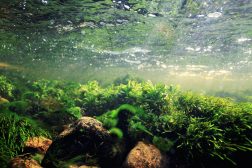
Algae are abundant and diversely distributed. They live especially in moist and aquatic habitats. Thus, they are found to thrive in freshwater, marine water, and moist terrestrial habitats. Nutrients and light largely influence Their abundance. Thus, there are instances when nutrients abound, their number could also become large enough to cause the so-called algal blooms or red tides.
Algal groups
The photosynthetic pigments are used as a basis to classify algae into major groups, particularly green algae, red algae, brown algae, and golden algae. Blue-green algae (Cyanophyta) are not considered by others as algae but rather include them together with bacteria under Kingdom Monera.
Green algae
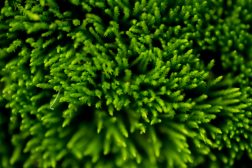
Green algae refer to any of the photosynthetic algae characterized by containing the pigments, chlorophyll a and chlorophyll b. They store food as starch within plastids. They have diverse forms: unicellular (e.g. Micrasterias sp.), multicellular, or colonial. Multicellular forms are those that appear filamentous or form leaf-like thallus (e.g. Ulva sp.). Some of them form colonies, such as Volvox sp. Green algae include charophytes (mostly in freshwater habitats) and chlorophytes (mostly marine). There are also green algae that live in terrestrial habitats (e.g. soil, rocks, and trees). Certain green algal species have been found to form symbiosis on land. For instance, Chlorella sp. forms a symbiosis with Hydra sp.
Red algae
Red algae are those belonging to the phylum Rhodophyta. They are characterized by their reddish color due to the presence of accessory pigments, such as phycoerythrin, phycocyanin, and allophycocyanins in phycobilisomes, aside from the chlorophyll. Examples of red algae are Rhodella, Compsopogon, Stylonema, Bangia, Porphyra, Porphyridium cruentum, Hildenbrandia, Nemalion, Corallina officinalis, Ahnfeltia, Gelidium, etc.
Brown algae
Brown algae include those of the phylum Phaeophyta. They are characterized by their brown or greenish-brown color due to the presence of brown pigments, such as fucoxanthin, in addition to chlorophyll. Apart from Phaeophyta, other phyla that have predominant brown pigment apart from chlorophyll are Dinoflagellata (dinoflagellates) and olive-brown Bacillariophyta (diatoms).
Golden algae
Golden algae are those belonging to the phylum Chrysophyceae. They are distinguished mainly by the presence of two specialized flagella wherein one has mastigonemes and the other is smooth. Prymnesium parvum is one of the well-known golden algae due to its association with fish kills.
Blue-green algae
The blue-green algae include the members of the Cyanophyta. They are not considered by other references as algae since they are prokaryotes. Nevertheless, they are similar to other algal species in being photosynthetic due to the presence of chlorophyll. Aside from this pigment, the blue-green algal cell also has phycobiliproteins that make them blue-green in color (thus, the name).
Importance
Algae, in their natural habitat, are important as they account for half of the photosynthetic production of organic material on earth. They serve as food for aquatic animals. Some of them also live in symbiosis, such as lichens. Lichen is a symbiotic association between algae and fungi in terrestrial habitats. The presence of lichen could indicate the pollution status of the environment.
Algae are used in different industries. For instance, kelps (brown macroscopic algae) are harvested, dried, and processed for the commercial production of soap, glass, etc. They are also used as fertilizers. They are also used in the production of agar, which is used as a growth medium in microbiological studies. Seaweeds are an important food source, especially in Asia. They are an important source of nutrients such as vitamins (A, B1, B2, B6, niacin, and C), iodine, potassium, iron, magnesium, and calcium. (2)
See also
Try to answer the quiz below to check what you have learned so far about algae.

References
- The NCBI taxonomy database. Retrieved from http://www.ncbi.nlm.nih.gov/taxonomy
- Simoons, Frederick J (1991). “6, Seaweeds and Other Algae”. Food in China: A Cultural and Historical Inquiry. CRC Press. pp. 179–190.
- 10.2 What are Algae? EGEE 439: Alternative Fuels from Biomass Sources. (2018). Retrieved from Psu.edu website: https://www.e-education.psu.edu/egee439/node/693
- Introduction to the Green Algae. (2019). Retrieved from Berkeley.edu website: https://ucmp.berkeley.edu/greenalgae/greenalgae.html
- Algae – Plant Management in Florida Waters. (2018). Retrieved from Ufl.edu website: https://plants.ifas.ufl.edu/manage/why-manage-plants/aquatic-and-wetland-plants-in-florida/algae/
© Biology Online. Content provided and moderated by Biology Online Editors