Chromosome Mutations
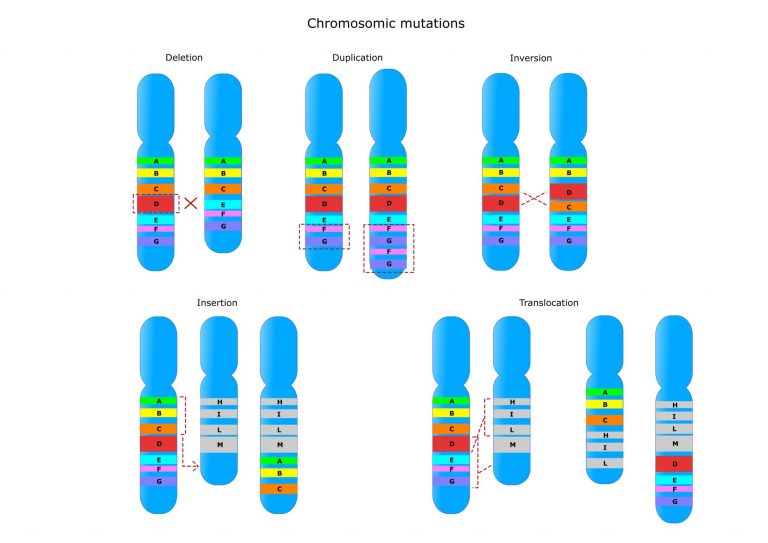
Mutations at the chromosomal level
Table of Contents
Reviewed by: Mary Anne Clark, Ph.D.
By nature, the genetic information from both parents is expected to be seen in the offspring following fertilization. However, it is possible for this genetic information to mutate, which in most cases, can result in fatal or negative consequences in the outcome of the new organism. This tutorial looks at the genetic mutations and their consequences in the outcome of the new organism. This tutorial is about the different types of mutations involving a chromosome.
Non-Disjunction and Down’s Syndrome
One well-known example of a mutation is non-disjunction. Non-disjunction is when the spindle fibers fail to separate during meiosis, resulting in gametes with one extra chromosome and other gametes lacking a chromosome.
If this non-disjunction occurs in chromosome 21 of a human egg cell, a condition called Down’s syndrome occurs. This is because their cells possess 47 chromosomes as opposed to the normal chromosome complement in humans of 46.
The fundamental structure of a chromosome is subject to mutation, which will most likely occur during crossing over at meiosis. There are a number of ways in which the chromosome structure can change, as indicated below, which will detrimentally change the genotype and phenotype of the organism. However, if the chromosome mutation affects an essential part of DNA, it is possible that the mutation will abort the offspring before it has the chance of being born.
The following indicates types of chromosome mutation where whole genes are moved:
Deletion
As the name implies, genes of a chromosome are permanently lost as they become unattached to the centromere and are lost forever
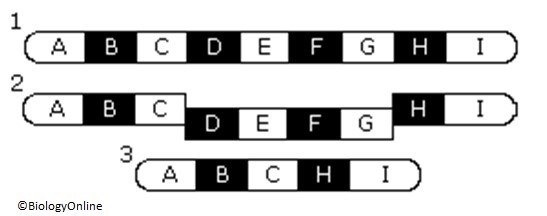
- Normal chromosome before mutation
- Genes not attached to centromere become loose and lost forever
- New chromosome lacks certain genes which may prove fatal depending on how important these genes are
Duplication
In this mutation, the mutants genes are displayed twice on the same chromosome due to duplication of these genes. This can prove to be an advantageous mutation as no genetic information is lost or altered and new genes are gained
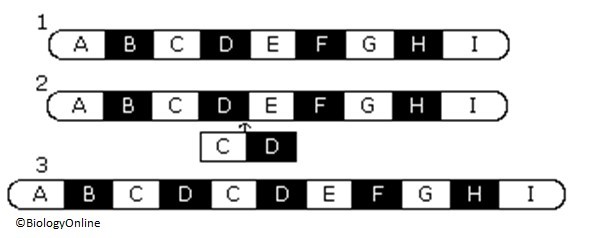
- Normal chromosome before mutation
- Genes from the homologous chromosome are copied and inserted into the genetic sequence
- New chromosome possesses all its initial genes plus a duplicated one, which is usually harmless
Inversion of Genes
This is where the order of a particular order of genes are reversed as seen below
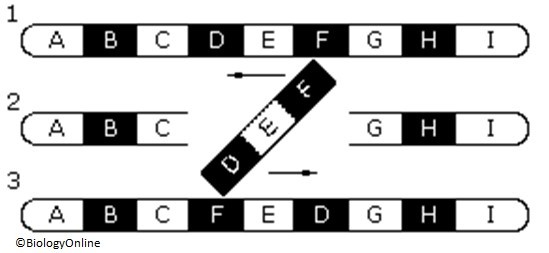
- Normal chromosome un-altered
- The connection between genes break and the sequence of these genes are reversed
- The new sequence may not be viable to produce an organism, depending on which genes are reversed. Advantageous characteristics from this mutation are also possible
Translocation of Genes
This is where information from one of two homologous chromosomes breaks and binds to the other. Usually, this sort of mutation is lethal

- An un-altered pair of homologous chromosomes
- Translocation of genes has resulted in some genes from one of the chromosomes attaching to the opposing chromosome
Alteration of a DNA Sequence
The previous examples of mutation have investigated changes at the chromosome level. The sequence of nucleotides on a DNA sequence are also susceptible to mutation.
- Deletion
Here, certain nucleotides are deleted, which affects the coding of proteins that use this DNA sequence. If for example, a gene coded for alanine, with a genetic sequence of C-G-G, and the cytosine nucleotide was deleted, then the alanine amino acid would not be able to be created, and any other amino acids that are supposed to be coded from this DNA sequence will also be unable to be produced because each successive nucleotide after the deleted nucleotide will be out of place. - Insertion
Similar to the effects of deletion, where a nucleotide is inserted into a genetic sequence and therefore alters the chain thereafter. This alteration of a nucleotide sequence is known as frameshift - Inversion
Where a particular nucleotide sequence is reversed, and is not as serious as the above mutations. This is because the nucleotides that have been reversed in order only affect a small portion of the sequence at large - Substitution
A certain nucleotide is replaced with another, which will affect any amino acid to be synthesized from this sequence due to this change. If the gene is essential, i.e. for the coding of hemoglobin then the effects are serious, and organisms in this instance suffer from a condition called sickle cell anemia.
All of the genetic mutations looked at through the last 2 pages more or less have a negative impact and are undesired, however, in some cases they can prove advantageous.
Genetic mutations increase genetic diversity and therefore have an important part to play. They are also the reason many people inherit diseases.
The next tutorial looks at the mutation at the gene level.
Mercy Education media
|
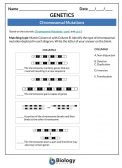
CHROMOSOMAL MUTATION MATCH-UP ACTIVITY
A critical-thinking match-up activity on chromosomal mutation! This matching-type test is useful in tracking the student’s skills in recognizing the different kinds of chromosomal mutations. Subjects: Genetics & Evolution |

You will also like...

Ecological Research: Measuring & Analysis
This lesson is about the methods used for ecological research, such as quadrat and transect sampling, canopy fogging, an..
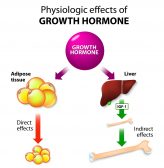
Animal Growth Hormones
Hormones are produced in the endocrine glands of animals. The pituitary gland and hypothalamus are the most impor..
Regulation of Biological Systems
Regulation of Biological Systems tutorials are focused on the modulation of biological systems from cell to population l..
Digestion and Absorption of Food
The gastrointestinal system breaks down particles of ingested food into molecular forms by enzymes through digestion and..

The Hominids
The hominid family diversified from the apes around 6 to 8 million years ago. Since then, the evolutionary path has prov..
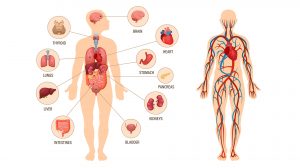
The Human Physiology
Physiology is the study of how living organisms function. Thus, human physiology deals specifically with the physiologic..